


Working together to protect the ocean and promote sustainable prosperity
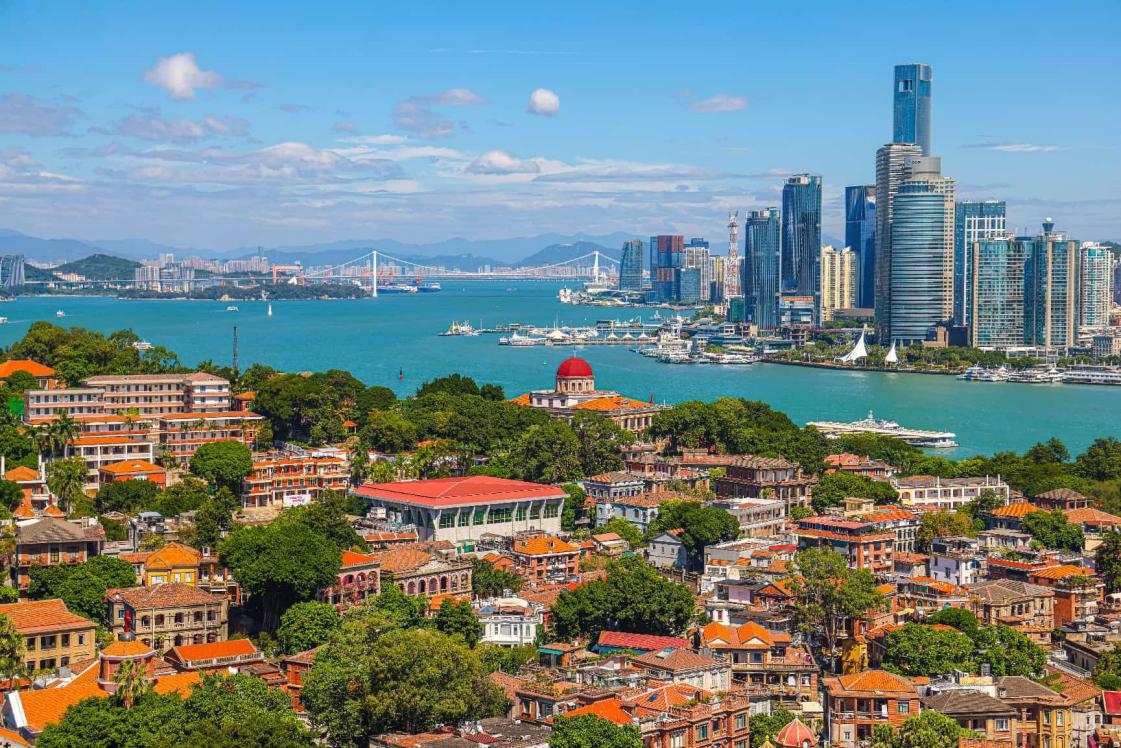
Photo shows an aerial view of Gulangyu Island in Xiamen, southeast China's Fujian province. (Photo/Wang Chu)
Addressing the governance deficit of the high seas has become a shared challenge for humanity.
The ocean has given rise to life, connected the world, and driven development. Yet the high seas, which account for two-thirds of the world's oceans, have long been inadequately governed, with less than 1 percent of their area effectively protected.
In January this year, the Agreement under the United Nations Convention on the Law of the Sea on the Conservation and Sustainable Use of Marine Biological Diversity of Areas beyond National Jurisdiction (BBNJ Agreement) entered into force, ushering in a new chapter in global ocean governance.
As one of the first countries to sign the agreement and become a Party to it, China participated extensively in the negotiations throughout the process and has applied to host the agreement's secretariat in Xiamen, southeast China's Fujian province.
The 2026 World Ocean Week in Xiamen, themed "Safeguard the Deep Blue Together, Foster Human-Ocean Harmony," was held from November 5 to 11 in Xiamen. The coastal city is emerging as a new platform for multilateral dialogue on ocean affairs.
China has a mainland coastline of approximately 18,000 kilometers and a long history of developing and utilizing marine resources. Xiamen's experience in coastal and bay management offers a vivid example of the country's efforts to promote sustainable ocean development and harmony between man and the ocean.
With its livable environment and favorable business climate, Xiamen has earned international recognition as an "International Garden City."
The city's comprehensive management of Yundang Lake has provided an effective model for sustainable development in coastal cities. Rare species such as Chinese white dolphins and blue-tailed bee-eaters have found habitats and breeding grounds in waters close to the city.
Local efforts reflect a broader national commitment. From the adoption of China's Ocean Agenda 21 to guide the sustainable development of its marine sector, to the first revision of the Marine Environment Protection Law to strengthen the legal framework for marine environmental regulation, and then the strategic plan announced at the 20th National Congress of the Communist Party of China (CPC) to step up efforts to build China into a strong maritime country, China has consistently incorporated marine ecological conservation into its overall approach to ocean development.
The country's sustained conservation efforts have contributed to the steady recovery of marine biodiversity.
China has established 353 marine protected areas, covering approximately 93,300 square kilometers of sea area, and designated around 150,000 square kilometers of marine areas as ecological red lines.
Twenty-four typical marine ecosystems have remained out of the "unhealthy" category for five consecutive years. Key species, including Chinese white dolphins, sea turtles, spotted seals, and corals, have received effective protection. Populations of the Chinese horseshoe crab, often described as a "living fossil," have shown signs of recovery, while the area of mangrove forests continues to expand.
China is also working to safeguard marine resources and promote a greener marine economy. It has adopted marine resource conservation measures such as expanding stock enhancement and releasing programs, implementing voluntary fishing moratoriums, and strictly fulfilling its obligations under the Agreement on Port State Measures.
At the same time, the country is accelerating the development of marine renewable energy, including offshore wind and tidal power, and building a green shipping system.
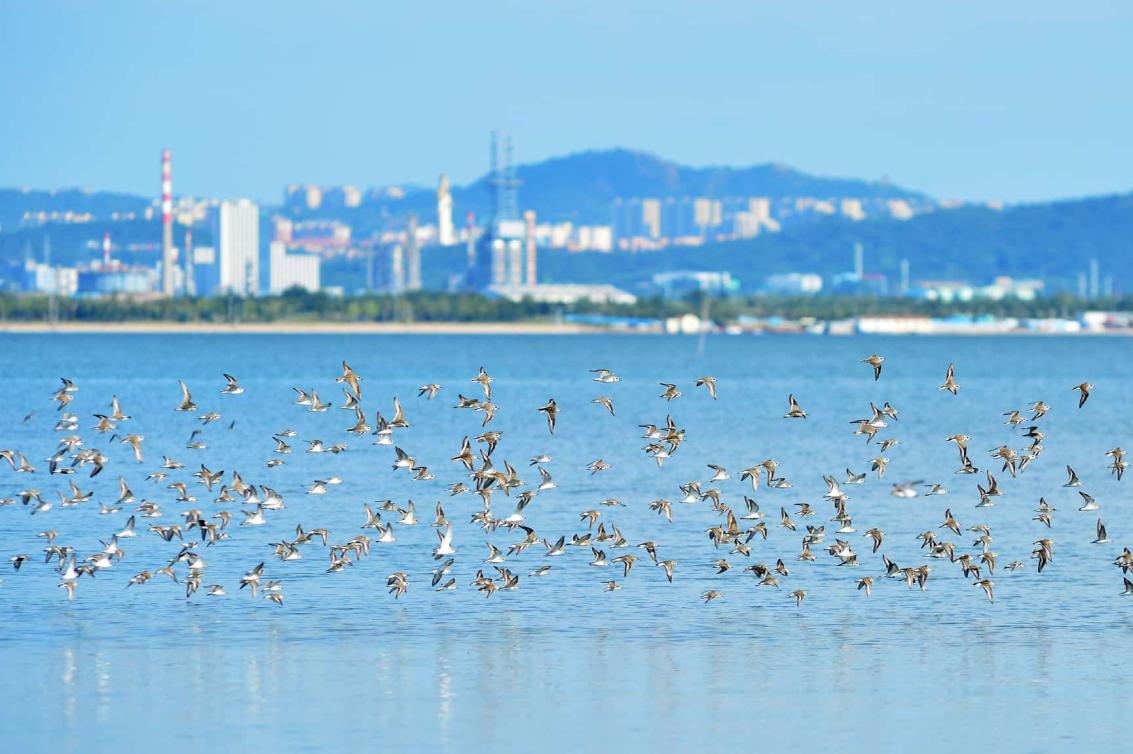
Migratory birds fly over Qingdao Jiaozhou Bay national marine park in Qingdao, east China's Shandong province. (Photo/Wang Haibin)
China was among the first to introduce voluntary fishing moratoriums on the high seas and has strengthened controls on distant-water fishing vessels, contributing to global efforts to conserve and manage high seas fisheries resources through concrete actions.
As all countries share the same blue planet, their security and well-being are closely interconnected.
Focusing on the practical needs of various countries, particularly developing nations, China has placed capacity building at the center of its international cooperation on marine affairs, seeking to ensure that the benefits of development are shared more broadly and equitably by people of all countries.
In Pacific island countries, China has supported the implementation of a "marine spatial planning plus" demonstration project on Malake Island and in the historical port town of Levuka, on Ovalau Island, Fiji, helping local communities address the challenge of balancing ecological conservation with economic development.
In Southeast and South Asia, China has shared its experience in beach restoration, developed in Xiamen, with Thailand and Sri Lanka, and provided mangrove ecosystem restoration technologies to Cambodia.
In Africa, China has helped countries including Uganda and Kenya expand their blue economies by sharing new fishing gear, advanced fishing techniques, and solutions for coastal aquaculture.
Deep-sea scientific exploration and the sharing of scientific research resources are important global marine public goods that China provides to the international community.
Recently, China's research vessel Deep Sea No. 1, carrying the country's manned deep-sea submersible Jiaolong, departed from Xiamen for the second leg of China's 100th oceanographic expedition, with scientists from South Pacific island countries invited to participate.
Meanwhile, the ports of Shanghai, Hamburg, and Los Angeles are working together to establish green shipping corridors and advance the low-carbon transition of maritime transport.

Business representatives discuss cooperation in marine equipment at the fourth Fujian International Maritime Equipment Expo in Fuzhou, southeast China's Fujian province, October 17. (Photo/Xie Guiming)
China and Egypt have also collaborated on marine archaeology and the protection of underwater cultural heritage, further broadening the scope of marine cooperation.
China has released the Blue Partnership Principles and launched the Sustainable Blue Partnership Cooperation Network and the Blue Partnership Action Fund. It has signed marine cooperation agreements with more than 50 countries and international organizations.
Through initiatives such as the Blue Talent Program and the Marine Scholarship of China, China has also organized more than 300 capacity-building training sessions on ocean governance, training over 6,000 marine professionals and sharing practical experience with developing countries in ecological restoration, climate response, and marine planning.
Firmly upholding the international system with the United Nations (UN) at its core and fully participating in the formulation and implementation of international rules on ocean affairs constitute China's consistent position in global ocean governance.
Under the framework of the UN Decade of Ocean Science for Sustainable Development (2021-2030), China has launched major scientific programs, including the Digital Deep-sea Typical Habitats Program, and opened access to research expedition resources for developing countries, creating more opportunities for countries of the Global South to participate in international ocean science collaboration.
As global ocean governance enters a new phase, China will remain committed to the vision of building a maritime community with a shared future. It will work with countries around the world to protect the blue planet and promote sustainable development, striving together toward a future of harmony between man and the ocean and shared prosperity.