


From Constantinople to Istanbul: A city at the thwarted kiss of two continents
London's Victoria and Albert Museum is set to open a new exhibition on Saturday.
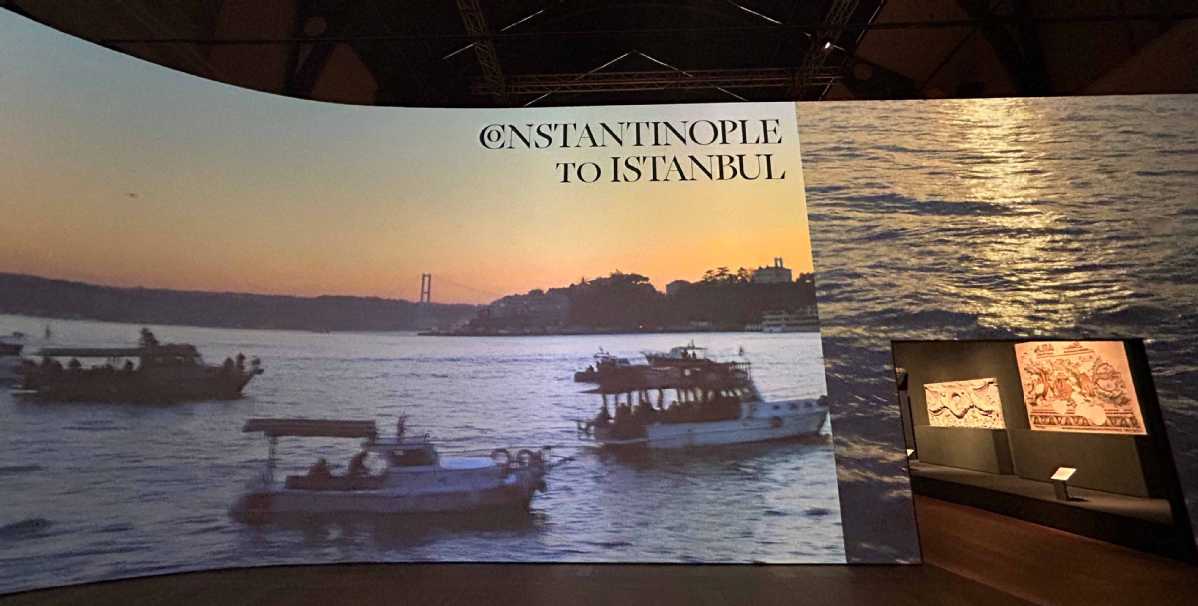
London's Victoria and Albert Museum is set to open a new exhibition themed Constantinople to Istanbul: One City, Two Empires on Saturday. (Photo: China Daily)
Titled Constantinople to Istanbul: One City, Two Empires, the exhibition charts the city's history when it served as the imperial and religious capital of two successive empires: the Byzantine (AD 330–1453) and the Ottoman (1453–1922).
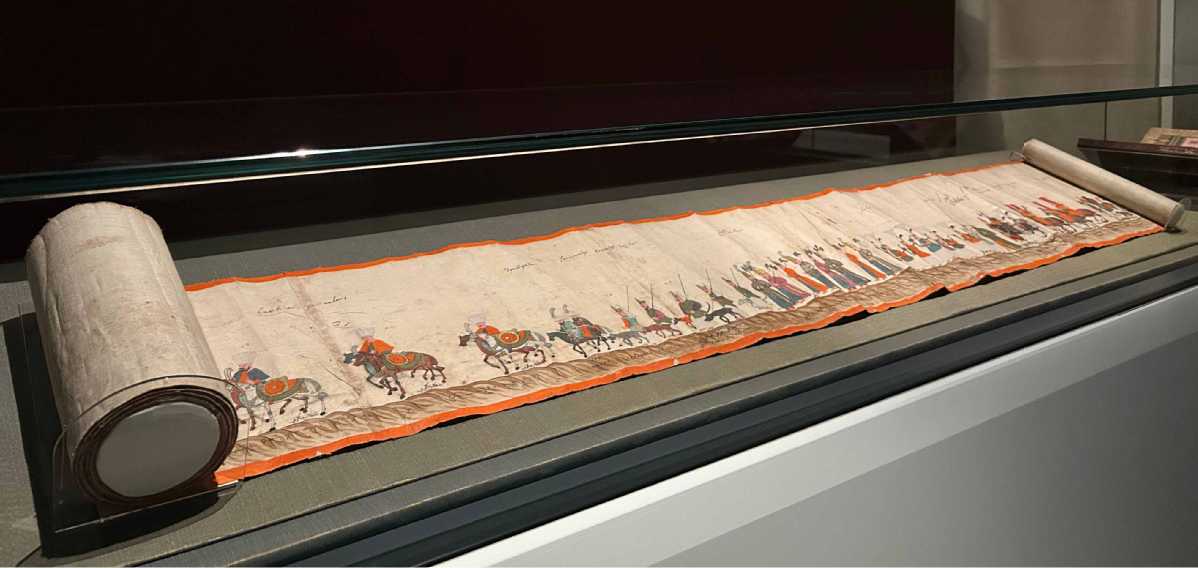
A procession roll that is almost eight meters long shows the Ottoman sultan in a procession with 200 participants. (Photo: China Daily)
More than 200 objects, including rarely seen decorative arts, such as fine silks and textiles, ceramic tiles, mosaics and tableware, as well as sculpture and architectural furnishings, are displayed across four main sections: Roman Beginnings, Heaven and Earth, Power and Reach, Life in the City.
Lead curator Tim Stanley said he hoped the exhibition could help the visitors, especially those of younger generations, understand that Constantinople, later Istanbul, was a very important place, both in terms of political power and the way it shaped the world, and through its production of art and design.
He also noted that the exhibition's appeal lies in its ability to bring together different cultural traditions through the history of a single city.
"This is one of those subjects that crosses cultural boundaries, but is united by the place where it took place," he said, referring to Istanbul, which has served as a meeting point for different civilizations from East and West over centuries.
"Constantinople, over a very long period, was a center that produced ideas and disseminated them. The exhibition concentrates more on that than on the interactions," Stanley said, adding "but obviously there are very important interactions."
One example of this cultural exchange can be found in the influence of Chinese porcelain on Ottoman ceramics.
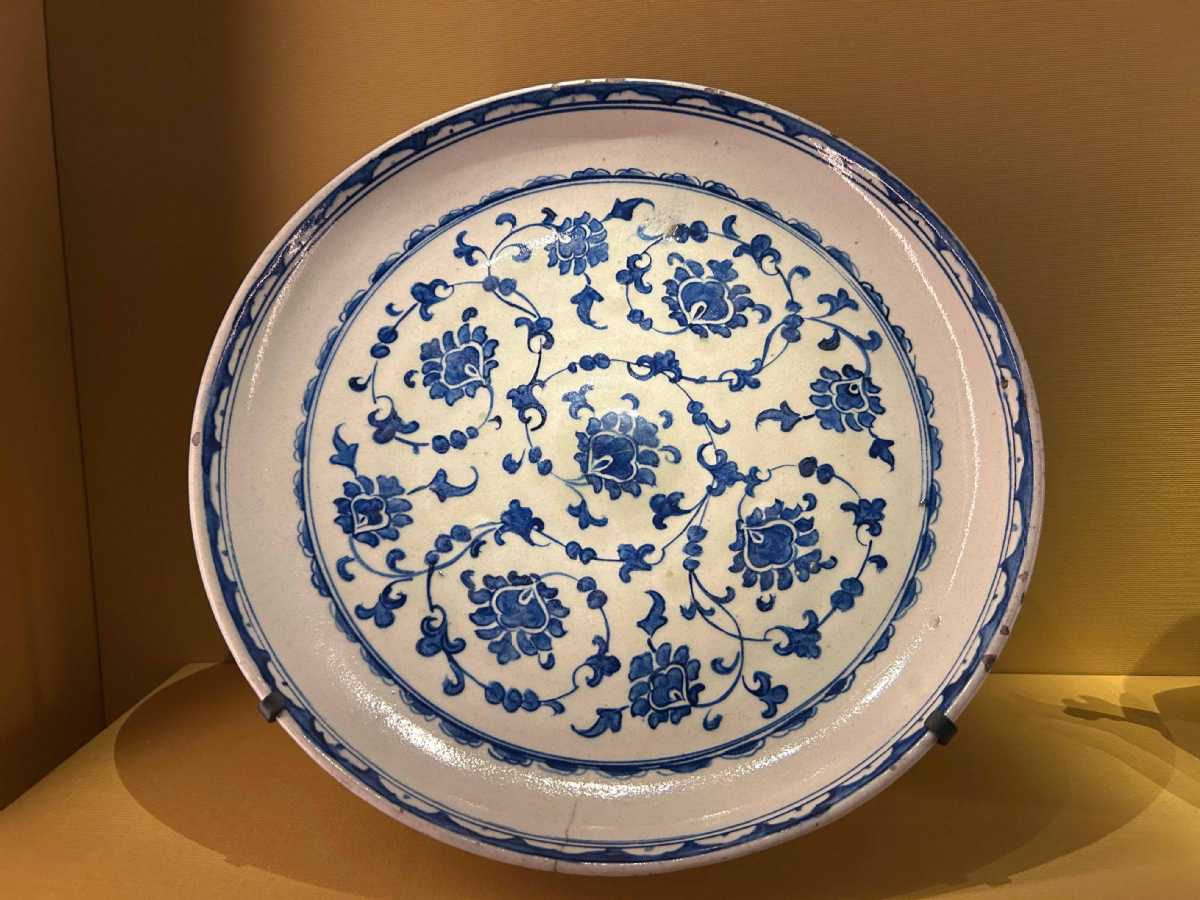
A blue-and-white porcelain dish from China's Yuan Dynasty is on display at the exhibition. (Photo: China Daily)
"The blue-and-white porcelain that was developed in China under the Yuan Dynasty (1271–1368) was so popular among the rulers of the Middle East, including the Ottomans," Stanley said.
The desirability of Chinese blue-and-white porcelain caused a revolution in Ottoman ceramics in the 1470s. A finer white body called fritware (stone paste) was introduced. Fritware matched Chinese porcelain closely.
"And then they interact with Europe as well, so that you get, as well as blue and white, which the Italians liked most, the Italians also produced lots of polychrome wares — the maiolica."
"You can see the Ottomans beginning to change the way they make pottery. They're making pots in imitation of Chinese ceramics, but then adapting them to suit Italian tastes. It's that sort of mixture between East and West that really underlies it."
The city's openness was also reflected in its diverse and growing population, which included Turks, Greeks and Armenians, as well as Western Christians and Jews. Jews from Spain and Portugal produced Istanbul's first printed books.
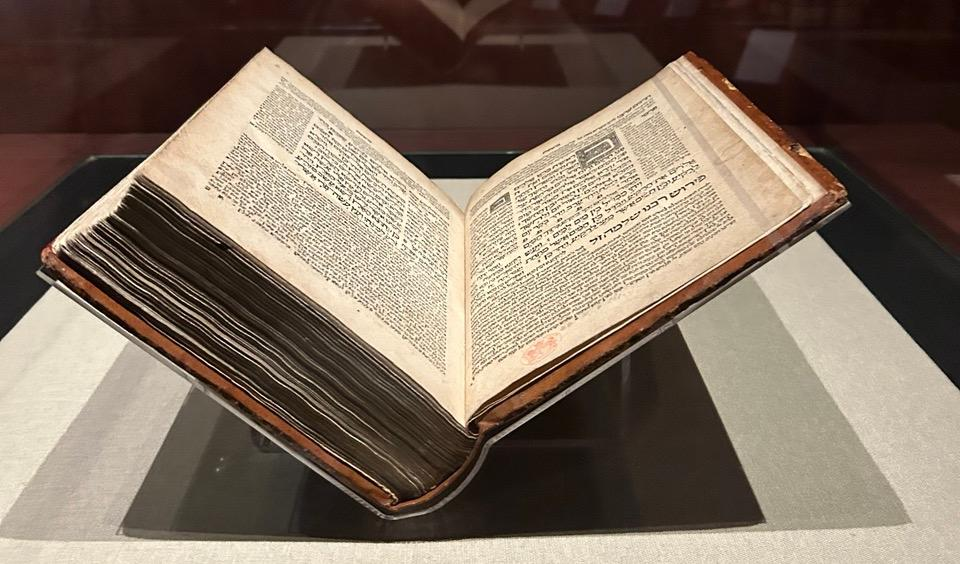
A printed Torah, the first five books of the Hebrew Bible, printed in Istanbul in 1546 is on display at the exhibition. (Photo: China Daily)
Stanley also highlighted the influence of Ottoman Istanbul on everyday life in Europe, from the spread of coffee culture to domestic design and furnishings.
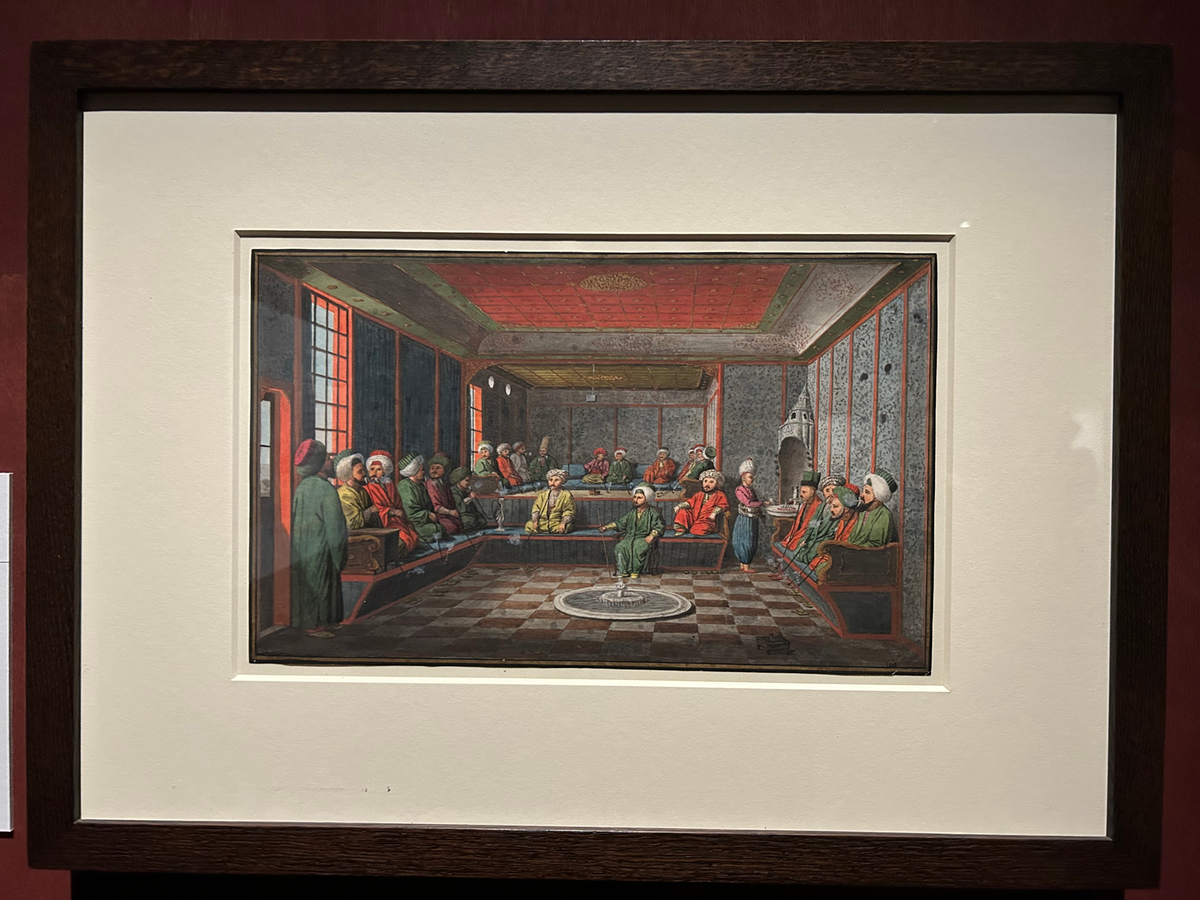
A coffee house scene in Istanbul is displayed in this painting. (Photo: China Daily)
"Coffee culture was actually transmitted to Europe from Istanbul, and if your bathroom has tiled walls and "Turkish" towels with a loop pile, you are an heir to Ottoman Istanbul," he said.
Tristram Hunt, president of the Victoria and Albert Museum, said, "As Robert Byron once put it, Istanbul is a city at the thwarted kiss of two continents. Here, before us, lies the creative fulcrum of East and West, of land and sea.
"The exhibition seeks to chart how two empires produced two distinct traditions of art and design each with an influence extending far beyond its borders. Our exhibition brings these histories together, told through the extraordinary creativity of the people who shaped and reshaped the city. Persian designs, Chinese motifs and Italian ideas found their way into the Ottoman port.
"The legacy of Constantinople is tangible, and it's the role of museums like the V&A, especially at a time of growing chauvinism and nationalism, to chart and champion that many-layered multicultural contribution."