


How mulberry-dyke and fish-pond system benefits the environment
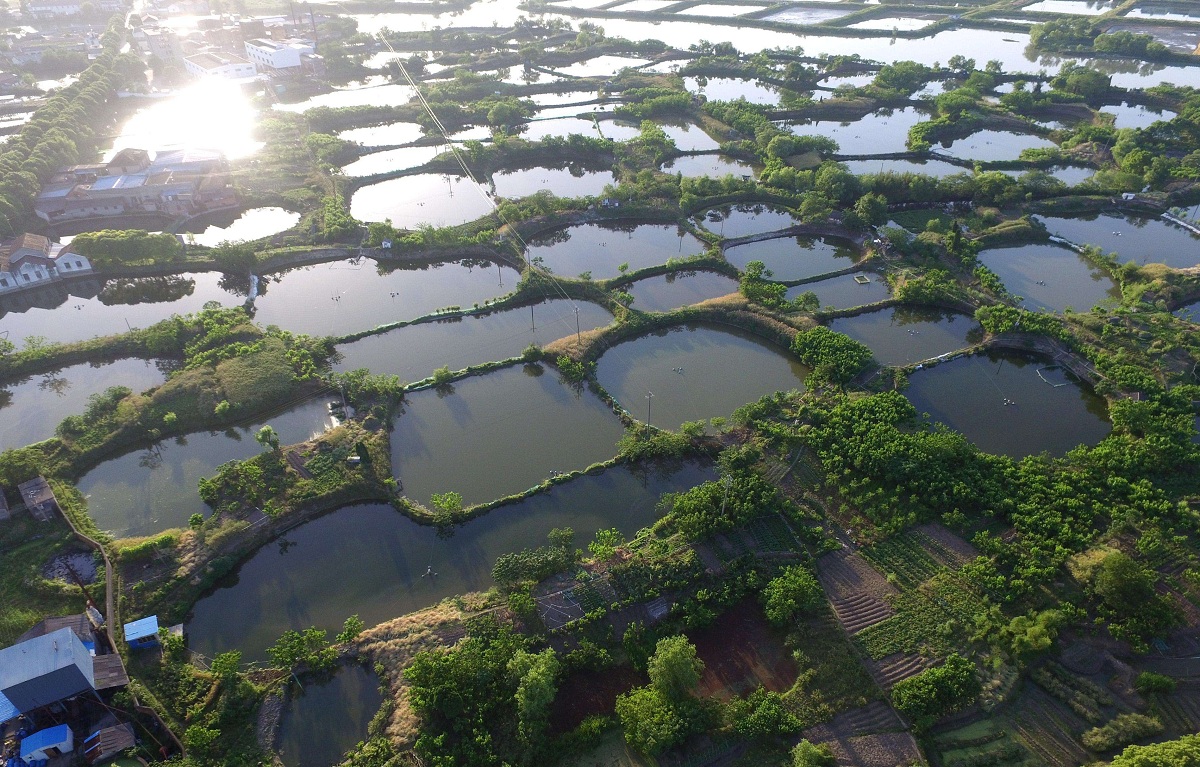
As the Huzhou mulberry-dyke and fish-pond system was recognized as a Globally Important Agricultural Heritage System by the UN Food and Agriculture Organization, here is something you need to know about it.
Originated over 2,500 years ago, the mulberry-dyke and fish-pond system features a complex irrigation system through the cultivation of mulberry trees, silkworm rearing and fish cultivation – a way of farming considered to be good for bio-diversity.
Various species of fish are bred in ponds and farmers manage to contain the spread of insect larvae, preventing the fields from being infested.
An eco-cycle of resource providers is established: The mulberry leaves are used to feed the silkworms, while the worms’ faeces can be the fodder for the fish and fish faeces is used as fertilizer for mulberry trees.
This virtuous balance is a closed cycle.
The symbiosis does not only take place between plants-insects-fish, but also within the fish breeding production process.
Indeed, there are mainly four types of fish with different biological characteristics produced in the system: They live on different layers of the water body, ensuring different “tasks” to reduce threats from bio aggressors.
In winter, the fertile mud at the bottom of the fish pond and the rivers is dug up to the dykes as the fertilizer for mulberry, improving the soil and reducing use of chemical fertilizers.
In addition, sources of water have been shaped to minimize the impact of flooding and regulate the regional microclimate.
It is known that rural development is crucial in building an ecological province — Huzhou of Zhejiang Province is committed to strengthening the ecological management of the rural environment through this green system.
All villages in Huzhou have adopted sewage treatment before discharge, and rate of waste collection and disposal has reached 100 percent.
The author is a program officer with the UN Food and Agriculture Organization.