


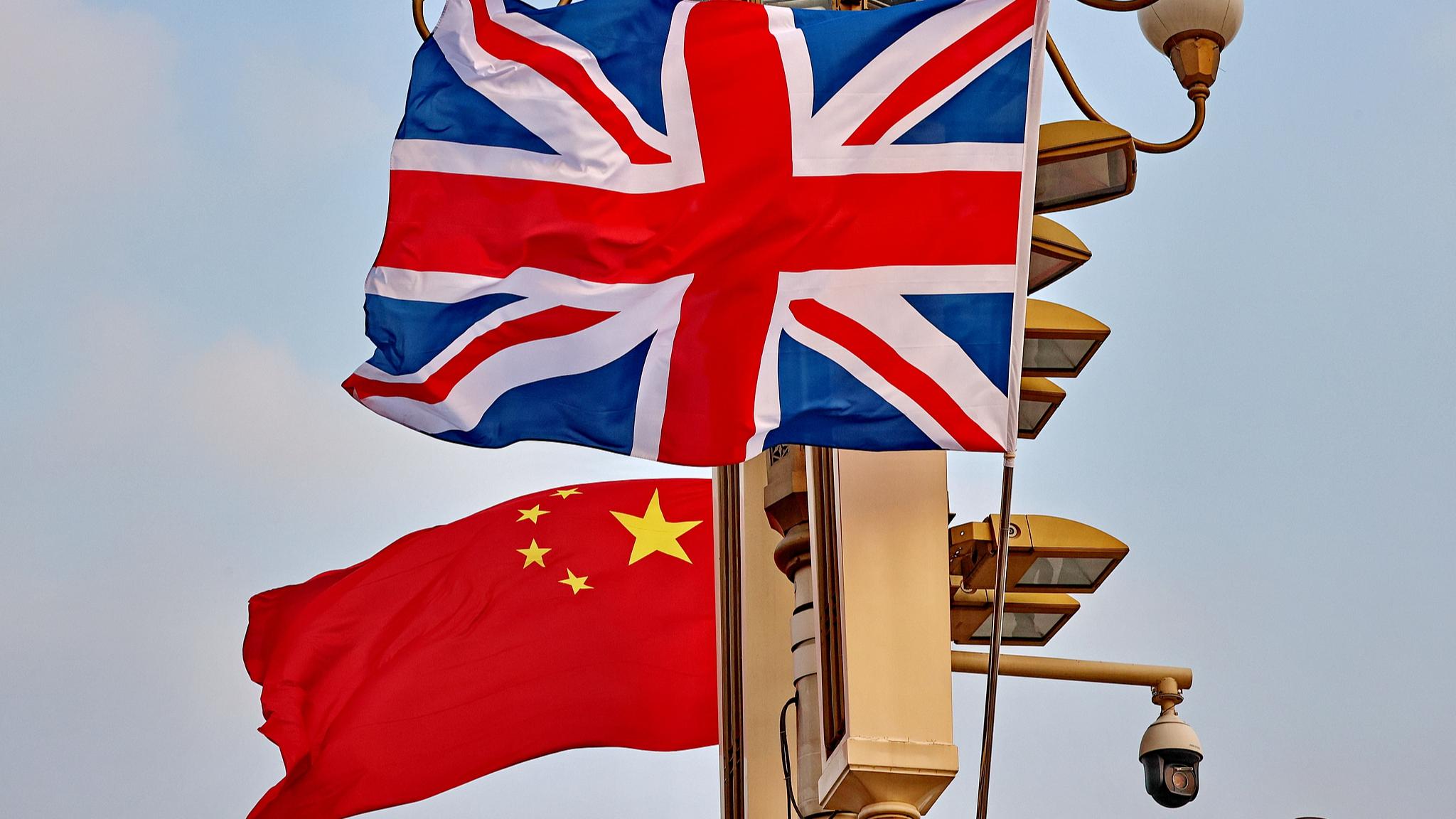
National flags of the United Kingdom and China flutter in the sky in Beijing, January 28, 2026. (Photo: VCG)
Against the backdrop of an increasingly volatile and intertwined international landscape, British Prime Minister Keir Starmer commenced his visit to China. This trip marks the first visit by a British prime minister to China in eight years, and Starmer is not the only foreign leader to visit China recently. According to a poll by CGTN, 85.2 percent of respondents believe the frequent visits by foreign leaders reflect a broad consensus among countries on achieving equal and orderly multipolarity, as well as inclusive and beneficial globalization.
The poll found that 64.8 percent of respondents believe Starmer's visit aims to pursue greater certainty in Britain's foreign relations. Economic and trade cooperation has always been an important part of China-UK relations, with its essence being mutually beneficial. In 2025, the bilateral trade value of goods reached $103.7 billion. According to the poll, 85.8 percent of respondents believe China's vast market represents a significant opportunity for British businesses.
The evolving course of China-UK relations has proven time and again that bilateral cooperation delivers real benefits. The poll showed that 83.1 percent of respondents believe a stable and mutually beneficial China-UK relationship requires both sides to adhere to the principles of mutual respect, equality and mutual benefit, and to work in the same direction. Additionally, 68.2 percent of respondents think differences between the two countries can be resolved through rational dialogue under the principles of mutual respect and practical cooperation.
In recent times, unilateralism, protectionism and power politics have been on the rise, severely impacting the international order. As permanent members of the United Nations Security Council and major global economies, China and the UK need to enhance dialogue and cooperation to maintain global peace and stability and promote economic and social development in both countries. This sentiment is echoed by 56.9 percent of respondents, who agree that China and the UK share common interests and responsibilities in upholding the post-war international order and the multilateral trading system. Meanwhile, 67.4 percent of respondents expect both countries to demonstrate the responsibility of major nations and work together within multilateral frameworks to address global governance challenges.
The poll was conducted across CGTN's English, Spanish, French, Arabic and Russian platforms, attracting 9,086 overseas netizens to participate and share their views within 24 hours.