


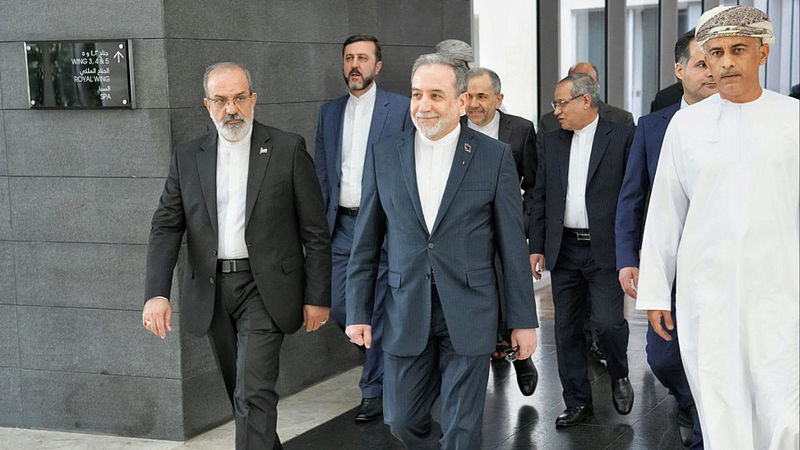
In this photo released by the Iranian Foreign Ministry, Iranian Foreign Minister Seyed Abbas Araghchi (C) heads to the venue for talks between Iran and the U.S. in Muscat, Oman, February 6, 2026. (Photo: VCG)
Iran and the United States agreed to continue negotiations after their indirect talks in Oman's Muscat ended "for now" with a "good start" on Friday, according to Iranian officials, while Washington announced fresh sanctions on the same day.
The talks, the first since the U.S. airstrikes on Iranian nuclear facilities in June 2025, took place in "a positive atmosphere," Iranian Foreign Minister Seyed Abbas Araghchi told reporters. He said the two sides will first hold consultations in their capitals and then decide how and when the next round of talks will take place, Iran's Fars News Agency reported Friday.
Meanwhile, according to Iran's official news agency IRNA, Araghchi said the Friday talks focused solely on nuclear issues, and that Tehran did not discuss "any other topics" with Washington.
The Iranian delegation had pointed out during the talks that refraining from threat and pressure is a prerequisite for any dialogue, Araghchi said, adding that Iran expects this point "definitely be observed to prepare the ground for the talks' continuation."
Also, Iran's state-run IRIB TV, quoting Araghchi, reported that Omani Foreign Minister Sayyid Badr bin Hamad Al Busaidi held several meetings with the Iranian and U.S. delegations, facilitating the exchange of viewpoints between the two sides.
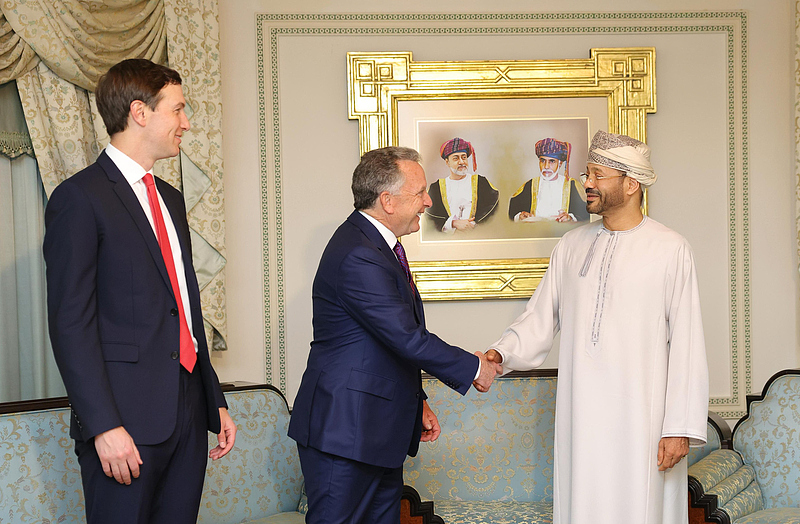
In this photo released by Oman's Foreign Ministry, U.S. special envoy Steve Witkoff (C) shakes hands with Omani Foreign Minister Sayyid Badr bin Hamad Al Busaidi (R) as Jared Kushner, U.S. President Donald Trump's son-in-law, looks on during a meeting in Muscat, Oman, February 6, 2026. (Photo: VCG)
The "very deep distrust" between Washington and Tehran formed in the past posed "a very big challenge to the negotiations, and we firstly have to overcome the pervading atmosphere of distrust and then be able to design the framework for a new dialogue capable of safeguarding the Iranian people's interests," Araghchi noted.
Following the talks, Al Busaidi, the Omani foreign minister, posted a statement on social media platform X, calling the talks "very serious" and "useful."
The discussions helped clarify each side's position and identify potential areas for progress, he said, adding that the parties "aim to reconvene in due course, with the results to be considered carefully in Tehran and Washington."
Earlier in the day, IRIB TV reported that the talks ended "for now" in Muscat, and that the two delegations may return home, whereas Iran's Mehr News Agency reported that Iran rejected a "zero enrichment" demand during the talks.
The two sides centered on the dilution of Iran's existing uranium stockpile, Mehr reported, adding that the atmosphere of the talks was "more serious" than in previous rounds between the two sides.
So far, the U.S. side has not issued any official statement regarding the talks, but Washington's subsequent moves have sent signals somewhat contradictory to Tehran's relatively positive rhetoric.
U.S. imposes new sanctions
As the indirect talks between the United States and Iran ended in Muscat, the Trump administration on Friday announced new sanctions targeting 15 entities, two individuals, and 14 so-called shadow fleet vessels linked to Iran's oil trade.
"The President is committed to driving down the Iranian regime's illicit oil and petrochemical exports under the Administration's maximum pressure campaign," the U.S. Department of State said in a statement.
Iran has yet to comment.
Regional countries welcome talks, call for further de-escalation
Regional and international leaders welcomed the talks and called for continued efforts to reduce tensions.
UN Secretary-General Antonio Guterres welcomed the resumption of talks, expressing hope they would help reduce tensions and prevent a broader crisis, his spokesman said.
The Egyptian Foreign Ministry said Egypt fully supports the renewed negotiations, stressing that "there are no military solutions" and that dialogue remains the only viable path forward. Cairo called for a constructive environment based on good faith and mutual respect to reach a sustainable settlement of the Iranian nuclear issue.
Saudi Foreign Minister Faisal bin Farhan Al Saud also welcomed the talks, voicing hope they would open a diplomatic path to ease tensions and promote regional stability. "The region is burdened by multiple crises, and finding a diplomatic solution between the United States and Iran is essential for achieving peace and stability," he said.
Qatar's Ministry of Foreign Affairs said the country reaffirms its support for all de-escalation efforts, resolving conflicts through diplomatic means, and bolstering peace and regional stability.
Iraq also reiterated its full support for efforts to ease tensions and promote stability and security in the region, based on its belief in the importance of dialogue and diplomacy in resolving disputes, according to a foreign ministry statement.