


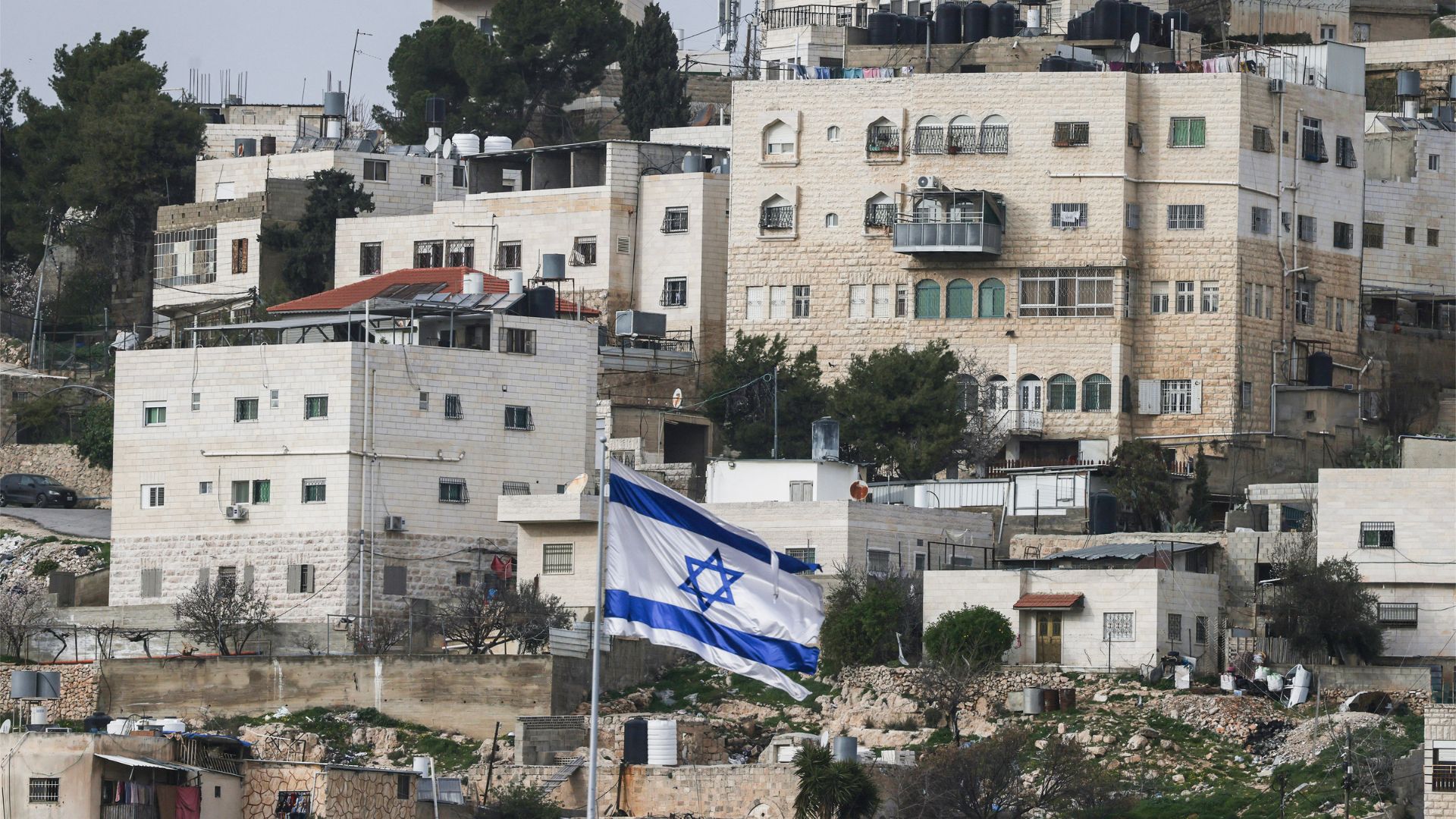
An Israeli flag fluttering above the Israeli settlement of Beit Romano (unseen), with Palestinian buildings in the background, in the Israeli-occupied West Bank city of Hebron on February 9. /Hazem Bader/AFP
Saudi Arabia, Jordan and the United Arab Emirates have led regional states in condemning Israel's move to ease settlement expansion and widen its powers in the West Bank, a step critics said went in the direction of annexing occupied land.
Sunday's decisions by Israel's security cabinet will make it easier for Jewish settlers to buy land in the West Bank and give Israeli authorities more power to act in areas supposedly under full Palestinian control, two senior Israeli ministers said.
One of them, ultranationalist Finance Minister Bezalel Smotrich, said in announcing the decisions that the government would "continue to kill the idea of a Palestinian state".
A joint statement by foreign ministers of Middle Eastern and some other Muslim countries, including Egypt and Türkiye, denounced the decisions as a violation of international law that would undermine the vision of a two-state solution as well as stability in the region.
They said the moves were meant to entrench Israeli settlement of the West Bank, displacing Palestinians and imposing unlawful Israeli sovereignty there. Annexing the territory has long been a priority of far-right parties in Netanyahu's coalition.
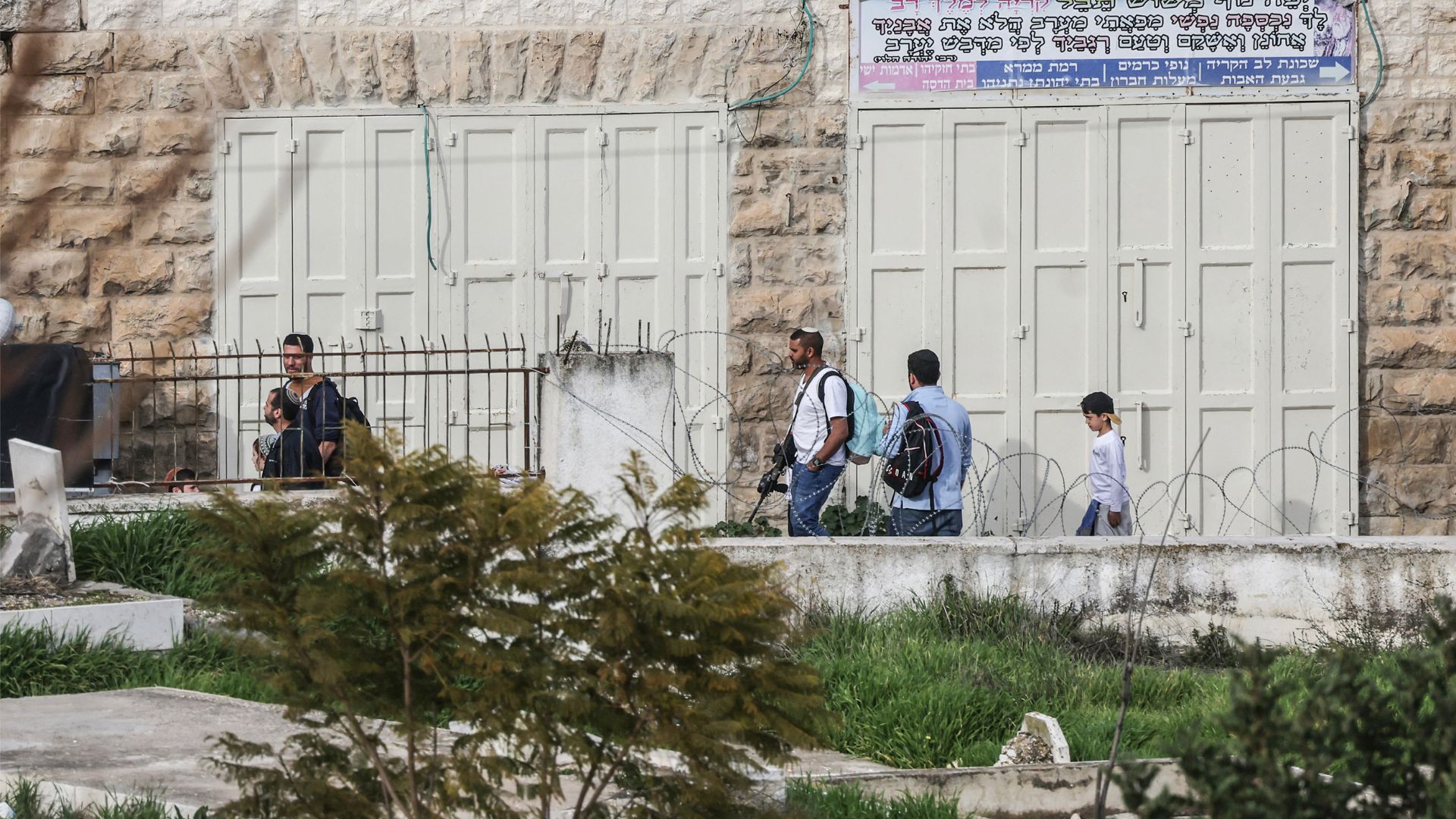
Armed Israeli settlers walk near the settlement of Abraham Avino in the Israeli-occupied West Bank city of Hebron on February 9. /Hazem Bader/AFP
Jordan, Egypt, the United Arab Emirates and Türkiye all have diplomatic relations with Israel. Saudi Arabia has said it will not establish such relations until the formation of a Palestinian state.
Most nations have long backed the creation of a Palestinian state alongside Israel as the best way to resolve the generations-old conflict and see the West Bank, which Israel has occupied since 1967, as the largest part of that future state.
Law repeal
Israeli Defense Minister Israel Katz and Smotrich issued a joint statement explaining the decisions of the five-member security cabinet, which were not published in full.
The security cabinet decided to repeal a law dating from Jordan's control of the West Bank before 1967 to make land registries public rather than confidential, and to remove a requirement for a permit from a civil administration office.
They said these moves would make it easier for Jews to purchase land in the West Bank.
Hagit Ofran from the Israeli settlement watchdog group Peace Now said the decision was barred by international law and represented a step towards annexation of the West Bank.
"The decision to allow every Israeli the right to buy land in the West Bank without government approval, without inspection, is also another way of saying it's normal life. It's not occupied territories, it's like part of Israel," she said.
Annexation is opposed by US President Donald Trump, who last year said he would not allow Israel to carry out such a step.
A White House official on Monday reiterated Trump's opposition toward Israel annexing the West Bank.
"A stable West Bank keeps Israel secure and is in line with this administration's goal to achieve peace in the region," the official said.
Israel's announcement came days ahead of Netanyahu's visit to the United States.
Katz and Smotrich also said the government had decided to expand monitoring and enforcement actions regarding water offences, damage to archeological sites and environmental hazards to areas A and B of the West Bank.

Palestinian boys look out over the Israeli-occupied West Bank city of Hebron from a rooftop on February 9. /Hazem Bader/AFP
Oslo Accords
Under the Oslo interim peace accords of 1993, Area A was designated as under security control of the Palestinian Authority and Area B as under joint control with Israel. Most of the West Bank became Area C under full Israeli security control.
Those changes could allow the Israeli military to carry out demolitions of Palestinian property and prevent Palestinian development not only in Area C but throughout the West Bank, Peace Now said in a statement.
In Hebron, a West Bank city with extensive archeological remains and a significant Israeli settler community, Palestinians voiced dismay at the decisions.
"It becomes easier to confiscate land, easier and faster to expand settlements and easier to demolish Palestinian homes," said Issa Amr, who heads an organisation in Hebron called Youth Against Settlements.
International condemnation
Britain on Monday called on Israel to reverse its decision.
"The UK strongly condemns the Israeli Security Cabinet's decision yesterday to expand Israeli control over the West Bank," the British government said. "Any unilateral attempt to alter the geographic or demographic make-up of Palestine is wholly unacceptable and would be inconsistent with international law. We call on Israel to reverse these decisions immediately."
UN Secretary-General Antonio Guterres was "gravely concerned" at the changes, and warned they were "eroding the prospects for the two-state solution", his spokesman Stephane Dujarric said in a statement.
Guterres called Israel's actions "destabilising" and pointed to an International Court of Justice finding that Israel's occupation of the Palestinian territory is illegal.
More than 500,000 Israelis live in settlements and outposts in the West Bank, which are illegal under international law.
Around three million Palestinians live in the territory.
Another 200,000 Israelis live in Israeli-annexed east Jerusalem, which the UN says is part of the Palestinian territories.