


Russia warns of military response as NATO launches Arctic mission in Greenland
Russian Foreign Minister Sergei Lavrov said on Wednesday that Moscow would take sufficient countermeasures, including military action, if Greenland is militarized or used to build capabilities targeting Russia, as NATO announced a new Arctic security mission amid renewed U.S. pressure over the island.
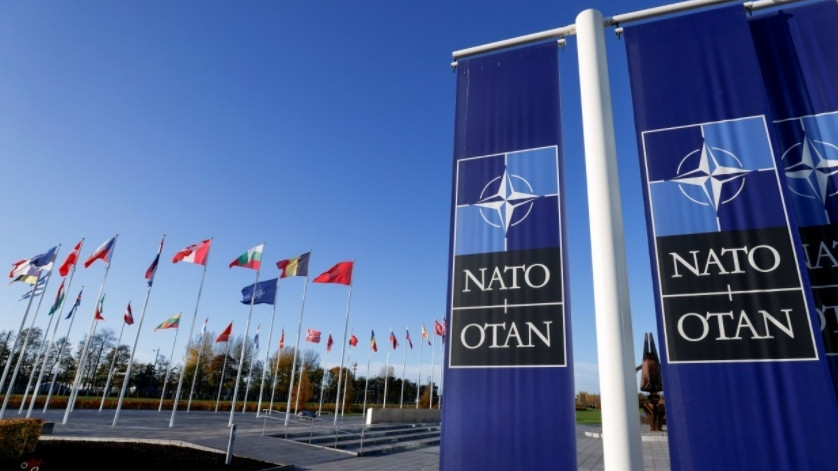
Flags outside NATO headquarters in Brussels, January 19, 2026. /VCG
Speaking in Russia's State Duma, Lavrov said that if Greenland was militarized or became home to military infrastructure directed at Russia, "we will take adequate countermeasures, including military-technical measures."
In an interview aired the same day on the online platform Empatia Manuchi, Lavrov accused NATO of seeking to turn the Arctic into a zone of confrontation, warning that the alliance's growing military activity is challenging Russia's "indisputable" rights over the Northern Sea Route.
"NATO has repeatedly provoked incidents in the region," Lavrov said, adding that such provocations could quickly decline once planners recognize the "serious consequences."
Lavrov's remarks came as NATO on Wednesday launched "Arctic Sentry," a new multi-domain mission aimed at strengthening security in the Arctic, a move the alliance said reflects the region's increasing strategic importance.
"Arctic Sentry underscores the alliance's commitment to safeguard its members and maintain stability in one of the world's most strategically significant and environmentally challenging areas," said U.S. General Alexus Grynkewich, NATO's Supreme Allied Commander Europe.
NATO said the mission would initially coordinate existing activities by member states, including upcoming exercises by Norway and Denmark. Denmark's defence minister said Copenhagen would contribute "substantially" to the new initiative, while Germany said it would deploy an initial four Eurofighter jets. Finland, which shares a 1,340-kilometer border with Russia, welcomed the move as boosting Arctic security.
However, it remained unclear whether NATO would deploy significant additional military capabilities under the mission.
The development comes amid heightened tensions triggered by U.S. President Donald Trump's repeated statements that he wants Greenland, a self-governing Danish territory, arguing the island is vital to U.S. national security. Trump has also floated plans to deploy a "Golden Dome" missile defense system on the island.
Although Trump has recently softened his rhetoric, U.S. Vice President JD Vance reiterated Washington's Arctic ambitions in an interview in Armenia on Tuesday, saying some allies had underinvested in Arctic security. He suggested that if the United States is to spend heavily and assume responsibility for "protecting" the vast region, it is "only natural" for it to seek corresponding benefits.
Russian Deputy Foreign Minister Sergei Ryabkov said earlier this month that developments surrounding Greenland stem from Washington's desire for global dominance, adding that Russia would ensure its national security "under any circumstances."
Trump's threats last month plunged transatlantic relations into one of NATO's deepest crises in years. He later backed off his vow to seize Greenland after saying he had reached a "framework" deal with NATO Secretary General Mark Rutte to secure greater U.S. influence.
Denmark and Greenland have since begun talks with Washington and are expected to renegotiate a 1951 treaty governing U.S. troop deployments on the island. Danish Prime Minister Mette Frederiksen has said NATO members support establishing a "permanent presence" in the Arctic, including around Greenland, as part of broader efforts to strengthen regional security.