


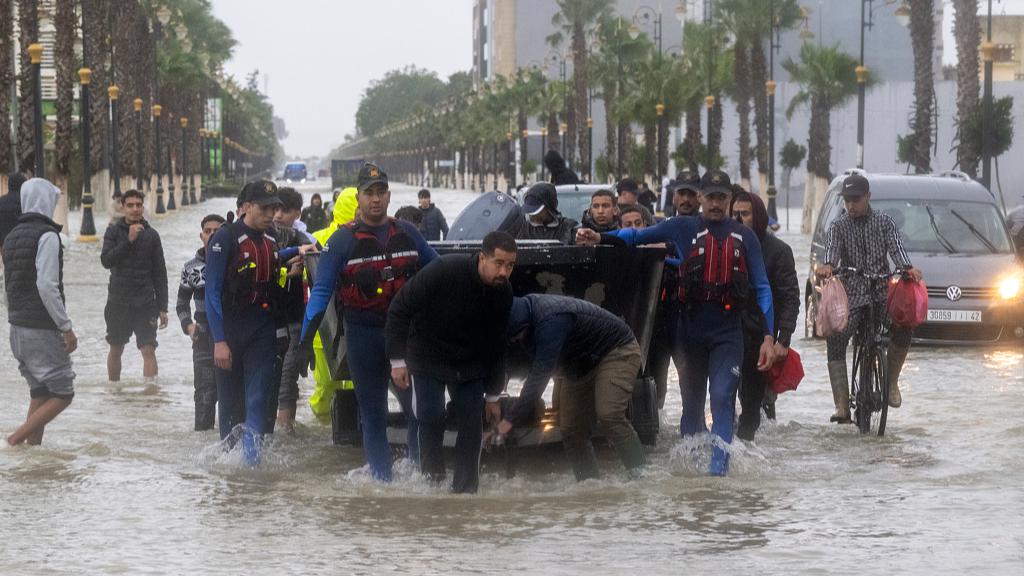
Royal Gendarmerie officers evacuated residents from the floodwaters in Ksar El Kebir, Morocco, as rising water levels in the Loukkos River flooded several residential areas, January 30, 2026. (Photo: CFP)
Moroccan authorities began organizing the gradual return of residents to the city of Ksar El Kebir and other flood-hit northwestern areas as weather conditions improved.
Authorities, backed by the army, have helped evacuate 188,000 people since early February to protect them from overflowing river waters that swept across 110,000 hectares in the northwest.
Most residents of Ksar El Kebir, 213 km north of Rabat, are now allowed to return home, except for those living in a few neighbourhoods, the interior ministry said on Monday.
Train and bus rides were offered free of charge to help transport residents who had sought shelter with relatives in other cities, or in centres and camps provided by the authorities.
Morocco plans to spend $330 million to upgrade infrastructure and support flood-affected residents, farmers and shop owners in the inundated areas, the prime minister's office said last week, declaring the hardest-hit municipalities disaster areas.
The Oued Makhazine dam, which had reached 160 percent of capacity, was forced to gradually release water downstream after exceptional inflows, leading to rising water levels in the Loukous River, which inundated Ksar El Kebir and surrounding plains.
Rainfall this winter was 35 percent above the average recorded since the 1990s and three times higher than last year, official data showed.
Morocco's national dam-filling rate rose to nearly 70 percent from 27 percent a year earlier, with several large dams being partially emptied to absorb new inflows.
The exceptional rainfall ended a seven-year drought that had pushed the country to ramp up investments in desalination.