


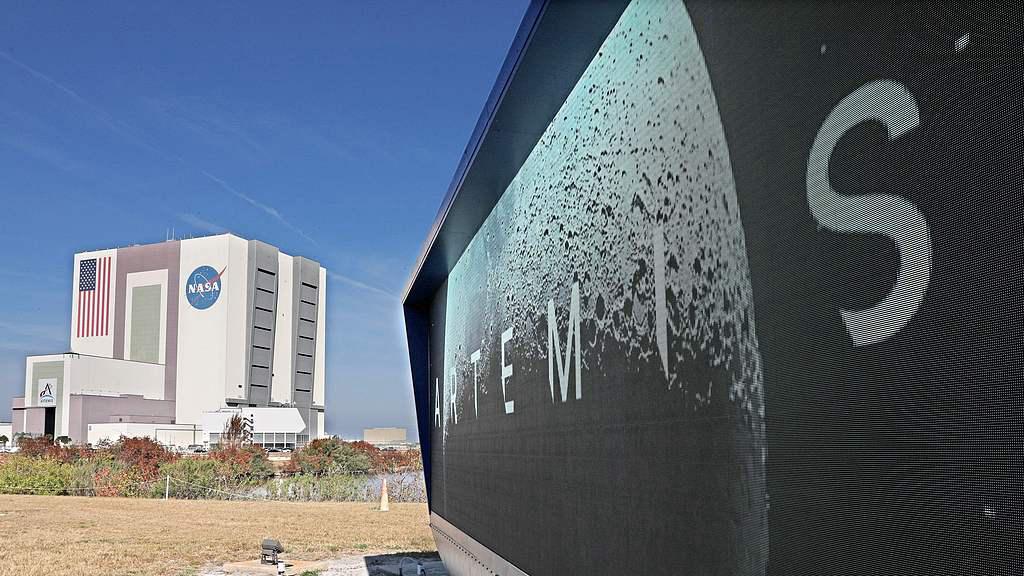
The countdown clock for the launch of NASA's Artemis II SLS rocket near the massive Vehicle Assembly building at the Kennedy Space Center in Cape Canaveral, Florida, February 20, 2026. (Photo: VCG)
NASA chief Jared Isaacman on Saturday ruled out a March launch for Artemis II – the first crewed flyby mission to the moon in more than 50 years – citing technical issues.
Workers detected a problem with helium flow to the massive Space Launch System (SLS) rocket that will "take the March launch window out of consideration," Issacman said in a post on X.
"I understand people are disappointed by this development. That disappointment is felt most by the team at NASA, who have been working tirelessly to prepare for this great endeavor," Isaacman said.
"During the 1960s, when NASA achieved what most thought was impossible, and what has never been repeated since, there were many setbacks."
The towering SLS rocket and Orion spacecraft will be rolled back into the Vehicle Assembly Building at the Kennedy Space Center in Florida to investigate the technical issues and make any necessary repairs, Isaacman noted, adding that a complete briefing will follow in the coming days.
NASA had previously set March 6 as the earliest possible launch date after the completion of a key test rehearsal on Thursday for the agency's SLS rocket.
The highly anticipated Artemis II mission, expected to last about 10 days, will send three Americans and one Canadian on a flight around the moon.
Although there was hope late last year that Artemis II could launch as early as February, the program has faced several delays.
The uncrewed Artemis I mission, originally scheduled for 2021, ultimately launched in November 2022 after multiple postponements and two scrubbed launch attempts.
More recently, technical issues in early February – including a liquid hydrogen leak – forced an early end to a so-called wet dress rehearsal for the Artemis II launch.
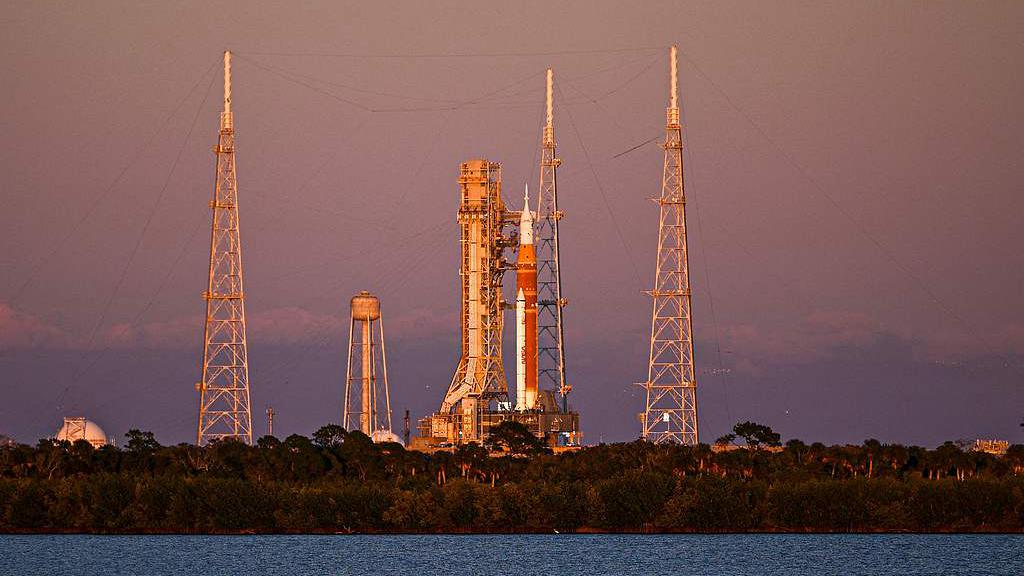
The SLS rocket and the Orion spacecraft, integrated for the Artemis II mission, at Launch Pad 39B at the Kennedy Space Center in Cape Canaveral, Florida, February 1, 2026. (Photo: VCG)
After Artemis II, NASA plans to advance the Artemis III manned lunar landing mission to take astronauts to the lunar surface. However, the lunar lander for that mission is still under development.
It would be a huge step towards Americans once again setting foot on the lunar surface, a goal announced by U.S. President Donald Trump in his first term.
NASA views the Artemis program as a critical stepping stone for future missions to Mars.
(With input from AFP)