


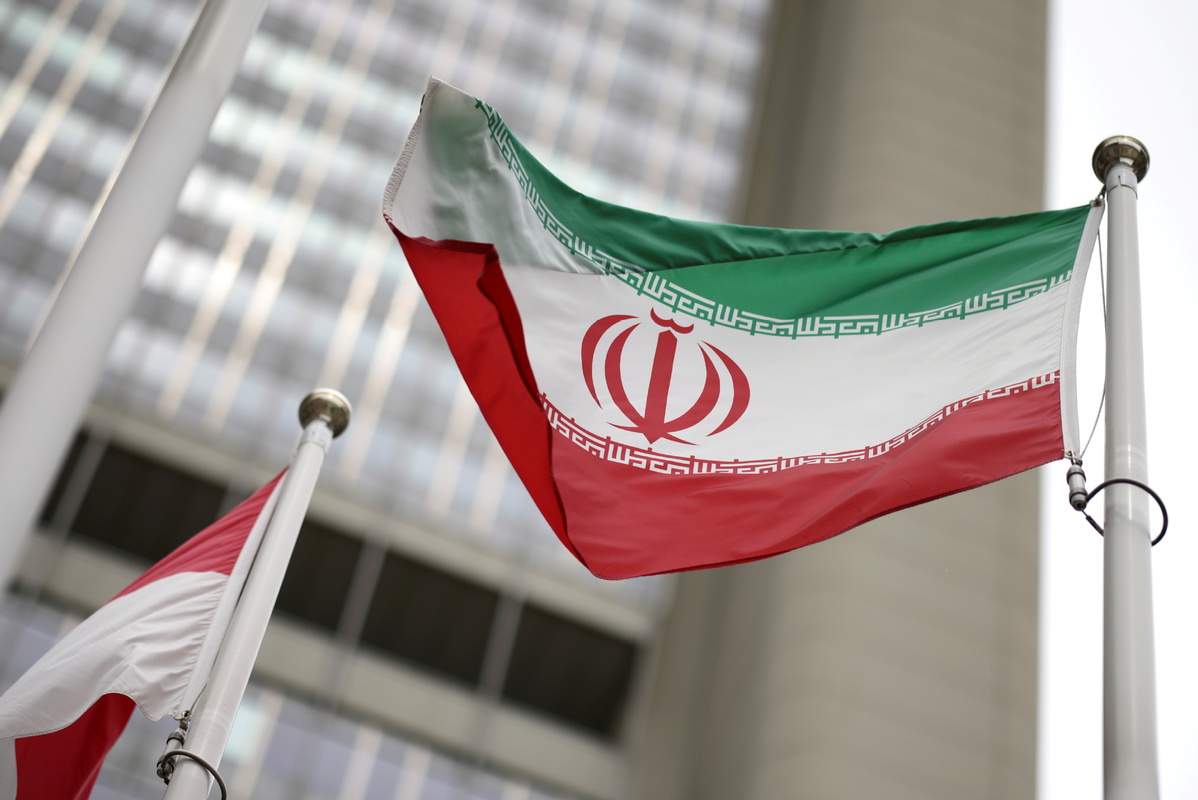
File photo
TEHRAN/MUSCAT, Feb. 22 (Xinhua) -- Omani Foreign Minister Sayyid Badr bin Hamad bin Hamood Albusaidi said on Sunday that the next round of U.S.-Iran talks will take place on Thursday in Geneva.
"Pleased to confirm U.S.-Iran negotiations are now set for Geneva this Thursday, with a positive push to go the extra mile towards finalizing the deal," the minister said on social media platform X.
Meanwhile, Iran's Foreign Minister Seyed Abbas Araghchi has said he will probably meet U.S. president's special envoy Steve Witkoff in Geneva on Thursday to discuss the draft proposal of a possible nuclear deal to be prepared by Tehran.
He made the remarks in an interview with the CBS News, which was broadcast on Sunday.
Araghchi said if the United States seeks to find a solution to Iran's "peaceful" nuclear program, diplomacy is the sole way, adding Iran has proved that in the past, "and I believe there is still a good chance to have a diplomatic solution, which is based on a win-win game."
He added a solution is within the two sides' reach, and there is no need for any military buildup as it can neither help the process nor pressurize Iran.
Commenting on the draft proposal he had earlier said would be prepared "within two to three days," Araghchi said, "We are still working on that and we are trying to make it something that consists of elements capable of accommodating both sides' concerns and interests."
He added that Iran and the United States can reach a nuclear deal better than the one signed between Tehran and world powers in 2015, noting unlike the previous negotiations, where the involved parties went into so many details, "this time, there is no need for that many details, and we can agree on basic things and make sure that Iran's nuclear program is peaceful and would remain peaceful forever and, at the same time, more sanctions would be lifted."
Araghchi said the nuclear issue is the sole focus of the ongoing negotiations, while highlighting Iran's right to uranium enrichment on its soil.
"We are a committed member of the Non-Proliferation Treaty (NPT) and have a safeguards agreement with the International Atomic Energy Agency. We are ready to fully cooperate with the agency according to the safeguards (agreement) and may accept with certain conditions the additional protocol to the safeguards (agreement) and the NPT. I think a full verification and monitoring mechanism (of Iran's nuclear program) is acceptable and can be in place," he added.
Also on Sunday, Iranian President Masoud Pezeshkian said recent negotiations with the United States have "yielded encouraging signals," but Iran is prepared for "any potential scenario."
"Iran is committed to peace and stability in the region. Recent negotiations involved the exchange of practical proposals and yielded encouraging signals. However, we continue to closely monitor U.S. actions and have made all necessary preparations for any potential scenario," Pezeshkian said in a post on social media.
Iran and the United States held the first and second rounds of their renewed nuclear negotiations on Feb. 6 and 17, respectively, in Muscat, the Omani capital, and Geneva. The diplomatic process comes amid a U.S. military buildup near Iran.