


The speech by US Secretary of State Marco Rubio at the Munich Security Conference (MSC) is one of the most open and radical pro-colonialist speeches of the 21st century. He celebrated the Western colonial powers for the settlement of new continents and the building of "vast empires extending out across the globe," branded the decolonization of the Global South as a communist conspiracy, and explicitly called on Europe and North America to restore the "West's age of dominance" and to renew the "greatest civilization in human history."
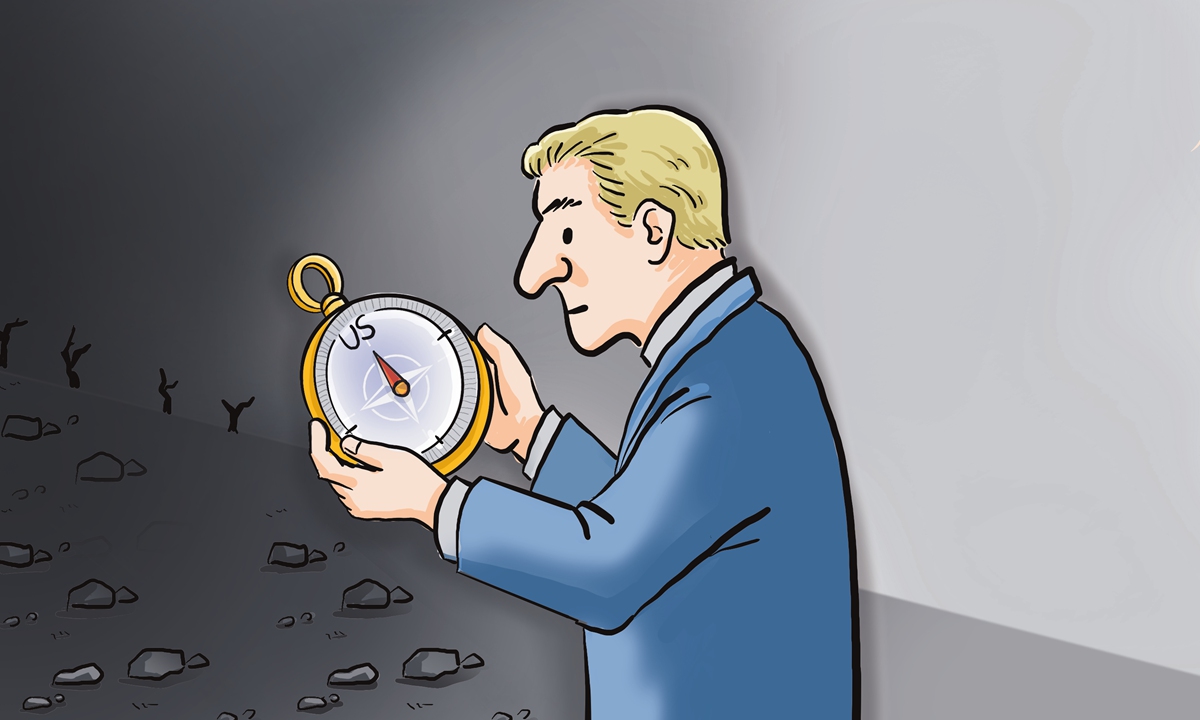
Illustration: GT
Rubio received a standing ovation from the audience, with Western heads of state and governments in attendance. It was a unification speech between the US and Europe. The signal was that they are in agreement on the main direction. As a consequence, they will proceed even more in a division-of-labor manner than before in support of US hegemony.
Some Europeans feel overly obligated to the US. Certainly, they are not thrilled that now they too - at least partially with Greenland - are on the menu. But at the same time, they hope that the current US government will be history in a few years, which partly explains the prominent invitations to leading Democrats like the Governor of California, Gavin Newsom, to the MSC.
It is becoming apparent that actors are only interested in an international order as long as they can use it to assert their own hegemony. If that hegemony wavers, one willingly dispenses with the self-imposed rules of international politics and adapts to a pure policy of the stronger. The real problem for Europe is the legitimization of such a policy.
In my view, Rubio's statement during this year's MSC shows that he wants to take the Europeans along in a division-of-labor manner in the US project of making the world unipolarly subservient. The excessive enthusiasm from some European leaders, however, highlights the degree of vassalage among some Europeans.
Will Europeans allow themselves to be dictated by the US?The possibilities for a truly future-oriented path for Europe are currently blocked. Many continue to content themselves with vassal status, believing they have to do this in exchange for US security guarantees. This is highly deceptive. In this respect, Munich was another nail in the coffin for Europe. Both the economic warfare and the exclusive financing of the proxy war against Russia in Ukraine threaten to ruin the economies and the welfare states of European NATO members.
As Henry Kissinger once correctly put it, the US has no permanent friends or enemies, only interests. The Europeans still refuse to understand this - at the cost of ongoing self-harm. NATO is not an association of equal partners for collective defense, but an instrument for enforcing US interests. From this perspective, the only consistent and rational conclusion for Germany and the other European NATO members must be: withdrawal from NATO.
Only by withdrawing from NATO, can the Europeans get a real chance of establishing an independent global economic and trade policy based on mutual benefit on a solid footing. There was once - though it now feels like a very distant memory - the concept of détente through economic interdependence. Confrontation was meant to be prevented precisely through mutual dependencies, and economic interdependence was intended to promote understanding as part of a balance of interests.
Today, the economies of NATO countries are thoroughly militarized. In the illusion that Russia can be strategically defeated, the US and the EU have imposed economic and financial sanctions aimed at waging a winnable economic war. This economic war has proved self-destructive, especially for Germany, Italy, and other countries.
Even if withdrawal is not on the horizon at the moment, the discussion must be steered back in this direction - if only to make clear to the peoples of Europe the damage that is being done by Europe's unconditional allegiance to the US.
Even without a NATO withdrawal, many positive steps would still be possible: the withdrawal of US troops, for example, and the prevention of the stationing of US hypersonic missiles that could reach Moscow from Germany in minutes. It could also mean building diplomatic and economic partnerships with BRICS-plus countries. The central question is whether Europeans will allow themselves to be dictated by the US, continuing to torpedo relations with Russia and failing to launch their own diplomatic initiative to pacify the Ukraine war. Anything that encourages Europeans to act independently in this respect will certainly be welcomed.
Some Europeans are only pretending to rely on multipolarity, otherwise the policy of submission to US interests could not be conveyed to the peoples of Europe at all.
If one lets the US have its way, that is merely understood as encouragement. People should not forget what happened in Cuba and Gaza. In Germany, they say "The appetite comes with eating" - and that also applies to US imperialism. Washington wants to show the world that it should have no hope for multipolarity and that anyone who does not submit will be destroyed. It is in essence a transparent imperialist strategy that exposes the world to an extreme threat. Institutions such as the UN are sidelined, or destroyed.
Cooperation with China an existential question for many European economies
The renewed China-Europe partnership envisaged by Chinese Foreign Minister Wang Yi at the MSC would bring a greater degree of rationality into international relations. Overall, China has put forward important proposals to stabilize the international order, whereas the US wants to tear everything down and harbors the dangerous illusion that it can determine the fate of the world - in a revival of US imperialism and colonialism. The Europeans will have to decide whether they want to follow the US against their own interests.
China-Germany relations have enormous potential for mutual benefit, but unfortunately this is not being adequately pursued from the German side. It would be desirable if the federal government - like Canada - were to free itself somewhat from what we might call the "friendly siege" by the US side and conclude agreements with China that serve mutual economic benefit. I do not consider this entirely impossible, because even in Europe some people are beginning to realize that they, too - as in the case of Greenland - are part of the menu and not just guests at the US table.
There is great potential for joint China-Europe initiatives, especially in preserving and reforming the UN, and in shared commitments to climate protection and economic cooperation. These initiatives are definitely win-win. Where political differences cannot be resolved, it makes sense to concentrate on economic partnerships. The US strategy is relatively simple: It relies on the political destruction of relations - for example between Europe and Russia - in order to subsequently secure a market for its expensive energy and to politically blow up every alternative. This strategy can possibly be undermined economically, especially since European economies have been severely weakened by gigantic rearmament, aid to Ukraine and the self-destructive consequences of the economic war against Russia. Consequently, for many European economies, cooperation with China has become an existential question.