


Iran's Foreign Minister Abbas Araqchi insists that a deal with the US is "within reach, but only if diplomacy is given priority", days ahead of an expected fresh round of talks between the two sides in Geneva.
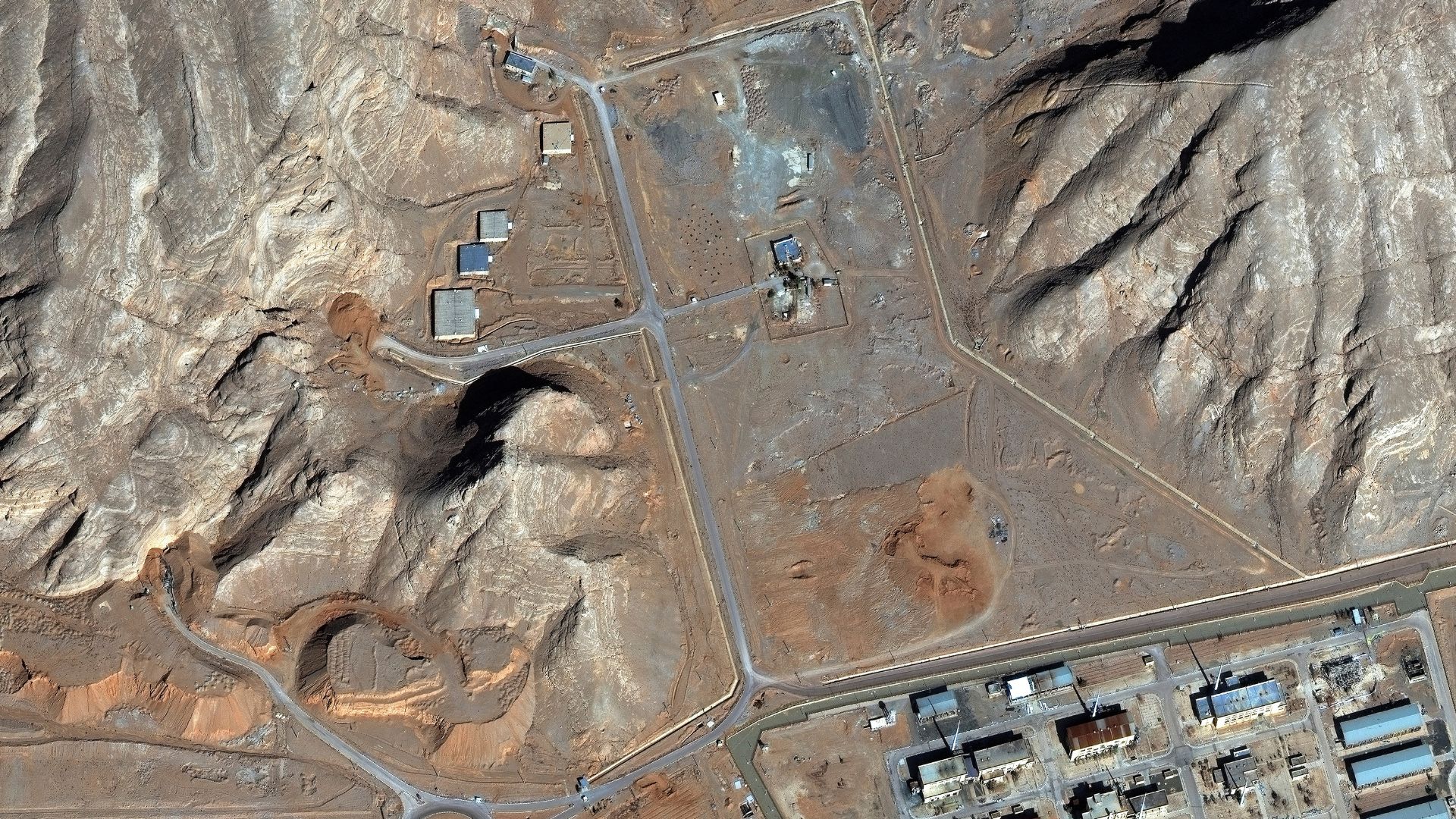
A satellite image shows tunnel entrances covered with soil at Isfahan nuclear complex, in Isfahan, Iran, February 10, 2026. (Photo via CGTN)
However, US President Donald Trump briefly laid out his case for a possible attack on Iran in his State of the Union speech to Congress on Tuesday, saying he would not allow the country to have a nuclear weapon.
The talks are set to take place on Thursday in Geneva, a senior US official said on Monday, with US envoys Steve Witkoff and Jared Kushner slated to meet with an Iranian delegation for the negotiations.
The two countries resumed negotiations earlier this month as the US builds up its military capability in the Middle East. Iran has threatened to strike US bases in the region if it is attacked.
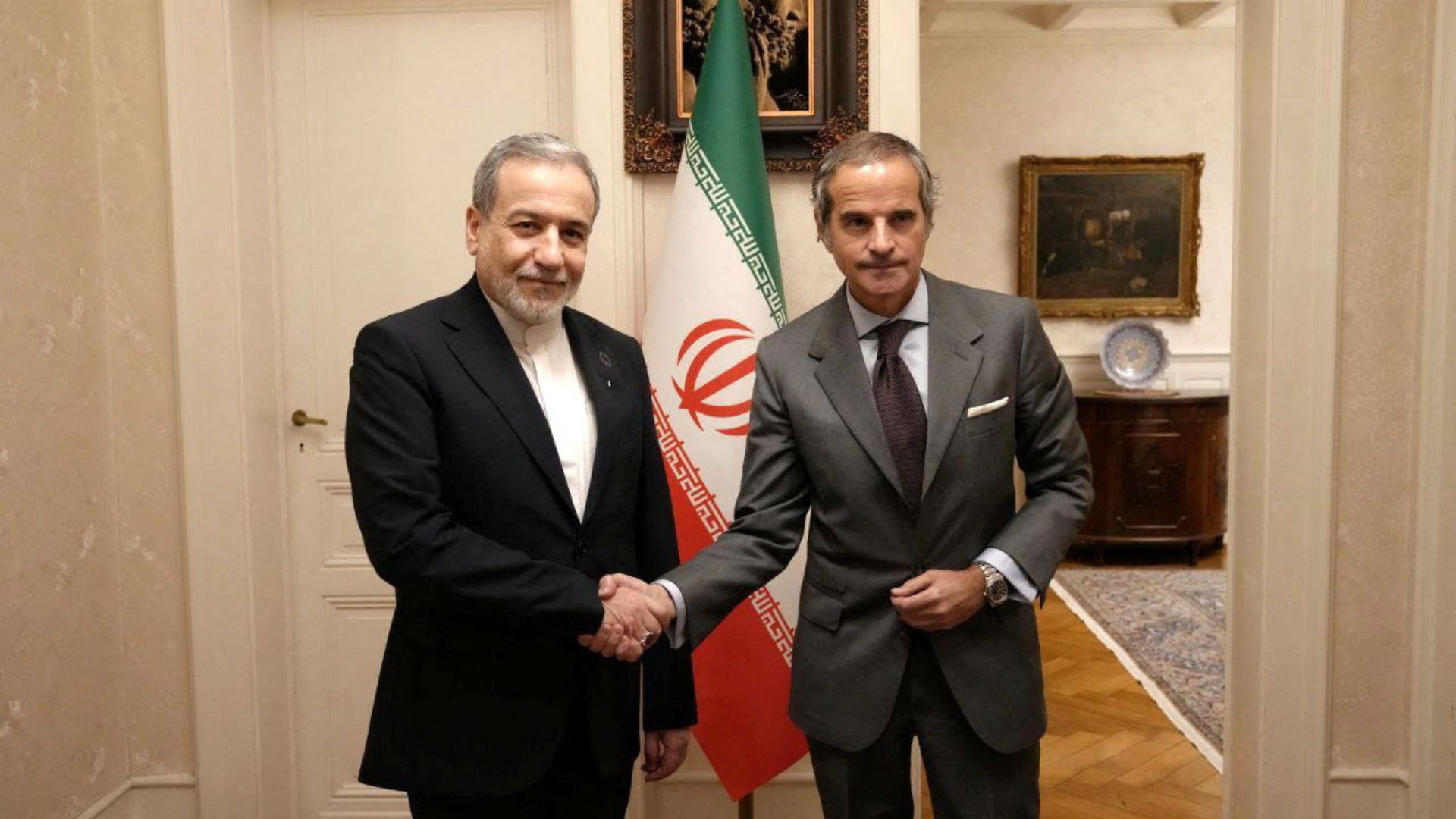
Iranian Foreign Minister Abbas Araqchi meets with International Atomic Energy Agency (IAEA) Director General Rafael Grossi in Geneva, Switzerland, February 16, 2026. (Photo: Iranian Foreign Ministry)
"We have a historic opportunity to strike an unprecedented agreement that addresses mutual concerns and achieves mutual interests," Araqchi said in a post on X on Tuesday.
The Iranian top diplomat said his country would resume the talks with "a determination to achieve a fair and equitable deal in the shortest possible time."
Earlier, Iranian Deputy Foreign Minister Majid Takht-Ravanchi said Iran was ready to take all necessary steps to reach a deal with the United States.
"We are ready to reach an agreement as soon as possible. We will do whatever it takes to make this happen. We will enter the negotiating room in Geneva with complete honesty and good faith," Takht-Ravanchi said in comments carried by state media.
A senior Iranian official told Reuters that Tehran would seriously consider a combination of sending half of its most highly enriched uranium abroad, diluting the rest and taking part in creating a regional enrichment consortium - an idea periodically raised during years of Iran-linked diplomacy.
Iran would do this in return for US recognition of Iran's right to "peaceful nuclear enrichment" under a deal that would also include lifting economic sanctions, the official said.
"If there is an attack or aggression against Iran, we will respond according to our defense plans... A US attack on Iran is a real gamble," Takht-Ravanchi added.
Friction
Indirect talks between the two sides last year brought no agreement, primarily due to friction over a US demand that Iran forgo uranium enrichment on its soil, which Washington views as a pathway to a nuclear bomb.
Iran has always denied seeking such weapons.
The US joined Israel in hitting Iranian nuclear sites last June, effectively curtailing Iran's uranium enrichment, with Trump saying its key nuclear sites were "obliterated". But Iran is still believed to possess stockpiles enriched previously, which Washington wants it to relinquish.
In his record-long State of the Union address, Trump pointed to Tehran's support for militant groups, its killing of protesters and the country's missile and nuclear programs as threats to the region and the United States.
"The (Iranian) regime and its murderous proxies have spread nothing but terrorism and death and hate," the Republican president said about 90 minutes into his annual address to a joint session of the Senate and House of Representatives.
He accused Iran of restarting its nuclear program, working to build missiles that "soon" would be capable of reaching the United States and of being responsible for roadside bombings that have killed US service members and civilians.
In response to Trump, an Iran foreign ministry spokesperson said: "Whatever they're alleging in regards to Iran's nuclear program, Iran's ballistic missiles, and the number of casualties during January's unrest is simply the repetition of 'big lies'.
The run-up to Trump's address was overshadowed by the buildup of US military forces in the Middle East and preparations for a possible conflict with Iran that could last for weeks if Tehran does not reach a deal to solve the longstanding dispute over its nuclear program.
Secretary of State Marco Rubio held a briefing on Iran hours before the speech for Congress' "Gang of Eight" - composed of the leaders of the Senate and House of Representatives and the two chambers' intelligence committees.
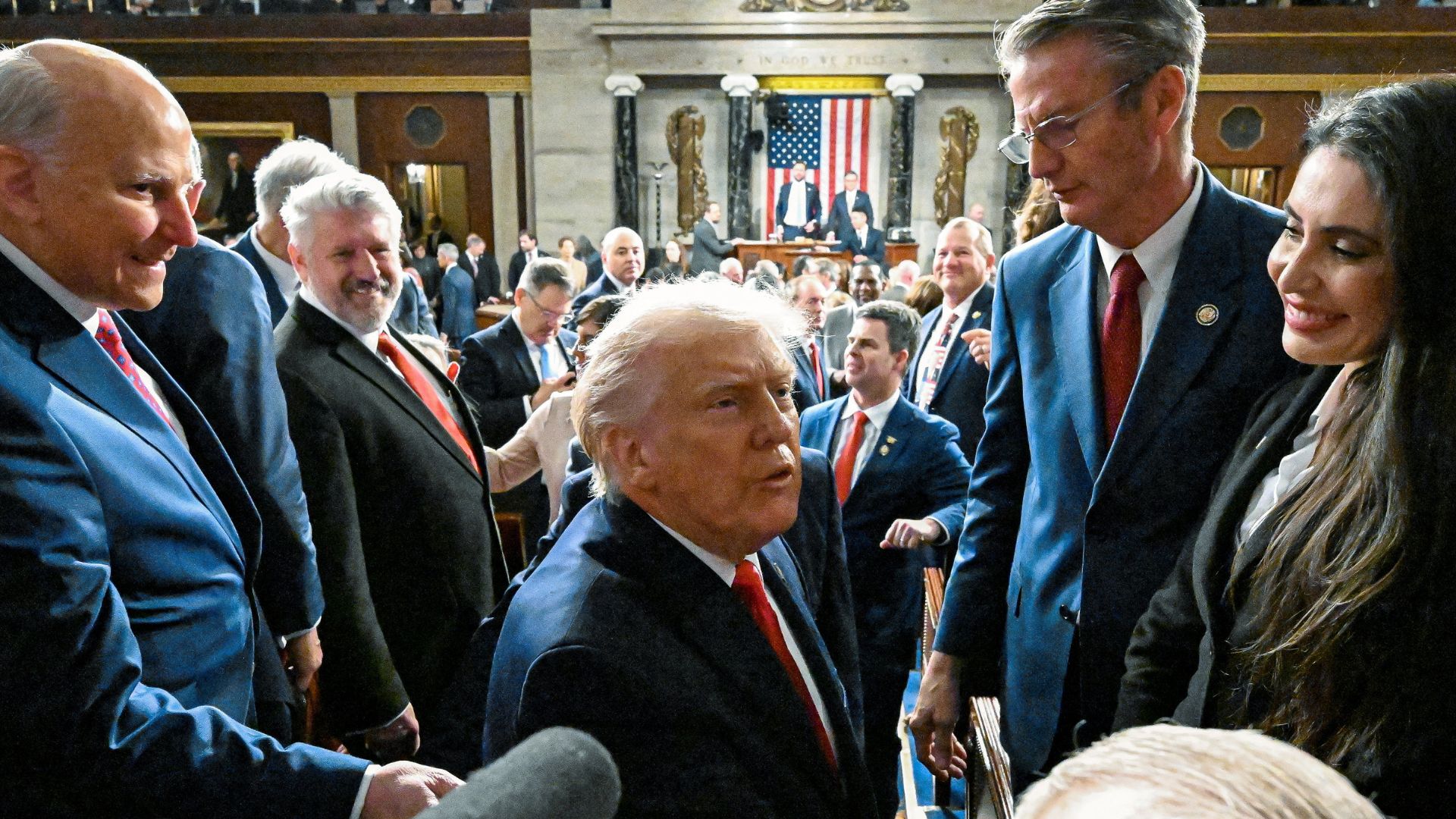
U.S. President Donald J. Trump exits the House Chamber after delivering the first State of the Union address of his second term. (Photo via CGTN)
Americans wary
Even while assembling a massive military force in the Middle East, Trump has done little to explain to the American public why he might be leading the US into its most aggressive action against the Islamic Republic since its 1979 revolution.
Polls show Americans wary of foreign conflicts. A Reuters/Ipsos poll from January showed 69 percent of Americans agreed with a statement the US should only use its military when facing a direct and imminent threat, while 18 percent disagreed and the rest weren't sure or didn't answer the question.
Regional reaction
There were various reactions within the Middle East region to the possibility of a US-Iran war.
Israel warned Lebanon that it would strike the country hard, targeting civilian infrastructure including the airport, in the event that Hezbollah gets involved in any US-Iran war, two senior Lebanese officials said on Tuesday.
The Lebanese officials, speaking on condition of anonymity, said the Israeli message was delivered indirectly. The office of Israeli Prime Minister Benjamin Netanyahu and the Lebanese presidency did not immediately respond to requests for comment.
Lebanese Prime Minister Nawaf Salam, whose government has sought the disarmament of Iran-backed Hezbollah since taking office a year ago, urged the group not to take Lebanon into "another adventure", speaking in a newspaper interview published on Tuesday.
The US State Department is pulling out non-essential government personnel and their eligible family members from the US embassy in Beirut, a senior State Department official said on Monday.
A Turkish diplomatic source said Türkiye is evaluating all aspects of potential measures that may be taken in the event of a conflict.
"Naturally, all aspects of the measures that could be taken in the event of a negative development are being evaluated," the source said, speaking on condition of anonymity.
"All scenarios are being considered; and steps that can be taken to ensure the safety of our citizens are being worked on," the person said, but added any steps that would "violate Iran's sovereignty" were "out of the question".
The source did not provide details on what measures Türkiye was evaluating.
Earlier, the Turkish presidency's office for countering disinformation denied media reports that Türkiye was planning to enter Iranian territory to stop a potential influx of refugees.