


UK growth forecast for 2026 cut to 1.1 pct
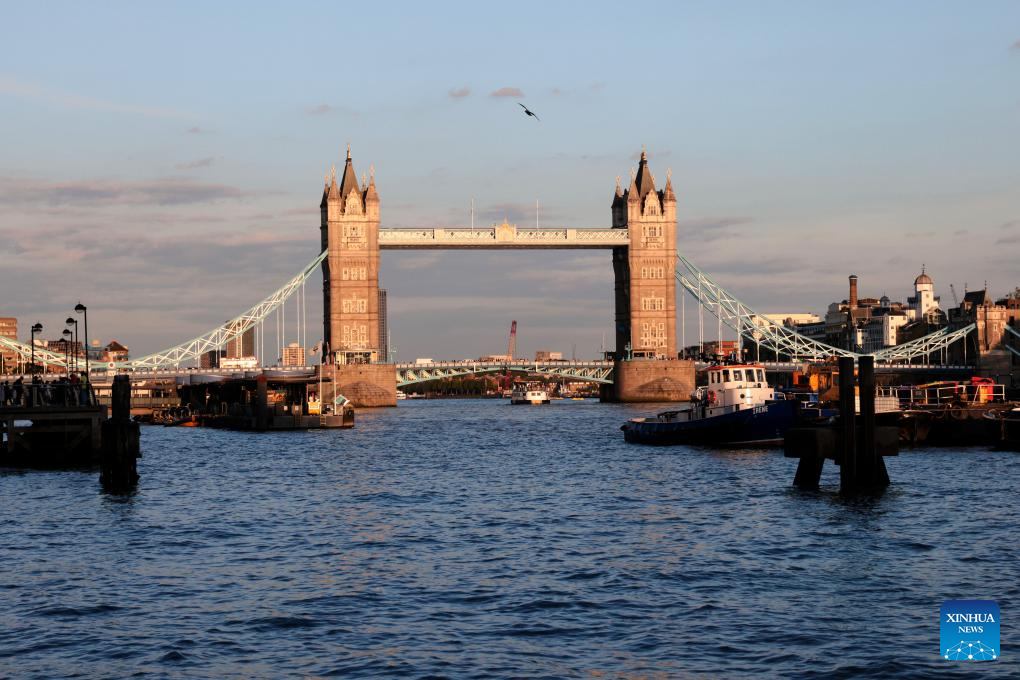
Tower Bridge is seen as the sun sets in London, Britain, Aug. 2, 2025. (Photo: Xinhua)
Britain's economic growth is now forecast to expand by 1.1 percent in 2026, down from a 1.4 percent projection made in November, the independent Office for Budget Responsibility (OBR) said on Tuesday, pointing to a weaker near-term outlook.
In her Spring Statement, Britain's Chancellor of the Exchequer Rachel Reeves announced the updated OBR forecasts.
According to the OBR, the economy is expected to grow by 1.1 percent in 2026, followed by 1.6 percent in both 2027 and 2028, and 1.5 percent in each of the subsequent two years. While the medium-term outlook was slightly upgraded compared with previous estimates, the downgrade for 2026 highlights persistent economic headwinds.
The growth downgrade comes as financial markets face renewed volatility following escalating tensions in the Middle East. A surge in global energy prices has added uncertainty to the inflation outlook and complicated expectations for monetary policy.
The yield on the benchmark 10-year UK government bond rose about 0.14 percentage points to around 4.5 percent on Tuesday, pushing up borrowing costs. Derivatives pricing indicates investors now see roughly an 85 percent chance of one quarter-point interest rate cut by the Bank of England (BoE) by December, compared with expectations last week of two fully priced-in reductions.
Reeves stressed what she described as the "stability" of the public finances, noting that fiscal headroom against her self-imposed fiscal rules stood at 21.7 billion pounds (about 27 billion U.S. dollars) following November's Budget. However, the OBR's latest forecasts do not reflect the most recent developments in the Middle East or their potential impact on energy prices and borrowing costs.
Tuesday's release marks the first full OBR forecast since a publication error last year led to the premature release of its November analysis and the resignation of then OBR chair Richard Hughes.