


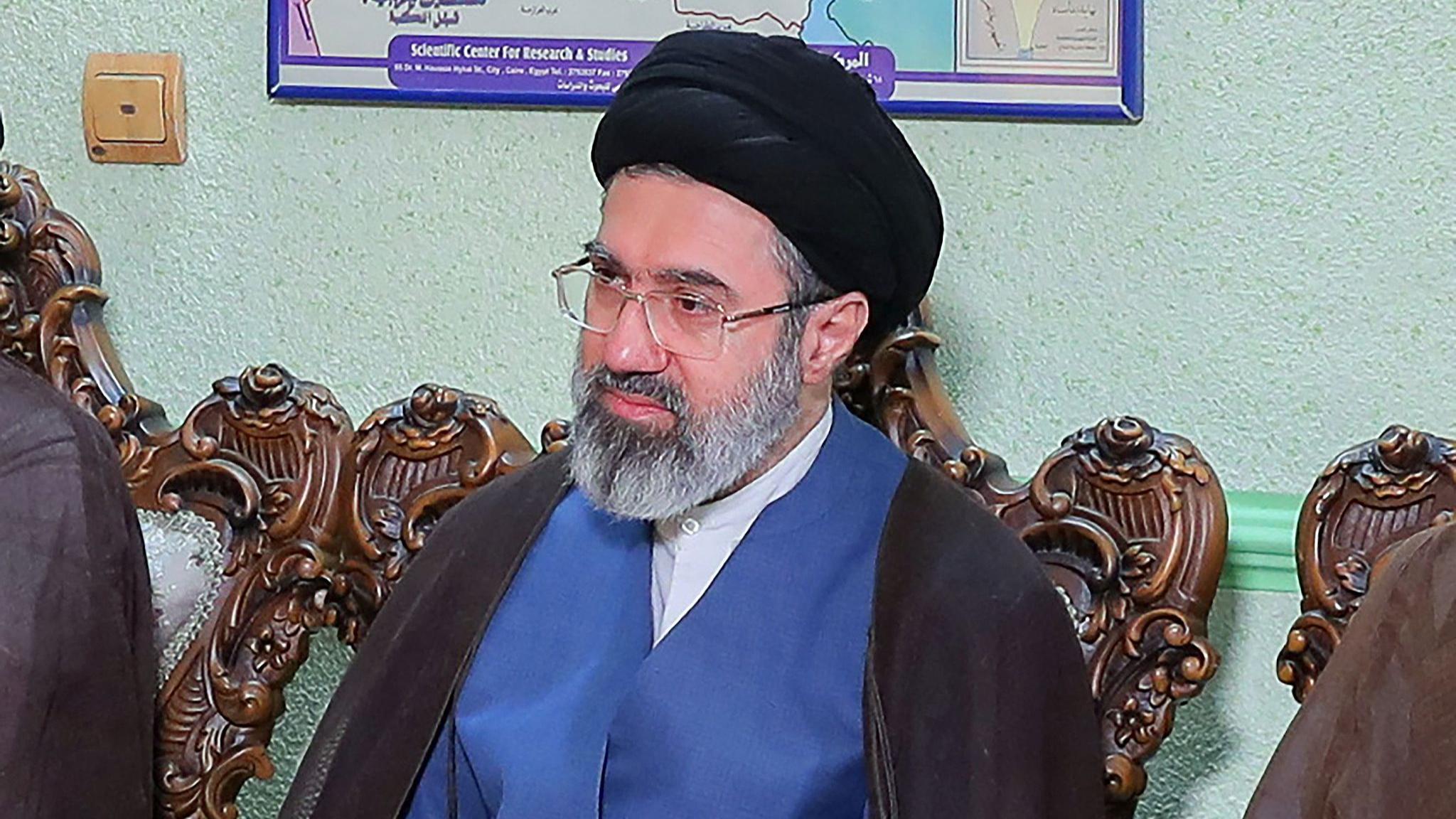
File photo of Mojtaba Khamenei. (Photo: VCG)
Mojtaba Khamenei, the 56-year-old second son of Iran's late supreme leader Ali Khamenei, has been elected as the country's new supreme leader, Iran's Assembly of Experts announced on Sunday.
In a statement, the assembly confirmed Mojtaba Khamenei's election as the country's third supreme leader, citing "the decisive vote of the respected representatives" of the assembly.
"In today's extraordinary session, Ayatollah Seyyed Mojtaba Hosseini Khamenei ... is appointed and introduced as the third leader of the sacred system of the Islamic Republic of Iran," the statement said.
Following the announcement, Iran's Islamic Revolutionary Guard Corps (IRGC) immediately pledged allegiance to the new supreme leader, voicing its readiness to follow his instructions.
Mojtaba Khamenei was born in 1969 in the northeastern city of Mashhad. He moved with his family to the capital, Tehran, after the victory of the Islamic Revolution in 1979. After graduating from high school, he joined the Islamic Revolutionary Guard Corps (IRGC) and served towards the end of the Iran-Iraq War.
In 1999, Mojtaba went to Qom, a holy city regarded as a major center of Shia theology for advanced religious studies, gradually emerging as a key political aide to his father.
Mojtaba has largely maintained a low public profile. He has never held any official government position, nor has he delivered public speeches or given interviews. Only a limited number of photographs and videos of him have been released.
Nevertheless, he is widely rumored to wield significant behind-the-scenes influence as a key gatekeeper and advisor to his father.
As reported by the Associated Press, US diplomatic cables published by WikiLeaks in the late 2000s described him as "the power behind the robes" and widely viewed within the regime as a "capable and forceful leader."
According to Iranian sources, Mojtaba has long assisted his father in handling a range of important state affairs and has "a deep understanding of major national administrative matters." He is said to maintain working contacts with many senior officials across successive governments, as well as close ties with numerous military commanders.
His connections reportedly extend to leaders within the "Axis of Resistance," a network supported by Iran, including the late senior General Qasem Soleimani and the late Secretary-General of Lebanon's Hezbollah, Hassan Nasrallah.
Further reading: For the latest developments following Mojtaba Khamenei's appointment and the escalating regional situation.
(With input from agencies)