


A growing number of European leaders have traveled to China in 2026, signaling a renewed push for pragmatic cooperation amid global economic uncertainty that is reshaping foreign policy priorities.
Recent visits by leaders from Ireland, Finland, Germany and the UK highlight Europe's interest in strengthening ties with Beijing across trade, innovation and green development.
Chinese President Xi Jinping has hosted several of those visiting leaders in Beijing. During talks with German Chancellor Friedrich Merz, Xi said China and Germany should deepen communication and trust amid global turbulence.
"The more turbulent and uncertain the world becomes, the more China and Germany should strengthen strategic communication and deepen mutual trust," Xi said during the meeting.
Economic ties remain a major driver of the relationship. Trade between China and the EU exceeded $750 billion last year, according to Eurostat data, making China one of the bloc's most important trading partners.
China also accounts for roughly one-fifth of EU imports, underscoring how closely the two economies remain connected despite ongoing debates in Europe about reducing strategic dependencies in key industries.
Technology and green development have emerged as central areas for cooperation. China produces about 80 percent of the world's solar panels and accounts for roughly three-quarters of global electric vehicle battery production.
Those supply chains play a significant role in Europe's transition toward electric mobility and renewable energy.
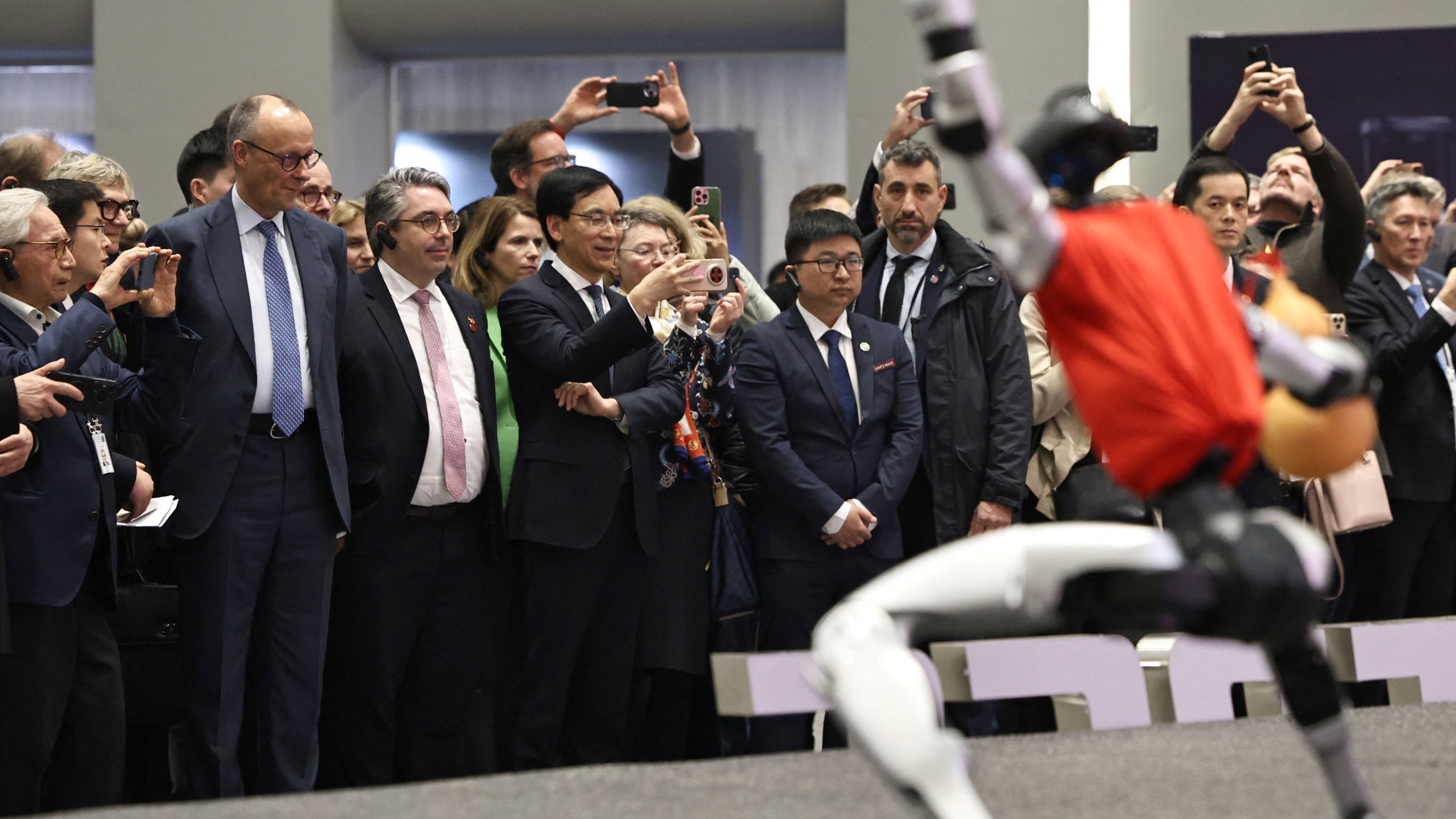
German Chancellor Friedrich Merz was in China in February as Europe's leaders look To strengthen relations with Beijing. (Photo: Andres Martinez Casares/Reuters)
During his visit, German Chancellor Friedrich Merz emphasized the importance of maintaining dialogue and economic engagement.
"We should simply consolidate our relations with China," Merz said. "This applies to political talks, but it also applies to economic cooperation."
Analysts say the wave of high-level visits reflects a broader shift in Europe's approach to China.
"The general context has changed a lot," said Uli Brückner, a professor of European studies based in Berlin. "In the past, they discussed (being a) partner, rival and competitor. Now the priority is being more pragmatic and finding common ground with partners committed to multilateralism."
As global trade and supply chains face growing pressure from geopolitical tensions and economic uncertainty, many European governments say maintaining dialogue with China will remain an important part of navigating the evolving international landscape.
Areas such as clean energy, advanced manufacturing and technological innovation are expected to remain key pillars of cooperation in the years ahead.