


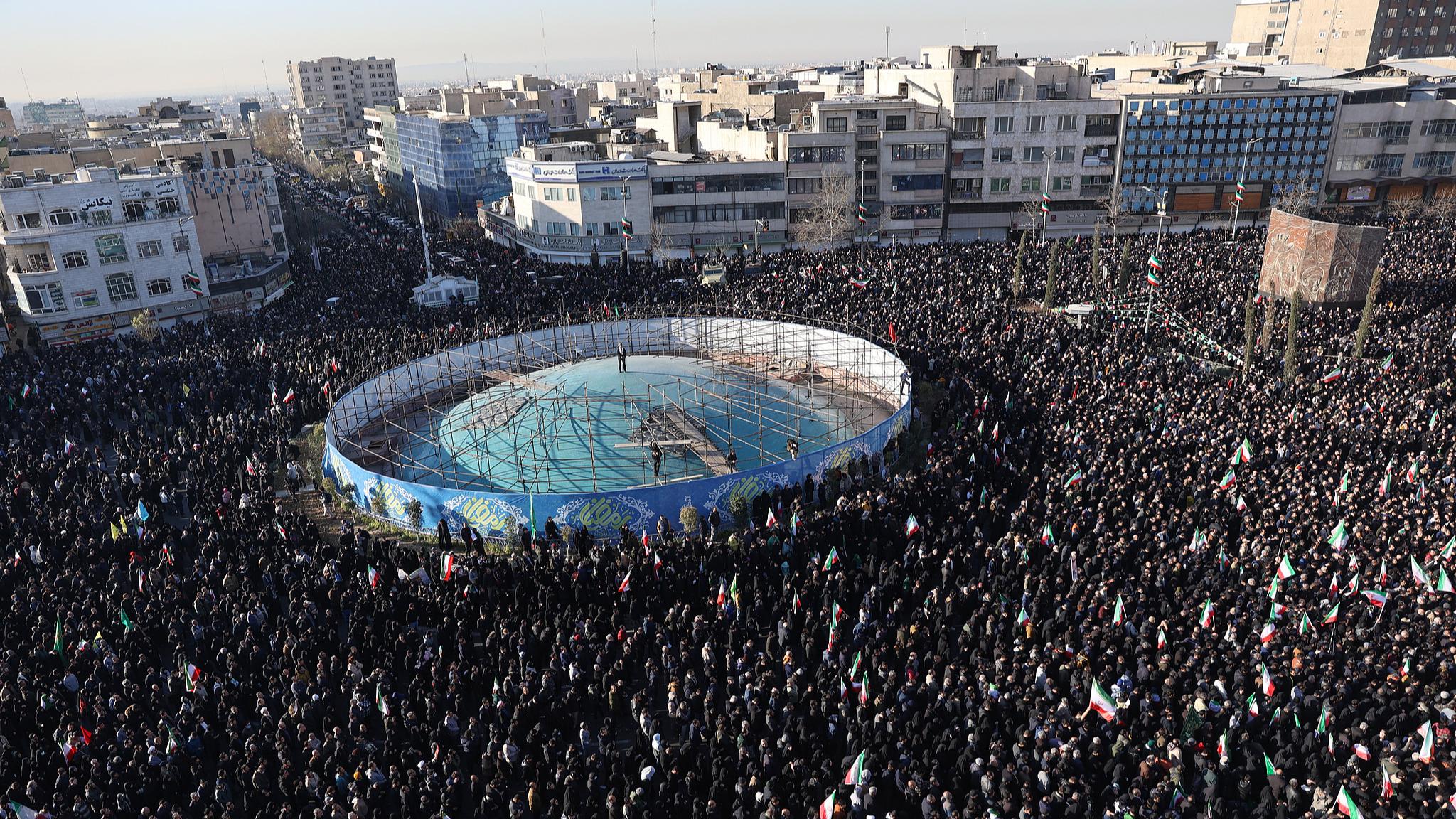
People gather in mourning after the state television officially announced the death of Iranian Supreme Leader Ayatollah Ali Khamenei, in Tehran, Iran, March 1, 2026. (Photo: CFP)
Editor's note: Imran Khalid, a special commentator for CGTN, is a freelance columnist on international affairs. The article reflects the author's opinions and not necessarily the views of CGTN.
The first official statement issued by Iran's new Supreme Leader Mojtaba Khamenei, issued Thursday as the smoke of conflict still hangs over the region, was a manifesto of defiance. It suggests the United States and Israel may have miscalculated the resilience of a regime they sought to dismantle.
The words of the younger Khamenei are not those of a placeholder but of a strategist who has spent decades observing the machinery of power from the inside.
The imagery in the statement was as deliberate as it was haunting. By describing his father, the assassinated Ayatollah Ali Khameni, as found with a "clenched fist" even in death, Khamenei signaled that the era of strategic patience has been replaced by a doctrine of perpetual resistance. The commitment to avenge every Iranian casualty transforms the conflict from a state-to-state war into a personal mission.
For Washington and Tel Aviv, the assumption that precision strikes on Iran's leadership would lead to a popular uprising or a more compliant successor appears to have been driven by the kind of wishful thinking that has historically plagued American adventures in the region. Instead of a fractured leadership, the strikes seem to have forged a more militarized and consolidated front.
The geopolitical fallout of this transition suggests that America is now trapped in a maze of its own making. The escalation has reached a point where the cost of staying is as high as the cost of leaving. Four primary scenarios illustrate how the United States has become trapped in this aggressive misadventure.
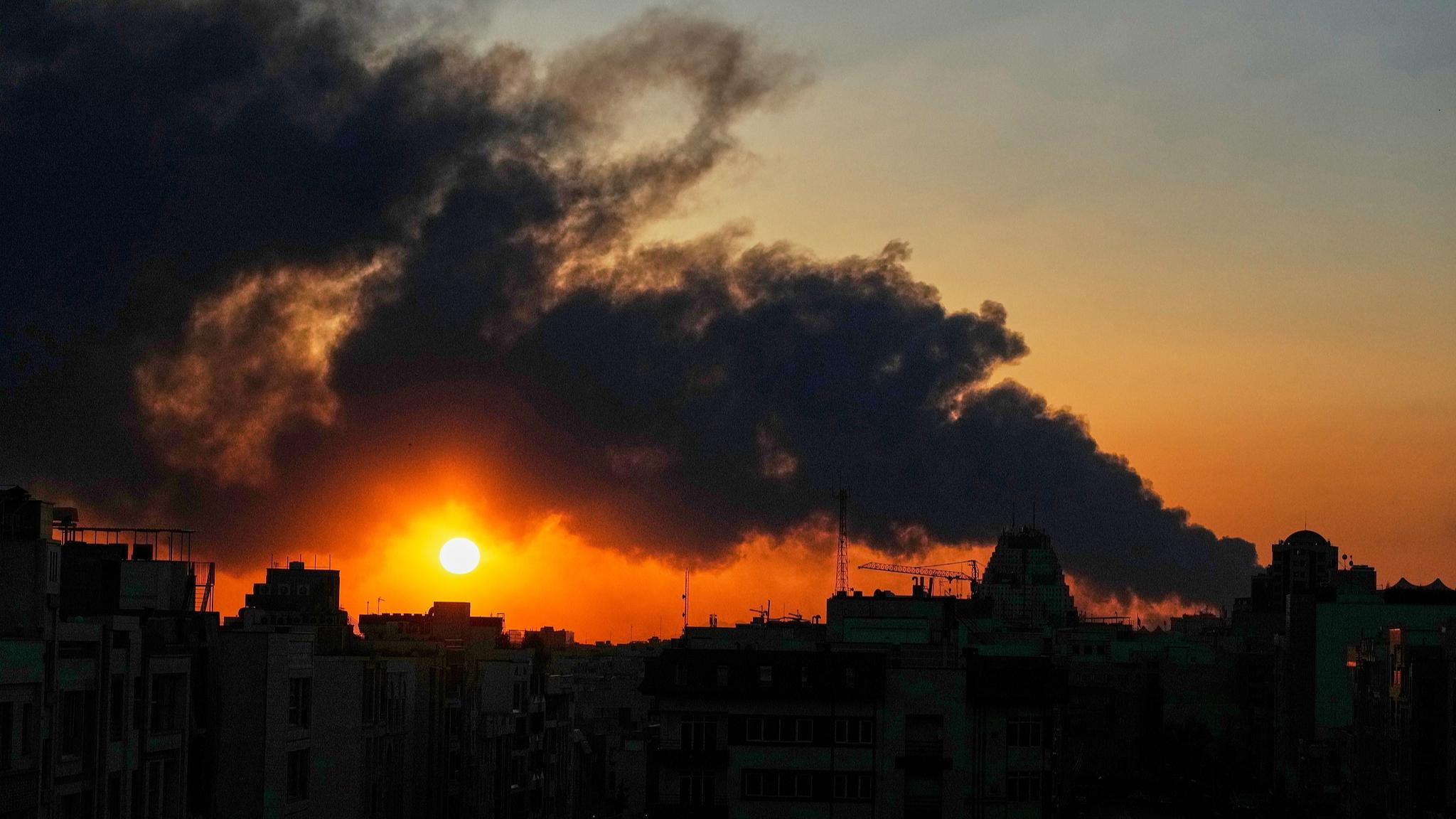
The sun sets behind a plume of smoke rising from a US-Israeli military strike in Tehran, Iran, March 3, 2026. (Photo: CFP)
The first involves the Strait of Hormuz leverage. By calling for the continued closure of the waterway, the new leader has placed a garrote around the global energy market. The United States finds its naval assets stretched thin, attempting to strike inland targets while simultaneously being unable to guarantee the safe passage of tankers.
According to US Energy Secretary Chris Wright, the US military is currently not ready to escort tankers because all assets are focused on offensive strikes. This dual burden has already sent oil prices past $100 a barrel.
The second point concerns the regional base dilemma. The demand for Gulf neighbors to shut down American bases puts regional allies in a difficult position. It forces local governments to choose between their security partnership with the United States and the immediate threat of being caught in a crossfire. This is exactly what Iranian First Vice President Mohammad-Reza Aref highlighted when stating that the strategic goal is a complete US withdrawal.
The third point is the war of attrition. Tehran is betting on long-term struggle. While the United States and Israel possess superior firepower, Iran possesses the advantage of geography and ability to endure hardships that a domestic American electorate does not share. Every day the war continues, the narrative of winning becomes harder to sell to a public watching gas prices rise.
The fourth point is the nuclear litmus test. The 440 kilograms of enriched uranium that Iran is reported to hold, a stockpile sufficient to make several nuclear weapons if further processed, remains the ultimate wildcard.
If the goal was to eliminate the nuclear threat, the current campaign may have achieved the opposite. Rafael Mariano Grossi, director general of the International Atomic Energy Agency, has warned that the stockpile is now dispersed in deep, fortified tunnels.
By proving that conventional sovereignty offers no protection against Western strikes, the conflict has likely convinced the new leadership that a nuclear deterrent is a necessity for survival.
The tragedy of the current American posture is the lack of a clear exit strategy. Recent assessments suggest there was no realistic plan to address the political vacuum following the strikes. This reveals a fundamental flaw in the coalition's approach: the belief that airpower can dictate political outcomes.
As the war enters its third week, the reality is setting in. The United States is not just fighting a military conflict, it is fighting a historical narrative. In this climate, the path to de-escalation is narrow and fraught with political risks.
Yet, the alternative is a deepening quagmire. The latest statement from Tehran suggests that the new leader is prepared for a marathon. The question remains whether the United States can find an exit before the trap snaps shut.
(If you want to contribute and have specific expertise, please contact us at opinions@cgtn.com. Follow @thouse_opinions on X to discover the latest commentaries in the CGTN Opinion Section.)