


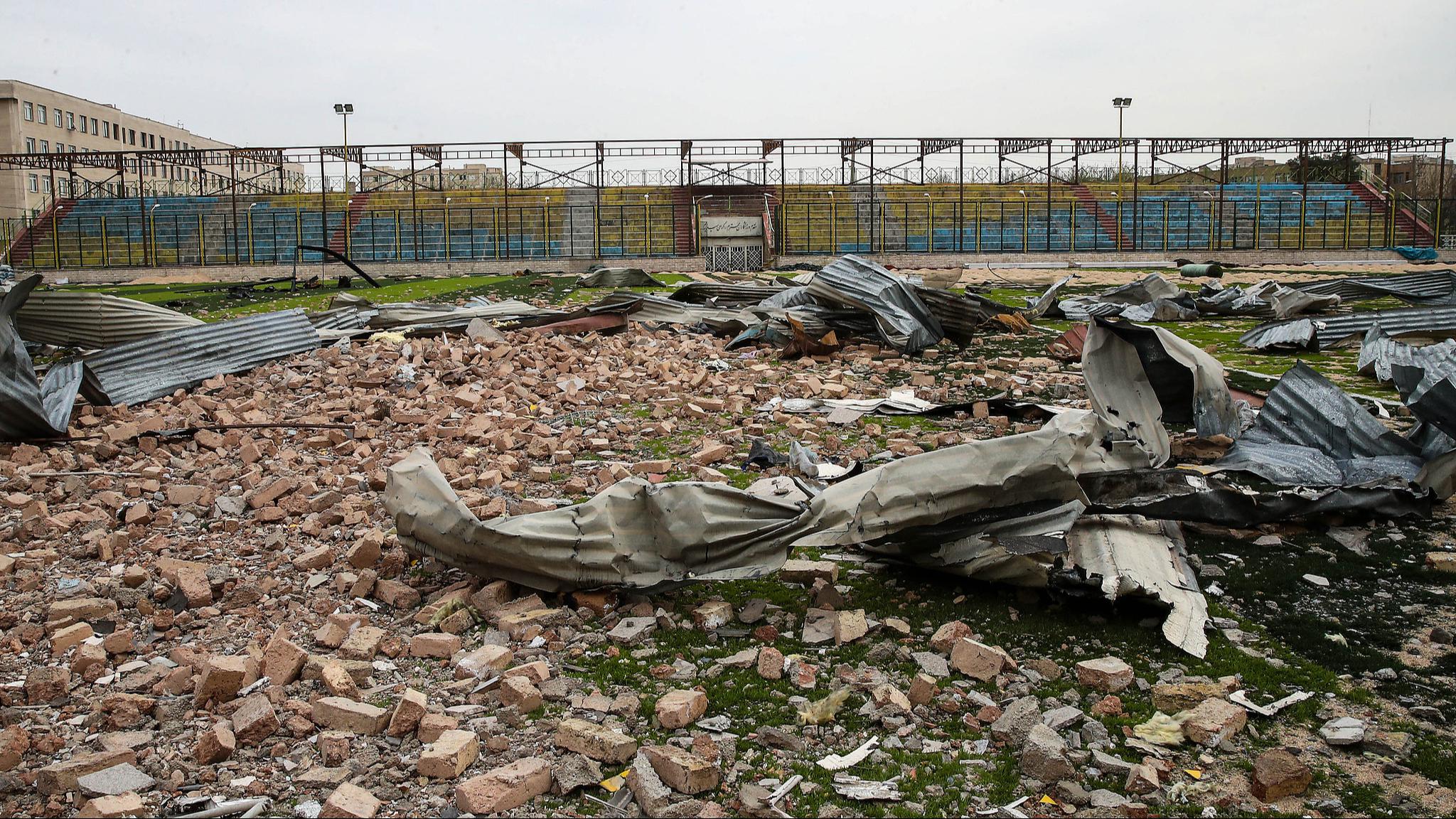
A general view of the destruction at the Shohadan-e Esmaeili Sports Complex, which was targeted by US and Israeli airstrikes, Tehran, March 17, 2026. (Photo: VCG)
Iran's top security official, Ali Larijani, was killed in an Israeli airstrike, Iranian state media confirmed on Tuesday, dealing a blow to Tehran's leadership as the US-Israeli war against Iran entered its third week.
Israel's Defense Minister Israel Katz announced the "elimination" of Larijani and Gholamreza Soleimani, commander of the Basij paramilitary force, in overnight strikes near Tehran. The assassinations represent the most senior losses for Iran since Supreme Leader Ayatollah Ali Khamenei was killed at the outset of the conflict in late February.
Larijani, a veteran pragmatic figure with experience in nuclear talks and the clerical establishment's inner circles, had been seen by some Western analysts as a potential backchannel for any future de-escalation. Iranian officials described his death as martyrdom in defense of the Islamic Revolution.
The assassination of Iran's security chief came amid widening cracks between the US and its Western allies. US President Donald Trump on Tuesday sharply criticized NATO members for refusing to join efforts to secure the Strait of Hormuz, where Iran has disrupted tanker traffic and blocked roughly 20% of global oil flows.
Speaking at the White House, Trump called the alliance's stance a "very foolish mistake" and said most NATO members had shown little enthusiasm for contributing warships to escort vessels through the vital waterway.
The remarks highlighted growing transatlantic tensions, as several European capitals have signaled reluctance to commit naval assets amid fears of entanglement in a prolonged conflict with uncertain outcomes.
Meanwhile, on the domestic front, the Trump administration is facing growing political pressure over the president's decision to launch the offensive. On Tuesday, National Counterterrorism Center Director Joe Kent resigned in protest, arguing Iran posed no imminent threat justifying the war.
Kent's departure followed criticism from congressional Democrats and some Republican skeptics, who have questioned the purpose of the campaign and highlighted US casualties. At least 13 US service members were killed, and over 200 were injured.
The conflict showed no signs of abating. Iranian forces launched fresh missile barrages across central Israel and infrastructure sites in the Gulf, while US and Israeli strikes continued on targets in Tehran and other provinces, including missile sites near the Strait of Hormuz.
Diplomatic efforts by regional countries appeared stalled, with both Iran's new Supreme Leader Mojtaba Khamenei and Trump having reportedly rejected talks for a ceasefire.