


Palestinians in Gaza welcome Eid al-Fitr with hope for normalcy, peace
GAZA, March 18 (Xinhua) -- As Eid al-Fitr approaches, Palestinians in the Gaza Strip are striving to revive a sense of normalcy and hold on to hopes for peace, despite widespread destruction and dire humanitarian conditions left by over two years of conflict.
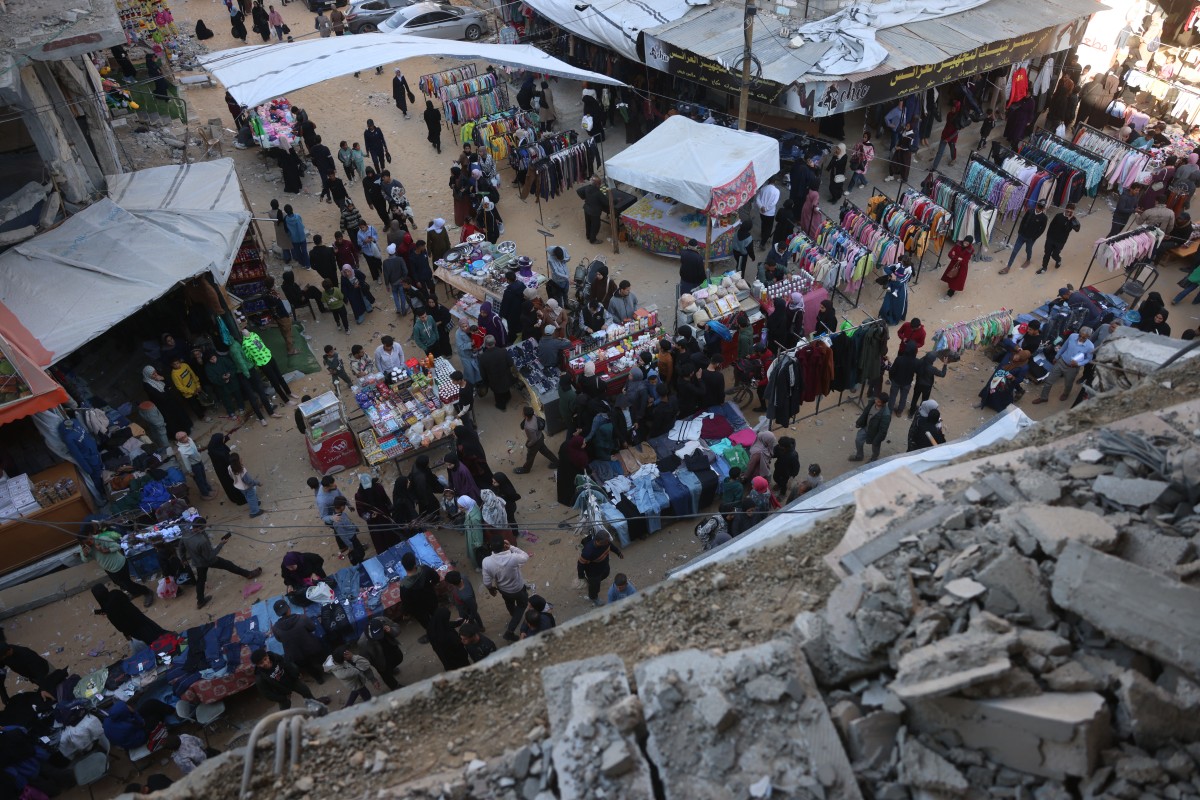
Displaced Palestinians shop at a street market as they prepare for Eid al-Fitr, the holiday marking the end of the Muslim holy fasting month of Ramadan, in Khan Yunis in the southern Gaza Strip on March 17, 2026. (Photo: AFP)
For many, this Eid is not only a holiday but also a moment to wish for security, stability, and an end to the hostilities that have disrupted their lives.
In a displacement camp in Gaza City, Om Mohammed Ashour, 38, is busy hanging colorful ribbons and paper decorations inside her tent, which has sheltered her family for months after their home was destroyed during the war.
"This year, we decided to create a festive atmosphere despite all the difficulties," she told Xinhua. "We bought simple decorations so the children can feel that Eid has arrived. Life is very hard, but we want to bring a little joy to our children after everything they have been through."
Ashour's four children helped her hang the decorations, moving small colored lights and paper chains across the tent's ceiling. "Seeing them smile makes the effort worth it," she said.
As a result of more than two years of Israel's large-scale military operations in Gaza, hundreds of thousands of Palestinians remain in temporary shelters or tents, having lost homes and possessions. Many neighborhoods are still in ruins, and access to electricity, water, and medical services remains limited.
Despite the challenges, families are preserving some Eid traditions, from decorating shelters to buying small toys or sweets for children.
In Gaza City's Zawiya market, small stalls display clothing, decorations and toys.
Hussam Arab, a 43-year-old man from Gaza City, was browsing the stalls before buying a few items for his children.
"Seeing the markets active gives residents a sense that life has not completely stopped," the father of four told Xinhua. "We hope this Eid will mark the beginning of a new era of peace and security in Gaza."
For some, however, the Eid mood is tempered by grief. Abu Mohammed al-Mabhuh, 40, lives alone in Gaza City after losing his family in an airstrike during the war.
"I am not preparing for Eid this year," he said. "Eid is usually a time for family, but I am alone. My hope this Eid is that the war ends and people can live in safety."
Despite a fragile ceasefire that took effect in October 2025, residents continue to face humanitarian challenges. Some border crossings remain closed. Food and medicine are in short supply, and prices for basic commodities continue to rise.
Palestinian medical officials say the war that began on Oct. 7, 2023, has killed more than 72,000 people, wounded tens of thousands and caused widespread destruction of homes, schools, hospitals, and businesses.
In addition to the material challenges, the psychological impact of the conflict continues to weigh heavily on residents. Mental health specialists warn that children in particular are struggling to cope with the trauma of war and displacement. Yet, Gazans are using Eid as a moment to revive hope and resilience.
"We do not ask for much, only for our children to live in peace and safety," Raed Nassar, a resident of Deir al-Balah in central Gaza, told Xinhua.
"We hope this Eid marks the start of a new period in which stability returns and people can rebuild their lives. This is what gives us the strength to continue," he said.