


View of mud volcanoes in Absheron District, Azerbaijan
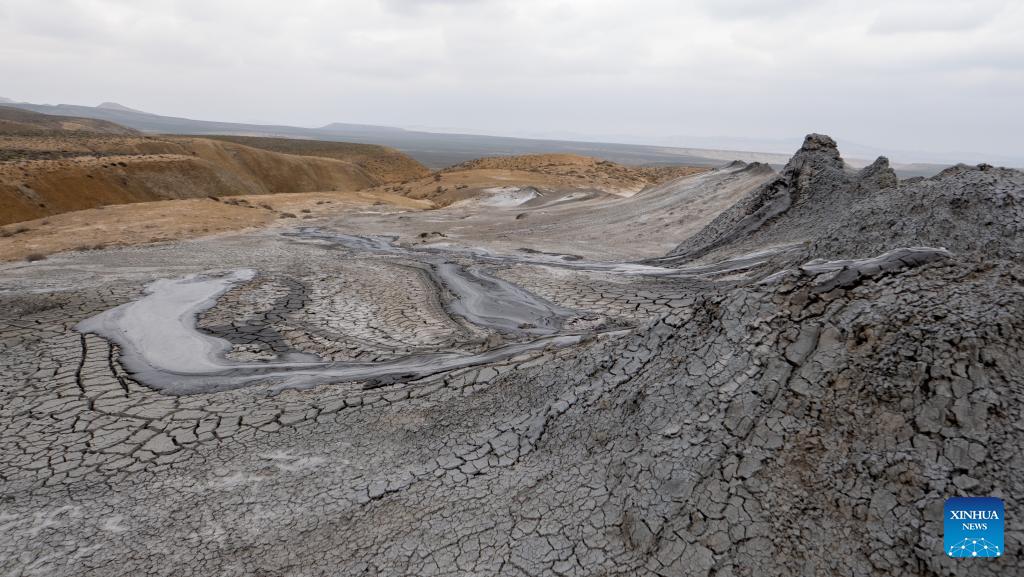
This photo taken on March 17, 2026 shows a view of mud Volcanoes in Absheron District in Azerbaijan.
Azerbaijan and its Caspian coastline are home to about 400 mud volcanoes, accounting for about half of the world's total.
Mud volcanoes are geothermal phenomena created by geo-excreted liquids and gases. Most of the gas released from mud volcanoes is methane while the ejected material is often a slurry of fine solids suspended in liquids that may include water and hydrocarbon fluids. (Xinhua/Chen Junfeng)
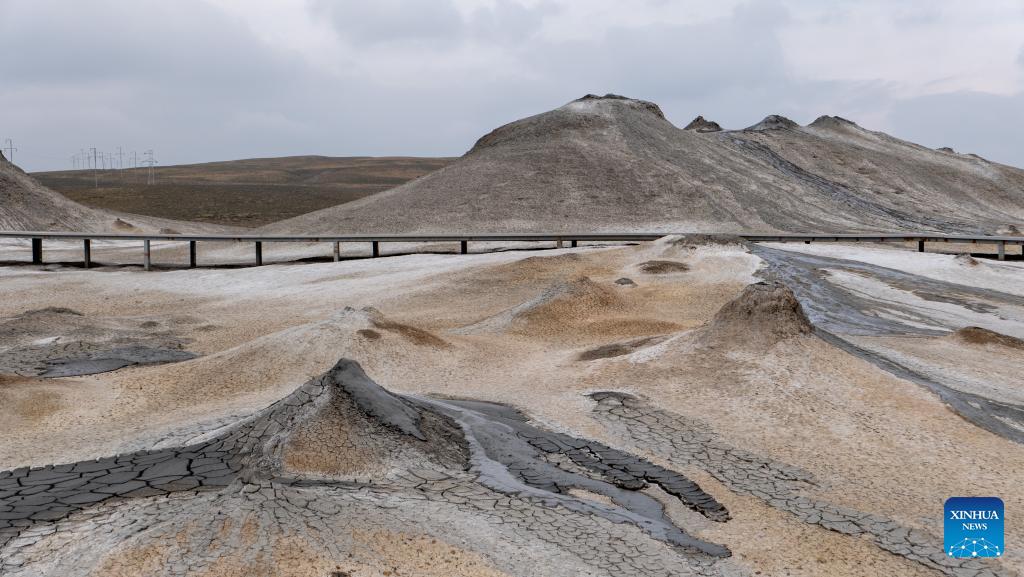
This photo taken on March 17, 2026 shows a view of mud Volcanoes in Absheron District in Azerbaijan.
Azerbaijan and its Caspian coastline are home to about 400 mud volcanoes, accounting for about half of the world's total.
Mud volcanoes are geothermal phenomena created by geo-excreted liquids and gases. Most of the gas released from mud volcanoes is methane while the ejected material is often a slurry of fine solids suspended in liquids that may include water and hydrocarbon fluids. (Xinhua/Chen Junfeng)
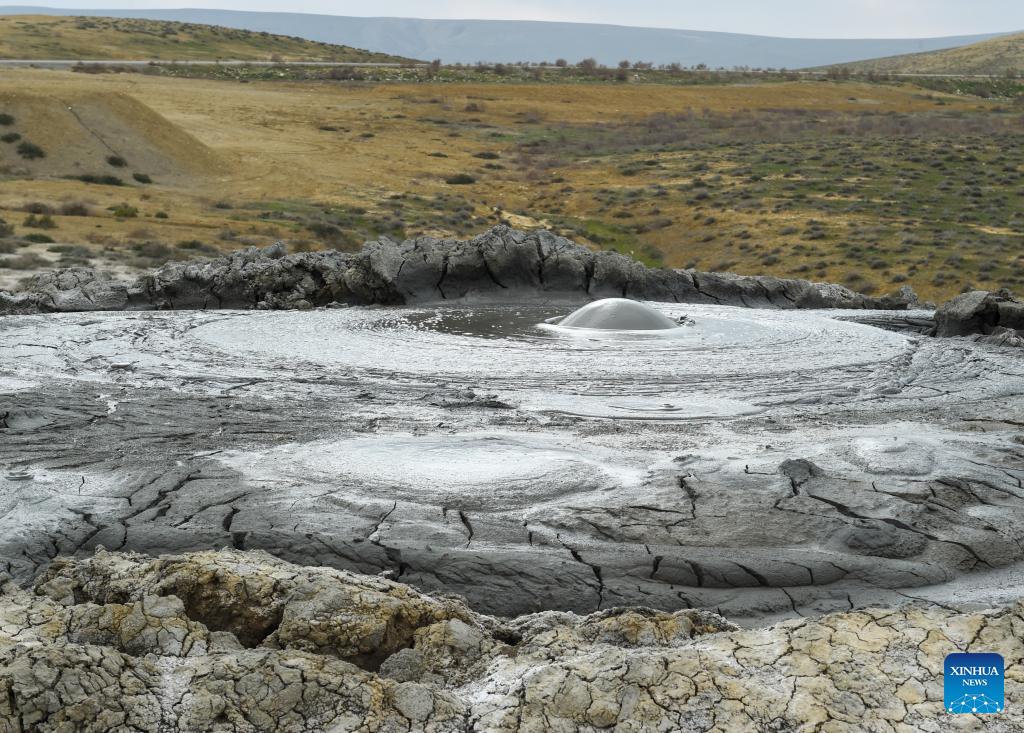
This photo taken on March 17, 2026 shows a view of mud Volcanoes in Absheron District in Azerbaijan.
Azerbaijan and its Caspian coastline are home to about 400 mud volcanoes, accounting for about half of the world's total.
Mud volcanoes are geothermal phenomena created by geo-excreted liquids and gases. Most of the gas released from mud volcanoes is methane while the ejected material is often a slurry of fine solids suspended in liquids that may include water and hydrocarbon fluids. (Xinhua/Chen Junfeng)
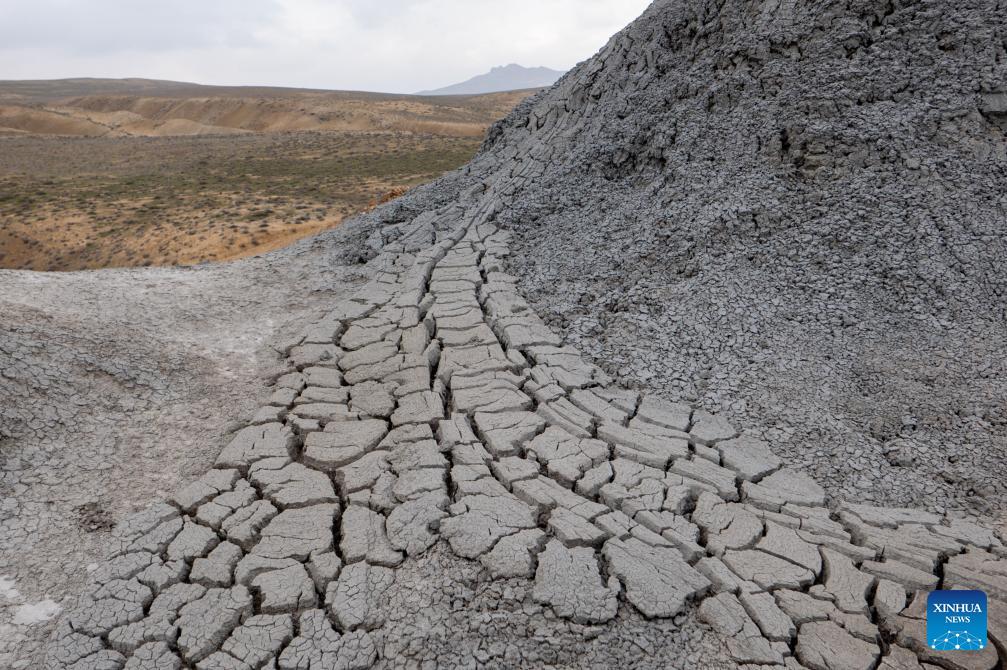
This photo taken on March 17, 2026 shows a view of mud Volcanoes in Absheron District in Azerbaijan.
Azerbaijan and its Caspian coastline are home to about 400 mud volcanoes, accounting for about half of the world's total.
Mud volcanoes are geothermal phenomena created by geo-excreted liquids and gases. Most of the gas released from mud volcanoes is methane while the ejected material is often a slurry of fine solids suspended in liquids that may include water and hydrocarbon fluids. (Xinhua/Chen Junfeng)
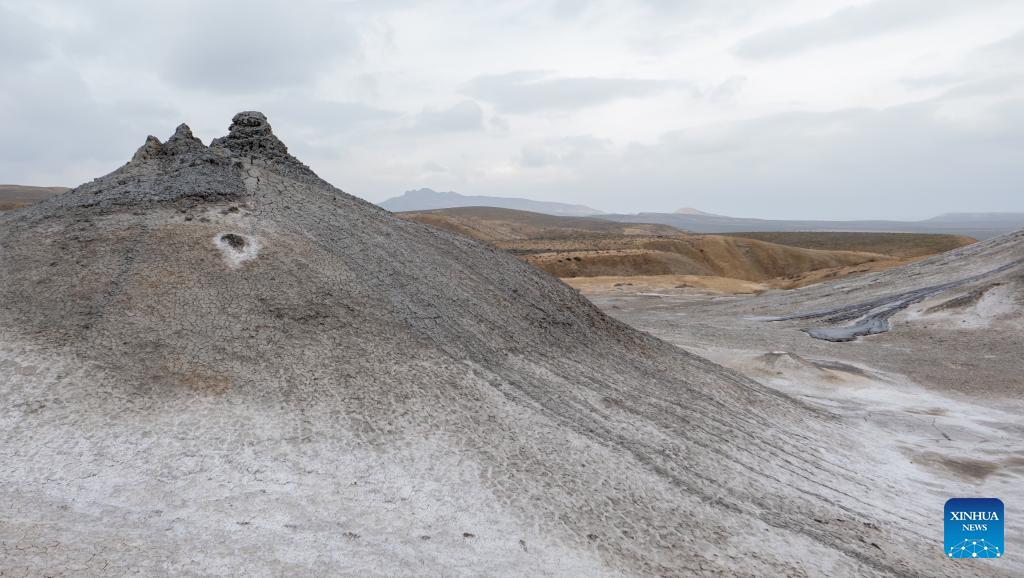
This photo taken on March 17, 2026 shows a view of mud Volcanoes in Absheron District in Azerbaijan.
Azerbaijan and its Caspian coastline are home to about 400 mud volcanoes, accounting for about half of the world's total.
Mud volcanoes are geothermal phenomena created by geo-excreted liquids and gases. Most of the gas released from mud volcanoes is methane while the ejected material is often a slurry of fine solids suspended in liquids that may include water and hydrocarbon fluids. (Xinhua/Chen Junfeng)
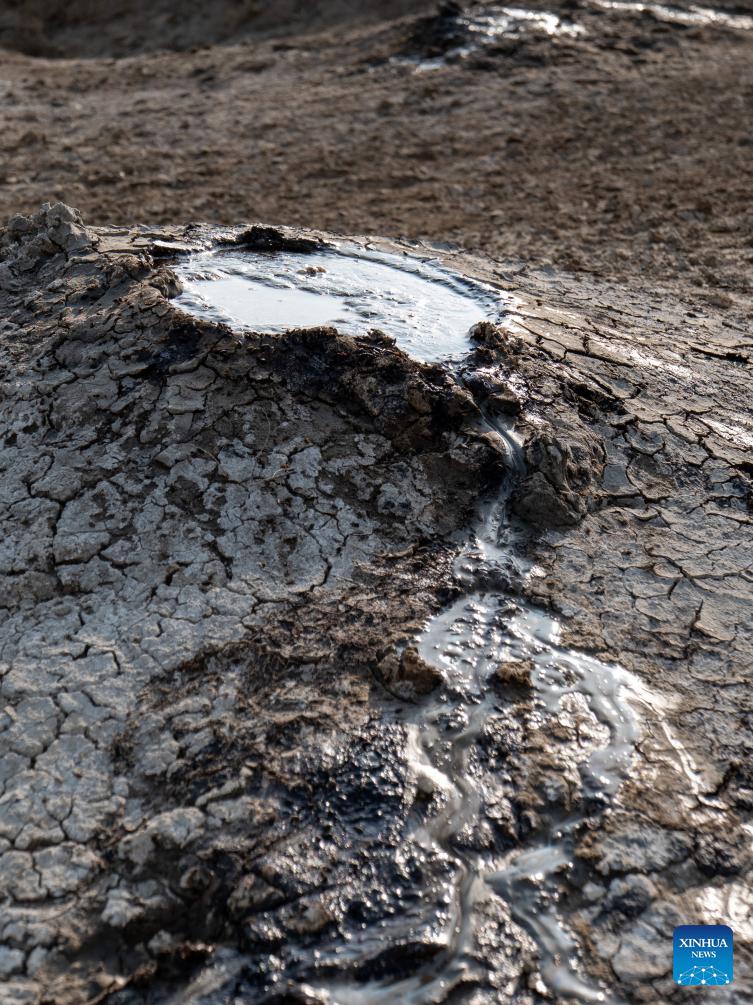
This photo taken on March 17, 2026 shows a view of mud Volcanoes in Absheron District in Azerbaijan.
Azerbaijan and its Caspian coastline are home to about 400 mud volcanoes, accounting for about half of the world's total.
Mud volcanoes are geothermal phenomena created by geo-excreted liquids and gases. Most of the gas released from mud volcanoes is methane while the ejected material is often a slurry of fine solids suspended in liquids that may include water and hydrocarbon fluids. (Xinhua/Chen Junfeng)