


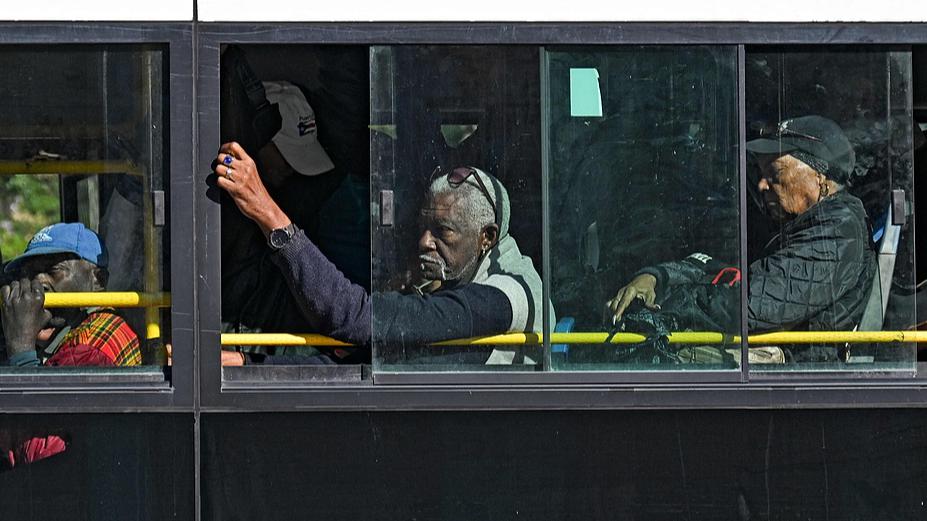
Passengers look out the window of a bus amid rolling blackouts and fuel shortages in Havana, Cuba, February 25, 2026. (Photo: VCG)
Cuba has introduced new labor and transport measures to address the energy crisis stemming from US restrictions, prioritizing worker relocation and essential services, authorities said on Wednesday.
Cuban Minister of Labor and Social Security Jesus Otamendiz said the current labor policy focuses on protecting workers and their families, prioritizing job relocation over job interruptions. Alternatives such as remote work, telecommuting, job reassignment, or adjustments to the workday must be implemented, he said.
Regarding job relocation, Otamendiz noted that there are many opportunities to employ the available workforce in strategic sectors such as food production, community services, care for vulnerable people, and education.
Cuban law ensures 100% of basic salary during the first month of any work interruption, followed by 60% from the second month onward, he said.
Minister of Transport Eduardo Rodriguez Davila said fuel shortages have forced cuts to domestic bus services and changes to train schedules.
Investments in ambulances and electric vehicles are continuing despite the crisis, and the unloading of all ships that have arrived, as well as donations to Cuba, has been secured, he added.
The United Nations has warned that US restrictions are worsening Cuba's fuel shortages, threatening essential services on the island and severely affecting the human rights of the Cuban people.