


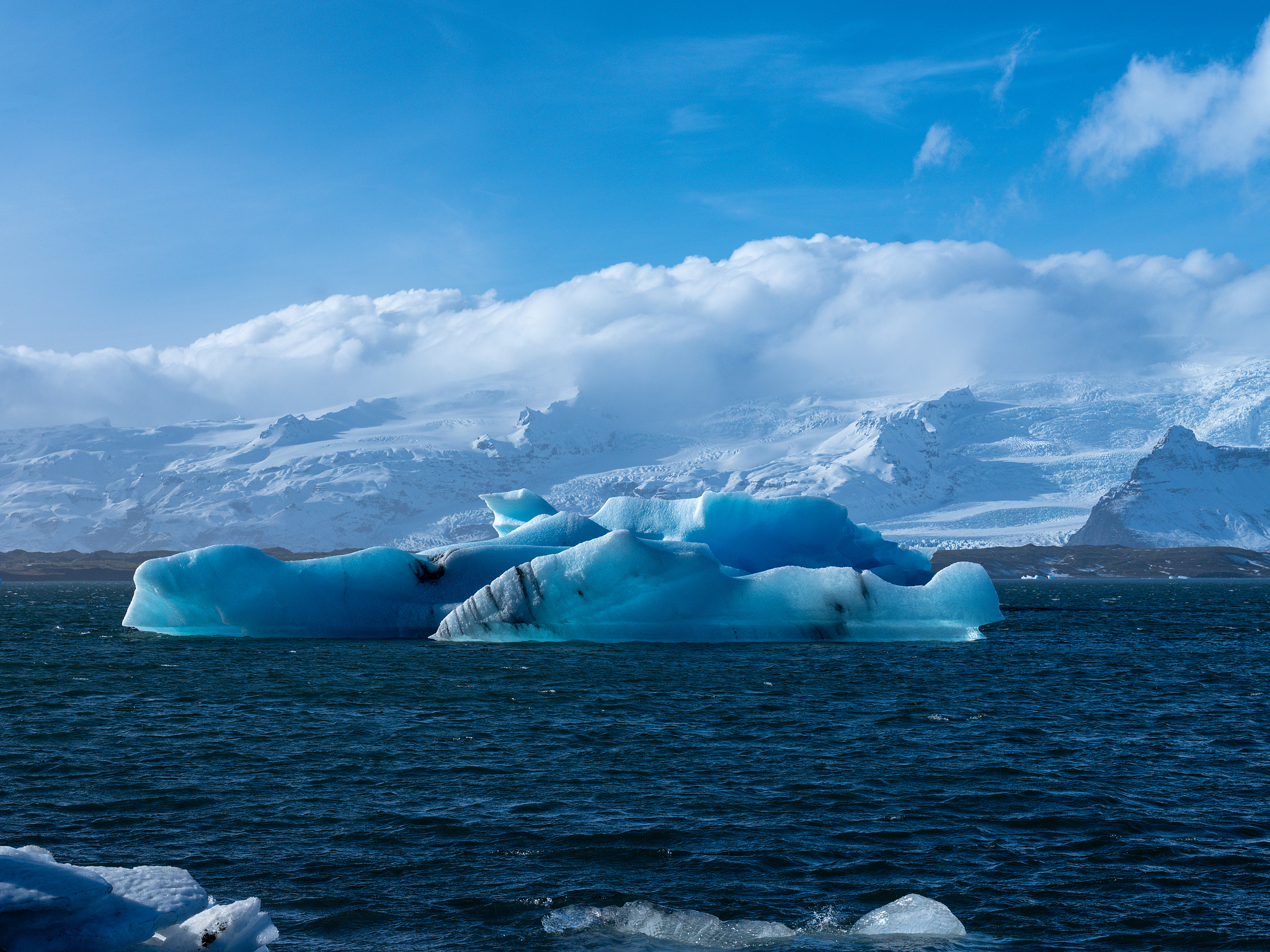
A view of ice from the Breiðamerkurjökull glacier, a section of the Vatnajökull ice sheet, scattered on the black volcanic sand beach in southeastern Iceland. March 10, 2026. (Photo: VCG)
Earth's energy imbalance reached a record high last year since 1960, said the World Meteorological Organization (WMO) on Monday in its state of climate report for 2025. The report also confirmed that 2015-2025 were the hottest 11 years on record.
March 23 is World Meteorological Day, with the theme "Observing Today, Protecting Tomorrow." On the same day, the WMO released the State of the Global Climate report 2025, analyzing a range of key climate indicators, including greenhouse gas concentrations, surface temperature, ocean heat and acidification, sea level rise, Antarctic sea ice extent, and glacier melt.
The report confirmed that 2025 was the second- or third-hottest year on record, about 1.43 degrees Celsius above the 1850-1900 average. Extreme events around the world, including intense heat, heavy rainfall and tropical cyclones, caused disruption and devastation, highlighting the vulnerability of interconnected economies and societies.
For the first time, the report included the Earth's energy imbalance as one of the key climate indicators. This metric tracks the rate at which energy enters and leaves the Earth system, according to WMO.
Under a stable climate, incoming solar energy should be about the same as the amount of outgoing energy leaving Earth. Less outgoing energy due to greenhouse gases would suggest that a vast amount of excess energy is trapped within Earth's system.
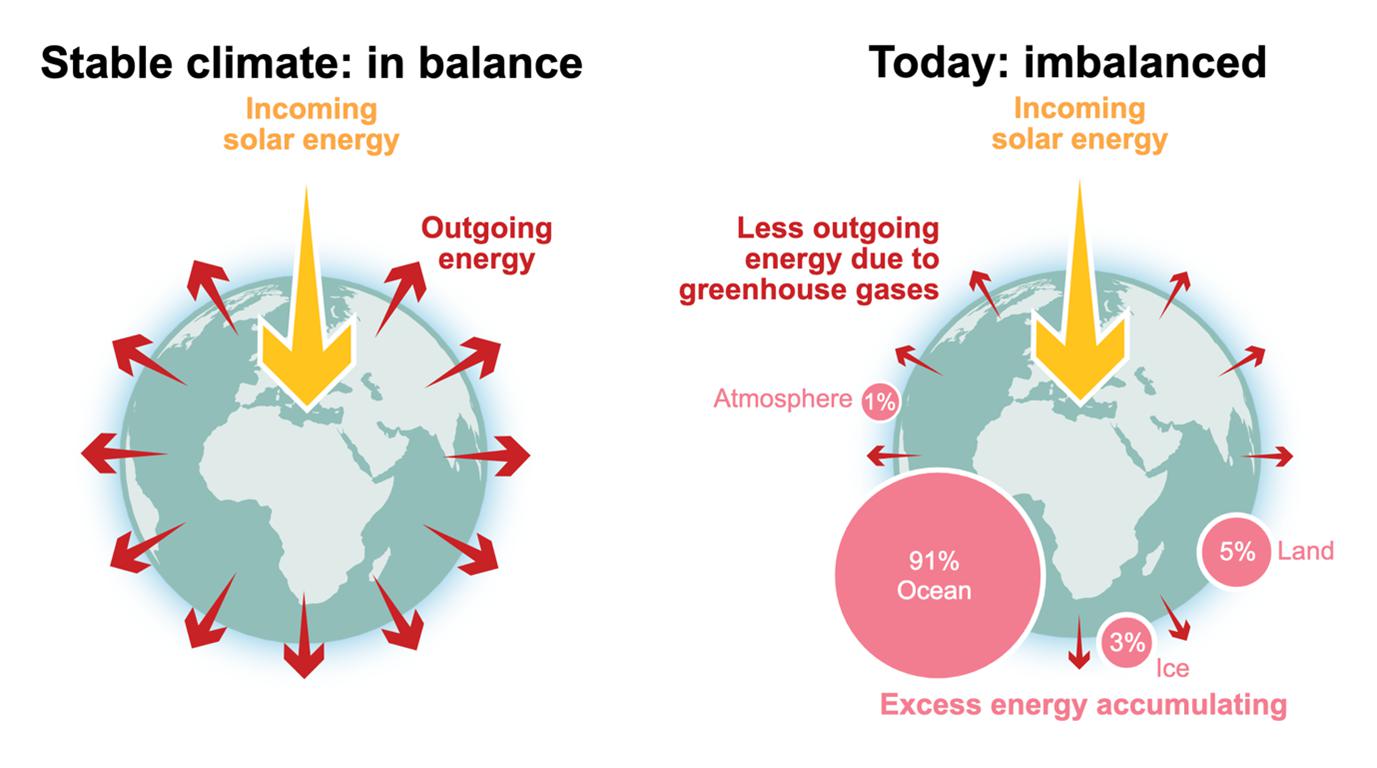
Schematic representation of Earth's energy balance and imbalance. (Photo: World Meteorological Organization)
According to the report, the warming of the atmosphere accounts for just 1% of the excess energy. The vast majority of excess heat, more than 91%, is stored in the ocean. This caused the ocean heat content to reach a record high last year, with the rate of ocean warming more than doubling from the period 1960-2005 to 2005-2025.
Another 3% of the excess energy fueled global glacier melt. The mass of the ice sheets in Antarctica and Greenland has both decreased drastically in recent years, with "exceptional glacier mass loss occurring in Iceland and along the Pacific coast of North America in 2025," according to the report.
The heating ocean and melting ice are driving the rise in global mean sea level, which could last for centuries, according to projections by the Intergovernmental Panel on Climate Change. Ocean warming also causes a change in deep ocean pH "irreversible on centennial to millennial time scales," the report wrote.
"And in this age of war, climate stress is also exposing another truth: our addiction to fossil fuels is destabilizing both the climate and global security," said UN Secretary-General António Guterres. "Today's report should come with a warning label: climate chaos is accelerating and delay is deadly."
(With inputs from Xinhua)