


BEIRUT, March 24 (Xinhua) -- Lebanon declared Iran's ambassador persona non grata Tuesday and ordered his departure by Sunday, citing violations of diplomatic norms in a significant escalation of tensions between Beirut and Tehran that drew swift condemnation from Hezbollah, which called the decision reckless and demanded it be reversed.
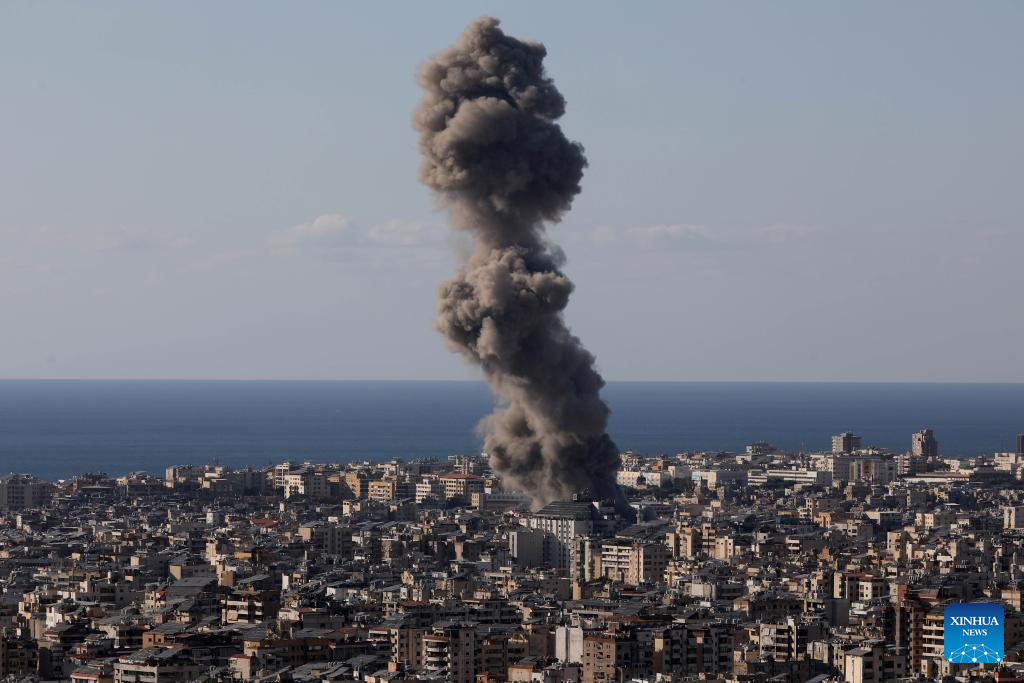
Smoke billows following Israeli airstrikes in the southern suburb of Beirut, Lebanon, Oct. 19, 2024. The death toll from Israeli airstrikes on Lebanon since the beginning of the Israel-Hezbollah conflict has reached 2,448, with injuries up to 11,471, according to a report on Saturday. (File photo: Xinhua)
The ministry said the Iranian diplomat, Mohammad Reza Sheibani, had made statements on Lebanon's internal politics, assessed government decisions and met with unofficial Lebanese parties without prior coordination. It summoned Iran's charge d'affaires, Toufic Samadi Khoshkhoo, to convey the decision and asked that the ambassador leave by Sunday.
Lebanon also recalled its ambassador to Iran for consultations over alleged violations of diplomatic norms. The ministry said the measures do not amount to a break in relations and that Lebanon seeks ties with Iran based on mutual respect and noninterference.
The move marks a significant escalation in Beirut's stance toward Tehran amid rising tensions between the two countries. Hezbollah condemned the decision and called on Lebanese authorities to reverse it.
In a statement, the group said the move lacked legal basis and described it as reckless, arguing it does not serve Lebanon's interests, sovereignty or unity. It dismissed accusations that the ambassador interfered in internal affairs as unfounded, calling the decision politically motivated.
Hezbollah warned the timing was dangerous and urged officials to adopt a unified position to confront Israeli attacks and press Israel to withdraw from Lebanese territory.
The group also accused the foreign minister of taking positions that serve Israel while ignoring U.S. interference, warning the move could deepen internal divisions.
Separately, Lebanese President Joseph Aoun called for increased international pressure on Israel to halt its attacks and support ceasefire efforts, local media reported.
"Lebanon cannot fight others' wars on its territory," Aoun said, stressing that state authority over weapons and decisions of war and peace is nonnegotiable and in line with the constitution and the Taif Agreement.
He said a negotiation initiative he launched days ago remains in place and has regional and international backing but requires an Israeli response to ceasefire calls.
Lebanon's Health Ministry said the death toll from Israeli attacks since March 2 has reached 1,072, with 2,966 wounded, including 33 killed and 90 injured in the past 24 hours.
Hezbollah entered the confrontation March 2 by firing rockets from southern Lebanon toward Israel for the first time since a Nov. 27, 2024, ceasefire, prompting intensified Israeli strikes across the country.