


What began as a regional crisis in the Middle East is fast becoming a broader economic strain, hitting ASEAN and Europe through higher energy bills and supply disruptions.
A recent report by Maybank said the current strain is spilling over into Asia through energy and supply channels, and could deliver a "stagflationary shock" to ASEAN—dampening growth while pushing up inflation.
ASEAN economies remain highly dependent on Middle Eastern energy. About 95% of the Philippines' and 88% of Vietnam's crude oil imports come from the Gulf. Singapore, Indonesia and Thailand rely heavily on Middle Eastern diesel supplies, while roughly 49% of Vietnam's natural gas is sourced from Gulf states.
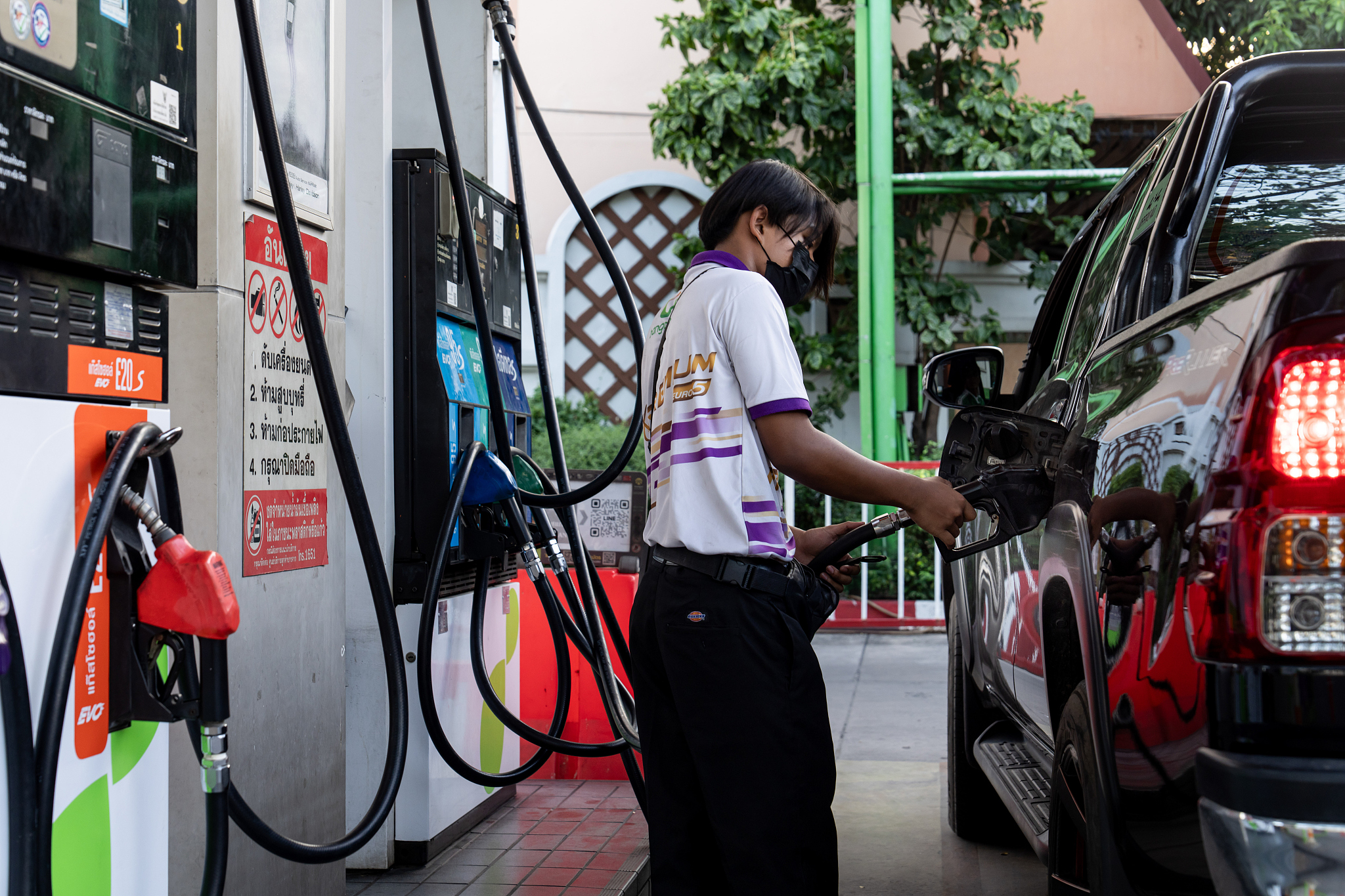
A gas station attendant refuels a truck at a gas station in Bangkok, Thailand, March 15, 2026. (Photo: VCG)
The report also flagged risks to agricultural inputs. Around 67% of Thailand's nitrogen fertilizer and 74% of its urea imports come from the Gulf. Any disruption to energy or fertilizer supplies could lift farming costs and feed through to higher food prices.
Maybank cut its 2026 growth forecast for six major ASEAN economies—Indonesia, Malaysia, the Philippines, Singapore, Vietnam and Thailand—to 4.5% from 4.8%. The Philippines and Vietnam saw the largest downgrades, each by 0.4 percentage point. Inflation across the six economies is now projected at 2.7%, up from a previous estimate of 2.2%.
In Europe, a surge in energy prices triggered by the Middle East tensions is adding a fresh headwind. After years of sluggish growth, the region had been counting on a recovery this year, but rising oil and gas costs, limited fiscal space and industrial strain are clouding the outlook.
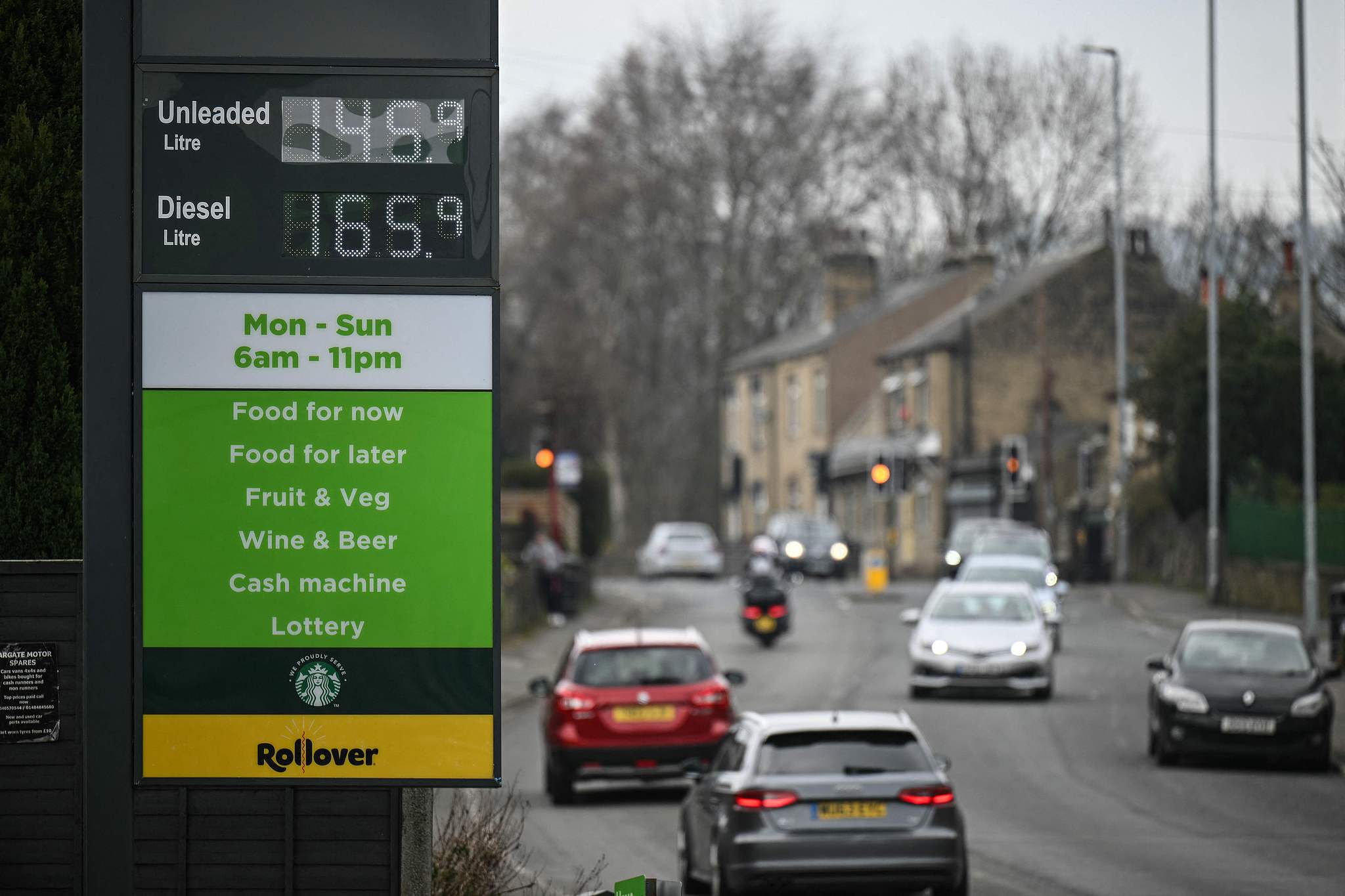
A signboard showing prices for petrol and diesel at a petrol service station in Huddersfield, northern England, March 19, 2026. (Photo: VCG)
In Britain, economic activity has slowed as higher costs curb demand. Data released by S&P Global on Tuesday showed the country's flash composite Purchasing Managers' Index (PMI) fell to 51.0 in March from 53.7 in February, the lowest level in six months. The services sector cooled sharply, with the PMI dropping to 51.2 from 53.9, while manufacturing slipped to 51.4, a three-month low. Factory output growth slowed to near stagnation.
S&P Global surveys showed new orders in the UK private sector fell for the first time in four months in March. Businesses cited rising uncertainty, higher costs and tighter financing conditions linked to the prolonged Middle East conflict, which have dampened both corporate and consumer spending.
Pressure on European industry is also mounting. Energy-intensive sectors such as chemicals face rising costs, prompting some firms to consider cutting capacity or shifting production to regions with cheaper energy.
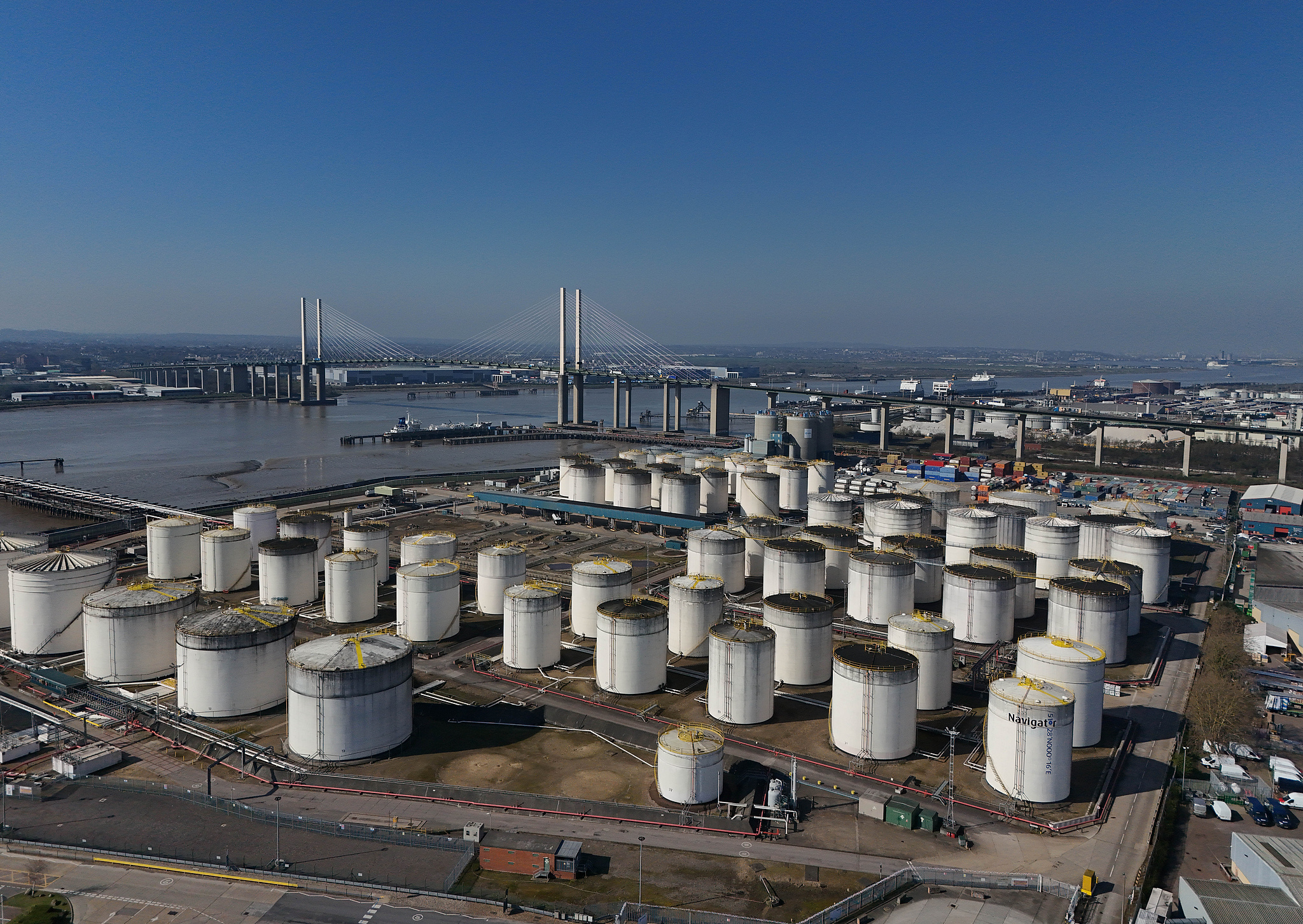
Oil, gas and fuel storage units are at the Navigator Terminal in Grays, the UK, March 19, 2026. (Photo: VCG)
Some companies have already trimmed their outlooks. Swiss chocolatier Lindt lowered its guidance for the year, partly citing uncertainty tied to the Middle East situation. Germany's Volkswagen said rising geopolitical risks could weigh on sales of premium brands such as Porsche and Audi.
The spillover is only beginning to bite.