


Tehran has come under increasingly frequent and intense airstrikes in recent days, as Iran steps up retaliatory attacks on Israeli targets and US military bases, deepening a conflict that remains fierce and deadlocked. Despite mediation efforts led by Pakistan, both sides continue to press demands deemed unacceptable by the other, leaving little chance of a near-term ceasefire.
On Sunday, the Iranian capital was struck by two large-scale waves of airstrikes, damaging parts of its power transmission system and causing temporary blackouts in multiple areas. The scale and frequency of attacks on Tehran have risen markedly in recent days.
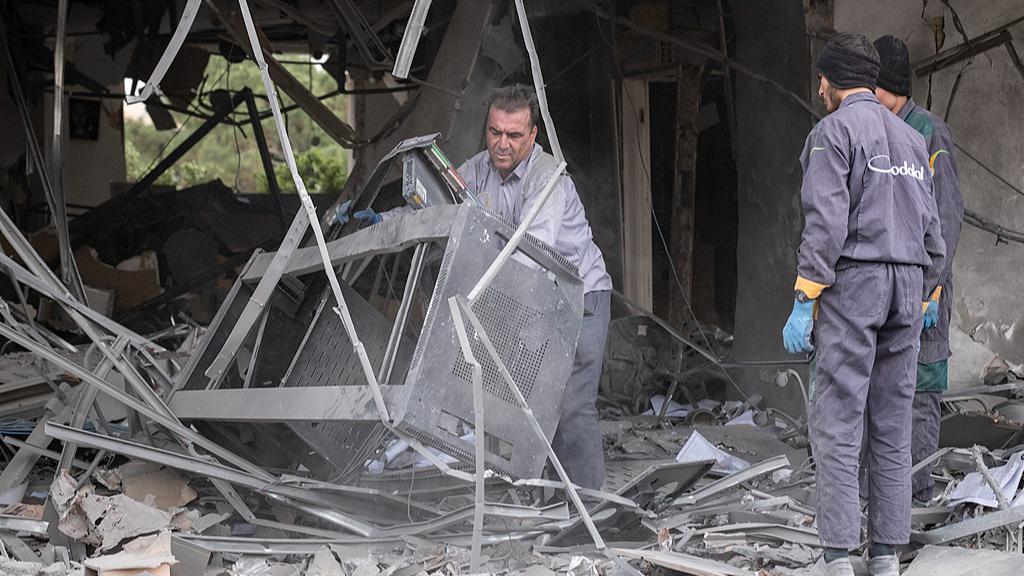
A man searches for belongings among the ruins of a commercial-office building in a residential area of Tehran, Iran, March 29, 2026. (Photo: VCG)
Strikes escalate as both sides widen attacks
According to a China Media Group correspondent in Tehran, residents in northern Iran's Mazandaran province reported hearing large formations of fighter jets heading toward the capital shortly after the first round of strikes. A second wave followed soon after. Earlier that morning, the Caspian coastal city of Nowshahr – previously considered relatively calm – was also hit around 7 a.m. local time.
The Israeli military later confirmed the strikes, saying dozens of fighter jets targeted infrastructure in Tehran. It said that the second operation aimed to degrade Iran's weapons production capacity, with more than 120 munitions dropped on facilities linked to weapons research and manufacturing. Sites used for storing and launching ballistic missiles, as well as multiple air defense systems, were also struck.
Iran, meanwhile, signaled sustained retaliation. Seyed Majid Mousavi, commander of the aerospace force of the Islamic Revolutionary Guard Corps (IRGC), said response operations were continuing, targeting Israel's Ramat Hovav industrial zone, along with a refinery, two steel plants and two major aluminum facilities.
Israeli pesticide maker ADAMA confirmed a strike. It said its Makhteshim plant in southern Israel had been hit, either by an Iranian missile or falling debris. Footage showed thick smoke rising over the facility in Ramat Hovav, a key hub for chemical production and hazardous waste treatment.
The IRGC also claimed it had destroyed a US E-3 Sentry airborne warning and control system (AWACS) aircraft in a missile and drone strike on Prince Sultan Air Base in Saudi Arabia, adding that other nearby aircraft were seriously damaged.
Separately, Iran released satellite images showing damage to US-related facilities in Bahrain, including logistics centers, fuel storage sites and hangars.
Iranian officials have also said Iran would target the residences of US and Israeli military and political personnel in retaliation for strikes on Iranian residential areas.
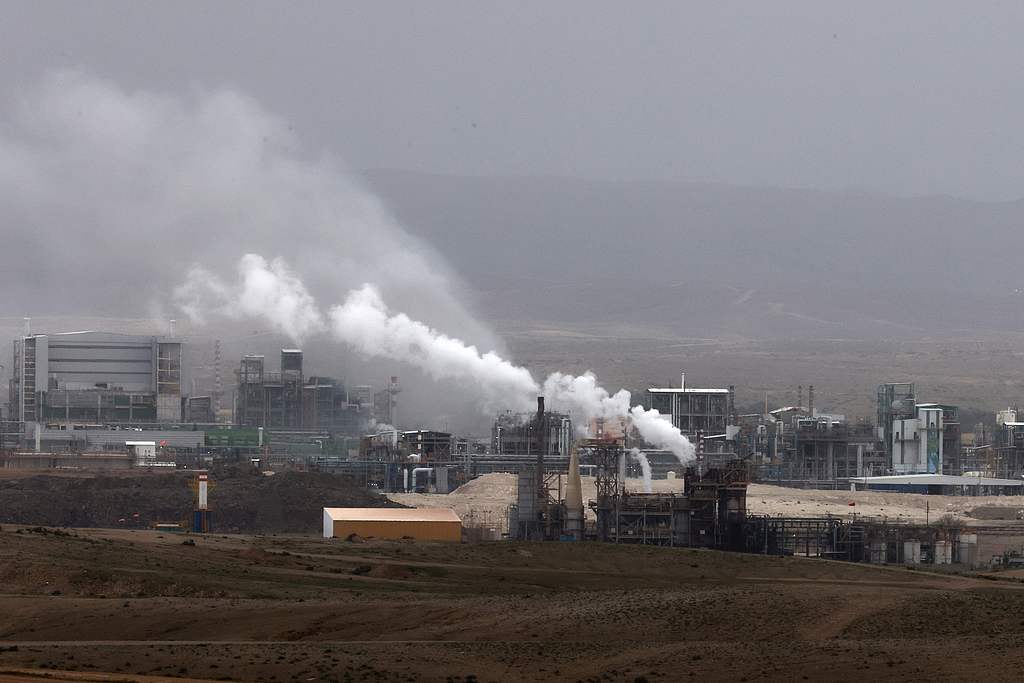
Smoke rises over the facility in the Ramat Hovav industrial zone south of Beersheba in southern Israel, March 29, 2026. (Photo: VCG)
Mediation efforts stall amid wide gaps
Diplomatic signals, however, remain limited and indirect. Iranian Foreign Ministry spokesperson Esmail Baghaei rejected claims of direct negotiations with Washington, saying only indirect exchanges had taken place through mediators. He described US 15-point proposal as "extreme and unreasonable," accusing Washington of lacking goodwill.
Baghaei also stressed that Iran's military operations would not target Arab countries, but only US bases and assets used in operations against Iran, adding that the conflict is not between the Iranian and American people, but one imposed on the region.
On the diplomatic front, Pakistan, Türkiye, Egypt and Saudi Arabia held talks on Sunday and agreed to form a joint committee to explore pathways toward resolving the conflict. Pakistan's Deputy Prime Minister and Foreign Minister Mohammad Ishaq Dar said both Washington and Tehran had expressed confidence in Pakistan's role in facilitating dialogue.
Analysts say the conflict is likely to persist in the near term, with risks of further escalation. Qin Tian, a Middle East researcher at the China Institutes of Contemporary International Relations, said Washington appears to be pursuing a dual-track approach – keeping military pressure while exploring negotiation options.
"I believe the Trump administration is seriously considering negotiations as a way to exit the conflict," Qin said, noting that prolonged confrontation does not align with US strategic interests. At the same time, continued troop deployments suggest preparations for possible escalation.
Others see little room for compromise. Niu Xinchun, dean of the China-Arab States Research Institute at Ningxia University, said both sides are advancing demands that resemble terms imposed by a victor. "What is concerning is that both believe they can keep fighting and ultimately prevail," Niu said.
He noted that US demands – including a full halt to Iran's nuclear activities, limits on its missile program and an end to support for regional proxies – remain unacceptable to Tehran. Conversely, Iran's demands, such as war reparations and guarantees against future US attacks, are equally unlikely to be accepted by Washington.
"Without substantive adjustments, not only is an agreement unlikely – even sitting down for talks will be difficult," Niu said, but he added that while the gap remains wide, the possibility cannot be ruled out that President Donald Trump could announce a one-month ceasefire, during which both sides would negotiate their terms. "This is a scenario that remains plausible at this stage," Niu said.