


Chinese doctors in Sierra Leone restore hope to patient with rare skeletal TB
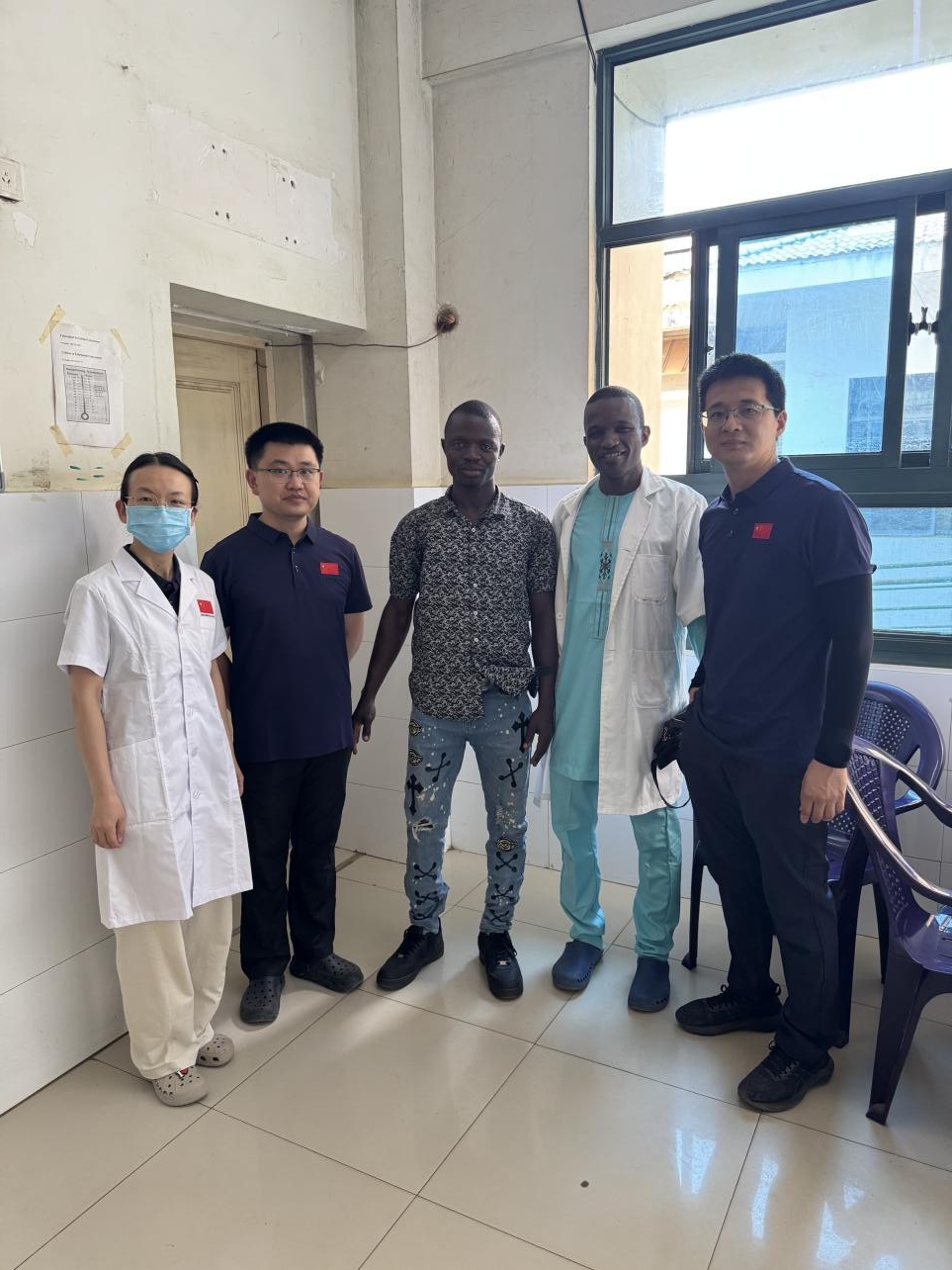
In a remarkable display of medical expertise and international cooperation, the 27th Chinese Medical Team (CMT) in Sierra Leone has successfully diagnosed and treated a complex case of skeletal tuberculosis, ending a year-long medical mystery and restoring hope to a young patient.
The breakthrough coincided with the commemoration of the 31st World Tuberculosis Day, underscoring the ongoing global fight against tuberculosis and the importance of early detection and effective treatment.
(Photo provided to People's Daily Online)
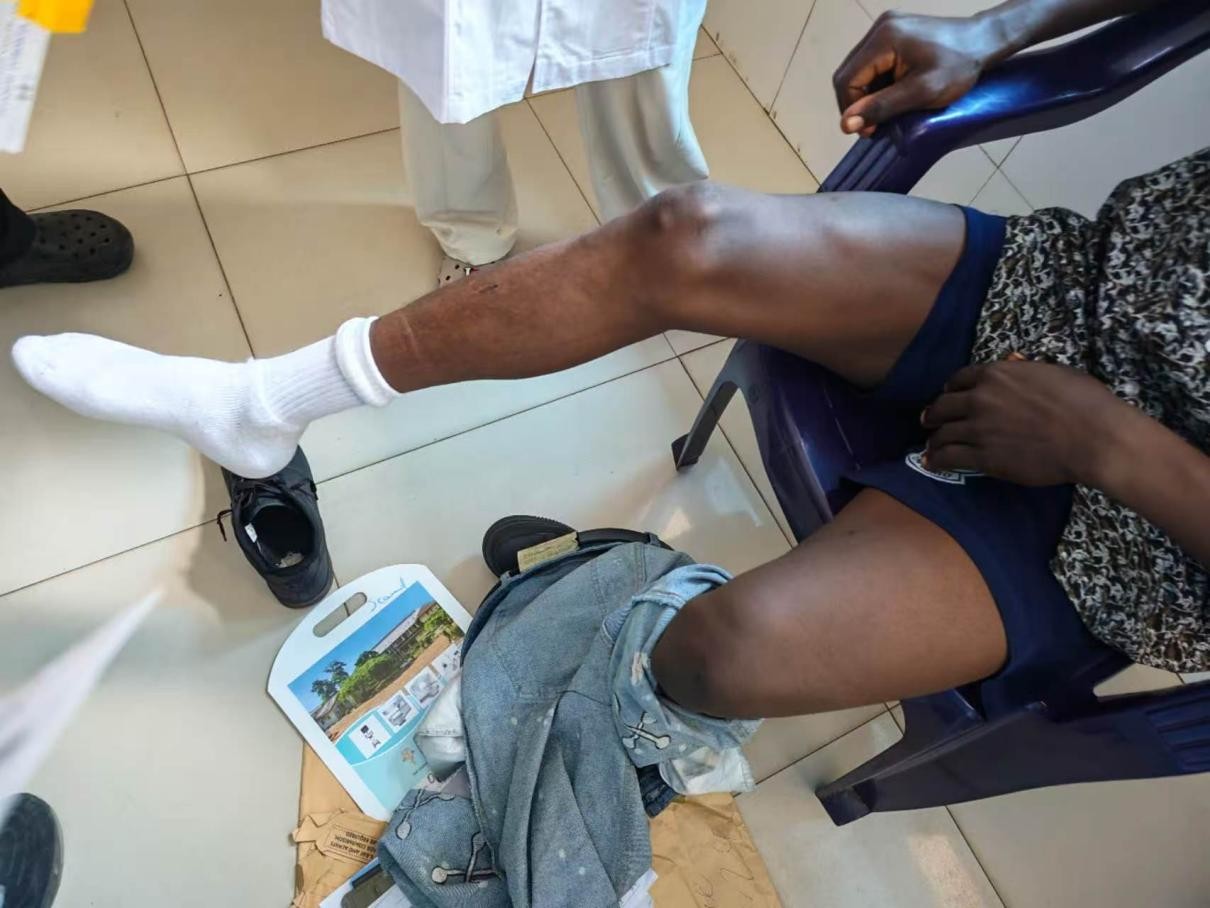
The case involved a 30-year-old Sierra Leonean man who had suffered persistent swelling and severe pain in his right knee for over a year. Over time, his condition worsened, resulting in a pronounced limp and significant weight loss that disrupted his daily life and ability to work. Despite seeking medical attention at several healthcare facilities, his condition remained undiagnosed, leaving him in prolonged distress.
Relief finally came when he was admitted to the Sierra Leone-China Friendship Hospital, where the 27th Chinese Medical Team is stationed. Upon examination, doctors noted severe pathological swelling of the knee, immediately recognizing the urgency and complexity of the case.
The medical team promptly activated its Multi-Disciplinary Team (MDT) protocol, bringing together specialists from different fields to collaboratively investigate the patient’s condition. In a resource-constrained environment, three experts—Huang Xianzhe (Orthopedics), Zhou Ning (Infectious Diseases), and Chen Juan (Radiology)—formed a focused task force to uncover the underlying cause.
(Photo provided to People's Daily Online)
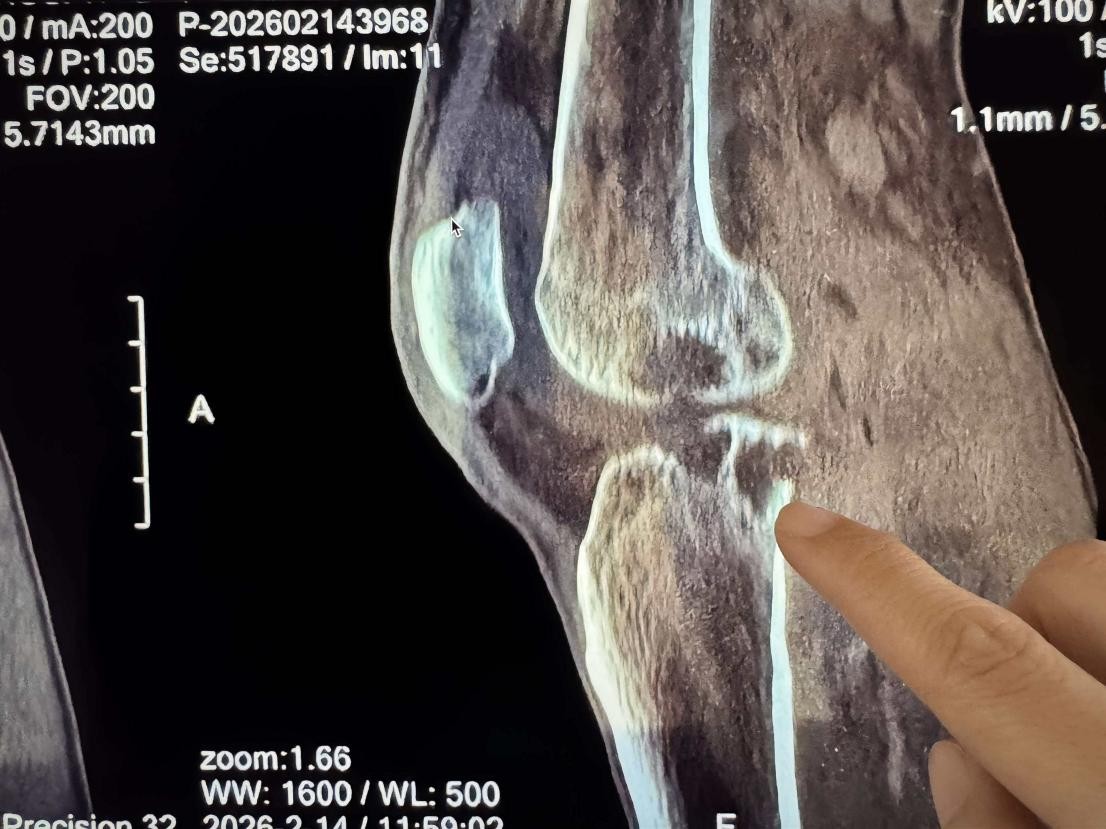
What followed was a meticulous diagnostic process that highlighted both clinical skill and determination. Working under challenging conditions where advanced diagnostic tools are limited, the team relied on detailed observation and careful analysis. In rooms where sunlight often substitutes as a viewing aid, CT scans were examined with precision and patience.
Chen identified subtle signs of bone destruction within the knee joint, while Zhou correlated laboratory findings with the patient’s broader symptoms, including weight loss and chronic inflammation. After systematically ruling out other possible conditions such as gout and localized tumors, the team reached a definitive diagnosis: tuberculosis of the right knee joint, a rare and often overlooked form of the disease.
“Skeletal tuberculosis is often insidious and can easily be misdiagnosed,” the team explained. “Without timely intervention, it can lead to joint deformity, permanent disability, and even life-threatening complications.”
(Photo provided to People's Daily Online)
Following the diagnosis, the patient was placed on an appropriate treatment regimen, marking the beginning of his recovery journey. Medical staff report that his condition has since shown encouraging improvement, bringing renewed optimism for a full recovery.
Beyond the immediate success of treating the patient, the case also served as a vital opportunity for knowledge sharing and capacity building. Throughout the diagnostic and treatment process, the Chinese Medical Team engaged local healthcare professionals in hands-on training, ensuring that the expertise gained would have a lasting impact.
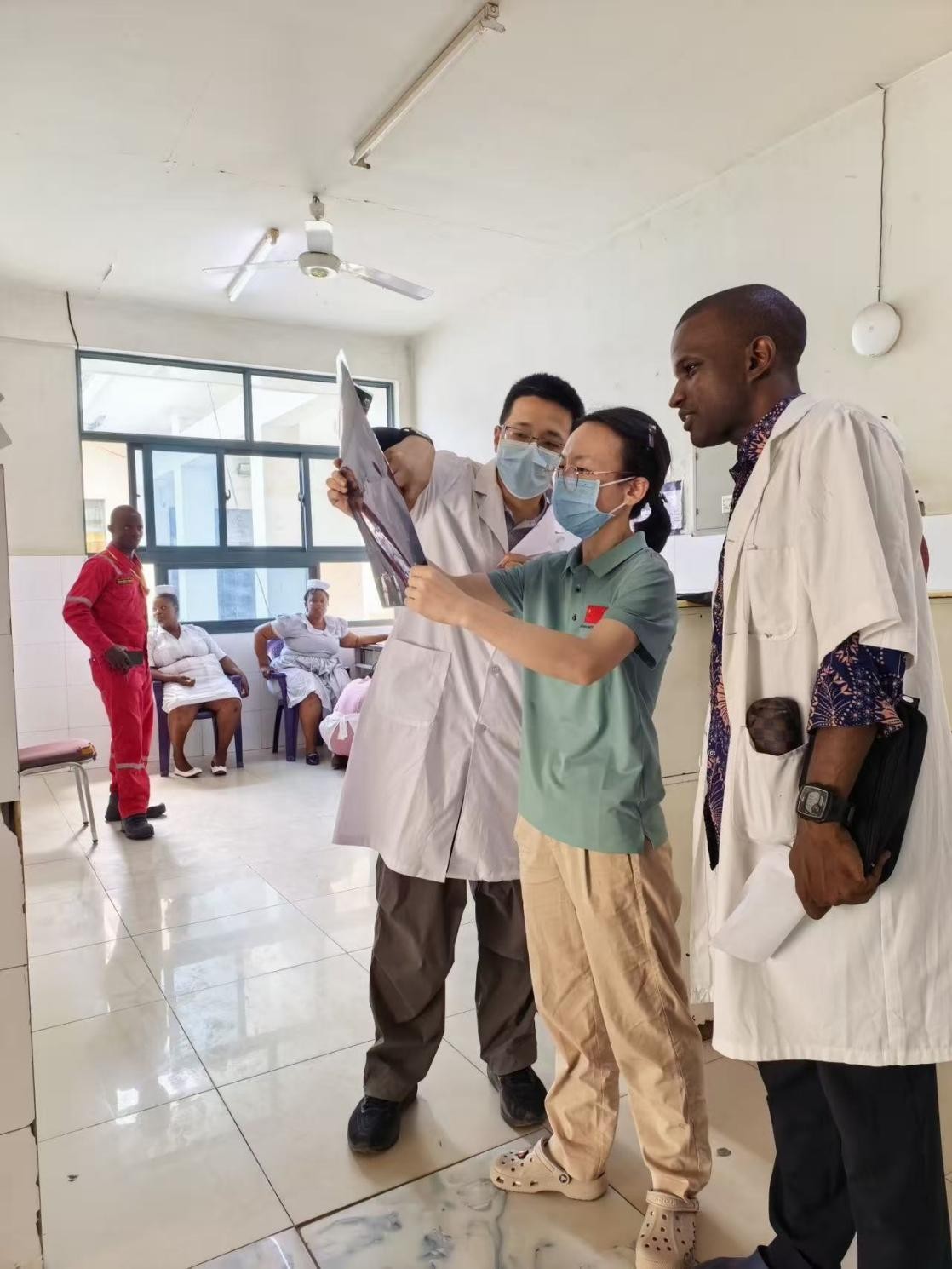
Among those who benefited from this collaboration was Abdulai Bah, a local clinician who participated in the case discussions and training sessions. Using the patient’s X-rays and CT scans as practical teaching tools, Zhou and Huang provided in-depth explanations of the clinical features, diagnostic pathways, and standardized treatment approaches for tuberculosis.
This “learning-by-doing” approach enabled local medical staff to strengthen their diagnostic capabilities, particularly in identifying atypical forms of tuberculosis that might otherwise go unnoticed. Health experts say such training is crucial in a country where tuberculosis remains a significant public health challenge.
The successful management of this case highlights the broader significance of health cooperation between China and Sierra Leone. The presence of the Chinese Medical Team continues to enhance healthcare delivery through a combination of direct patient care and professional development for local practitioners.
(Photo provided to People's Daily Online)
A representative of the team emphasized that their mission goes beyond treating individual cases. “Tuberculosis remains a major global health threat,” the representative said. “By combining clinical excellence with local capacity building, we are not just treating diseases—we are helping to build resilient healthcare systems and a shared future of better health.”
The intervention stands as a powerful example of how international collaboration can yield tangible benefits, particularly in resource-limited settings. It also reflects the enduring commitment of the Chinese Medical Team to the principles of dedication, compassion, and cross-border solidarity.
As Sierra Leone continues its efforts to combat tuberculosis and strengthen its healthcare system, success stories like this offer hope and inspiration. For one patient, the resolution of a year-long medical mystery has brought relief and a second chance at life. For the nation, it reinforces the value of partnership, innovation, and perseverance in the pursuit of better health outcomes for all.