


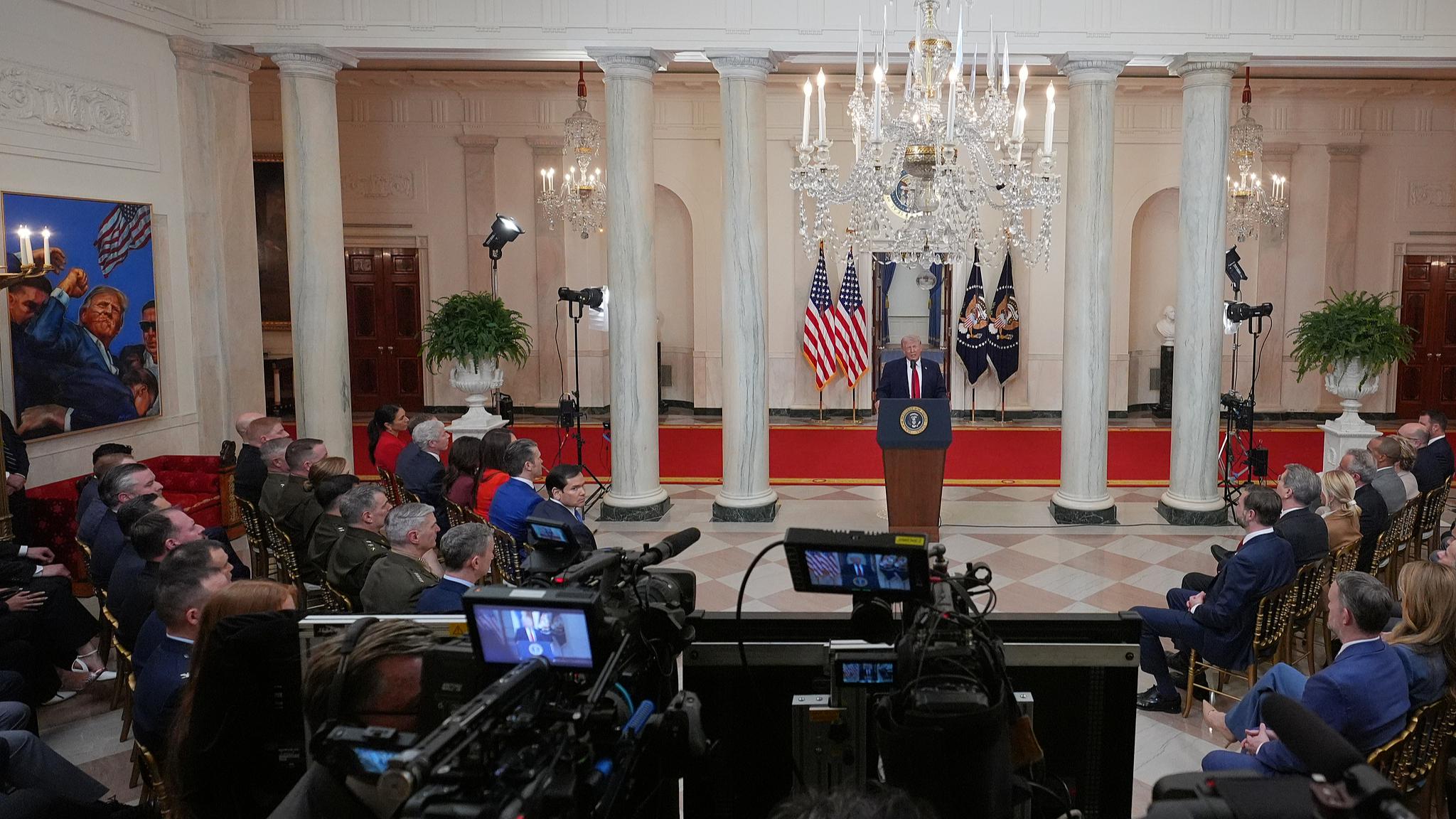
US President Donald Trump speaks during a televised address on the conflict in the Middle East from the Cross Hall of the White House in Washington, DC, US, April 1, 2026. (Photo: VCG)
While saying the United States is "nearing completion" of its core objectives in Iran, US President Donald Trump on Wednesday night threatened to hit Iran "extremely hard over the next two to three weeks," a timeline he has recently set for ending the monthlong war.
"I can say tonight that we are on track to complete all of America's military objectives very shortly. We are going to hit them extremely hard over the next two to three weeks. We're going to bring them back to the Stone Ages where they belong," Trump said in a prime time address to the nation.
Iran: US and Israel unaware of its vast strategic capabilities
Responding to Trump's address, Iran's Foreign Ministry spokesperson Esmail Baghaei said currently, the entire nation of Iran is united in its fight against this "unjust and aggressive war."
As long as this "illegal war" continues, and the enemies continue to attack the Iranian people and cities, Iran will continue to resist, he said.
The Iranian military on Thursday issued a strongly worded response to the remarks made by Trump. The spokesperson for Iran's Khatam al-Anbiya Central Headquarters said the United States and Israel do not have a comprehensive understanding of Iran's military strength and equipment, and are completely unaware of its vast strategic capabilities.
"Do not assume you have destroyed our strategic missile production sites, long-range attack and precision drones, modern air-defense systems, electronic warfare, or special equipment," the spokesperson said, adding that such assumptions will only deepen the quagmire the US has fallen into.
He emphasized that the enemy would suffer "crushing, broader and destructive" attacks.
Majid Mousavi, commander of the Aerospace Force of Iran's Islamic Revolutionary Guard Corps (IRGC), said it is the US who sends its soldiers to the graves, not Iran. He slammed the US for threatening a nation with over 6,000 years of civilization with its only 250 years of history.
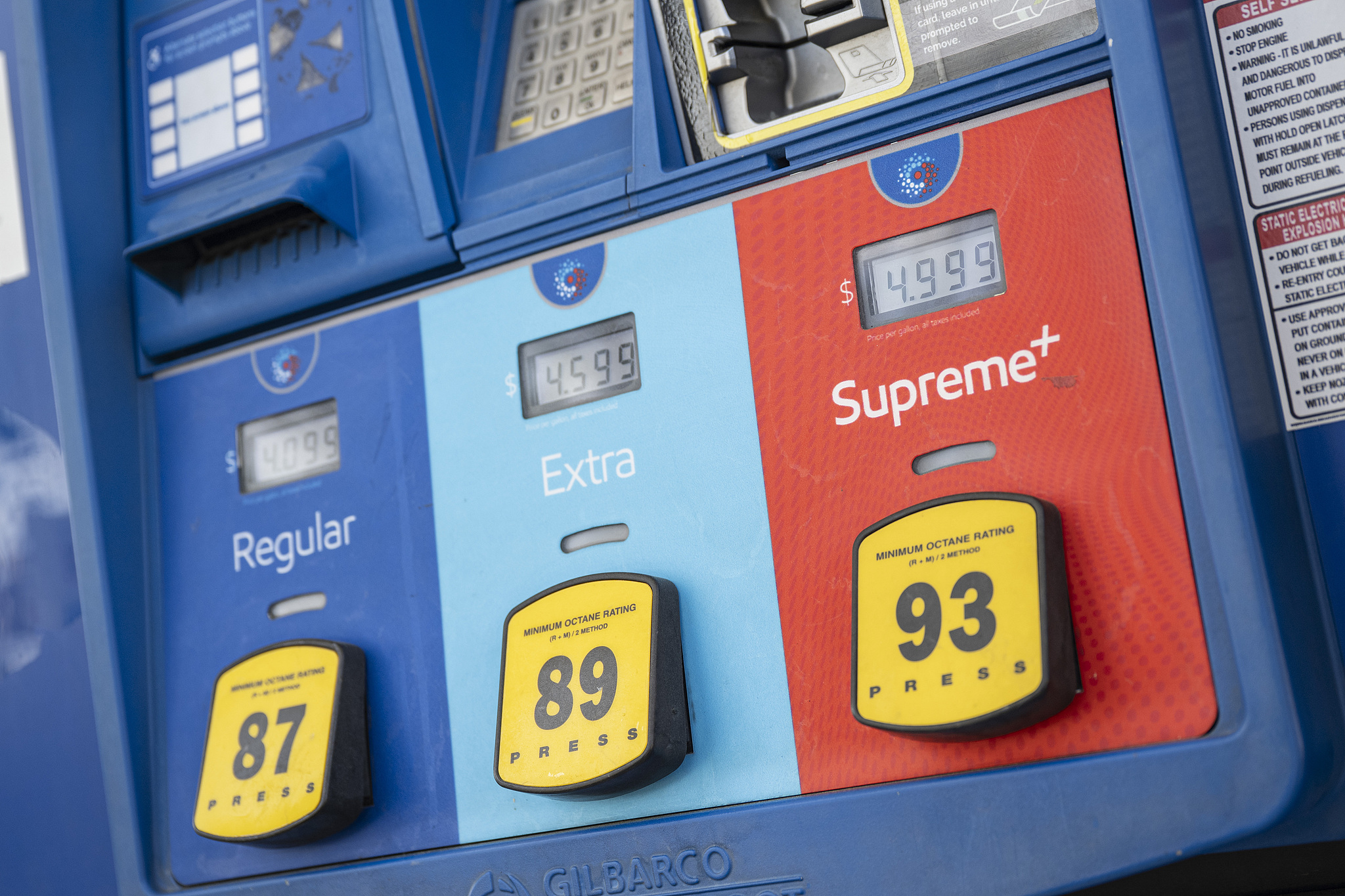
Gas prices exceeding $4 per gallon are displayed at an Exxon station in Arlington, Virginia, US, April 1, 2026. (Photo: VCG)
Sharp criticism from US lawmakers
Trump's address also drew sharp criticism from US lawmakers and politicians.
"Anyone watching that speech has no idea whether Trump is escalating or deescalating the war with Iran. But to be fair, neither does he," Democratic US Senator Chris Murphy wrote on X.
"He's talking about a country of 90 million people," said US Representative Yassamin Ansari, a Democrat from Arizona. "Vile, horrifying, evil."
Maryland Senator Chris Van Hollen is also critical of the address. "Trump, as always, lied to us," Van Hollen, a Democrat, said. "Over two weeks ago he said 'we won.' If so, then why are we still there? What's next? All we can count on is more lies from Trump. This delusional man is a danger to our country and the world."
Harlan Ullman, a former senior US naval officer, has slammed Trump's address to the nation, saying it failed to outline a clear strategy for the war on Iran. He called it a "victory speech for Iran."
Senate Minority Leader Chuck Schumer lambasted the speech. Calling the speech "rambling, disjointed, and pathetic," Schumer, a Democrat from New York, said Trump is "failing to articulate objectives, alienating allies, and ignoring the kitchen table problems Americans are facing."
He said Trump's actions in Iran will be considered one of the greatest policy blunders in the history of the US.
China: Military means cannot offer a fundamental solution
The Chinese Foreign Ministry also responded to the US threat to hit Iran "extremely hard."
"Military means cannot offer a fundamental solution, and the escalation of conflicts does not serve the interest of any party," spokesperson Mao Ning said at a regular press briefing.
She called on all parties involved to resolve problems through dialogue and negotiation to avoid further impacting the global economy and global energy security.
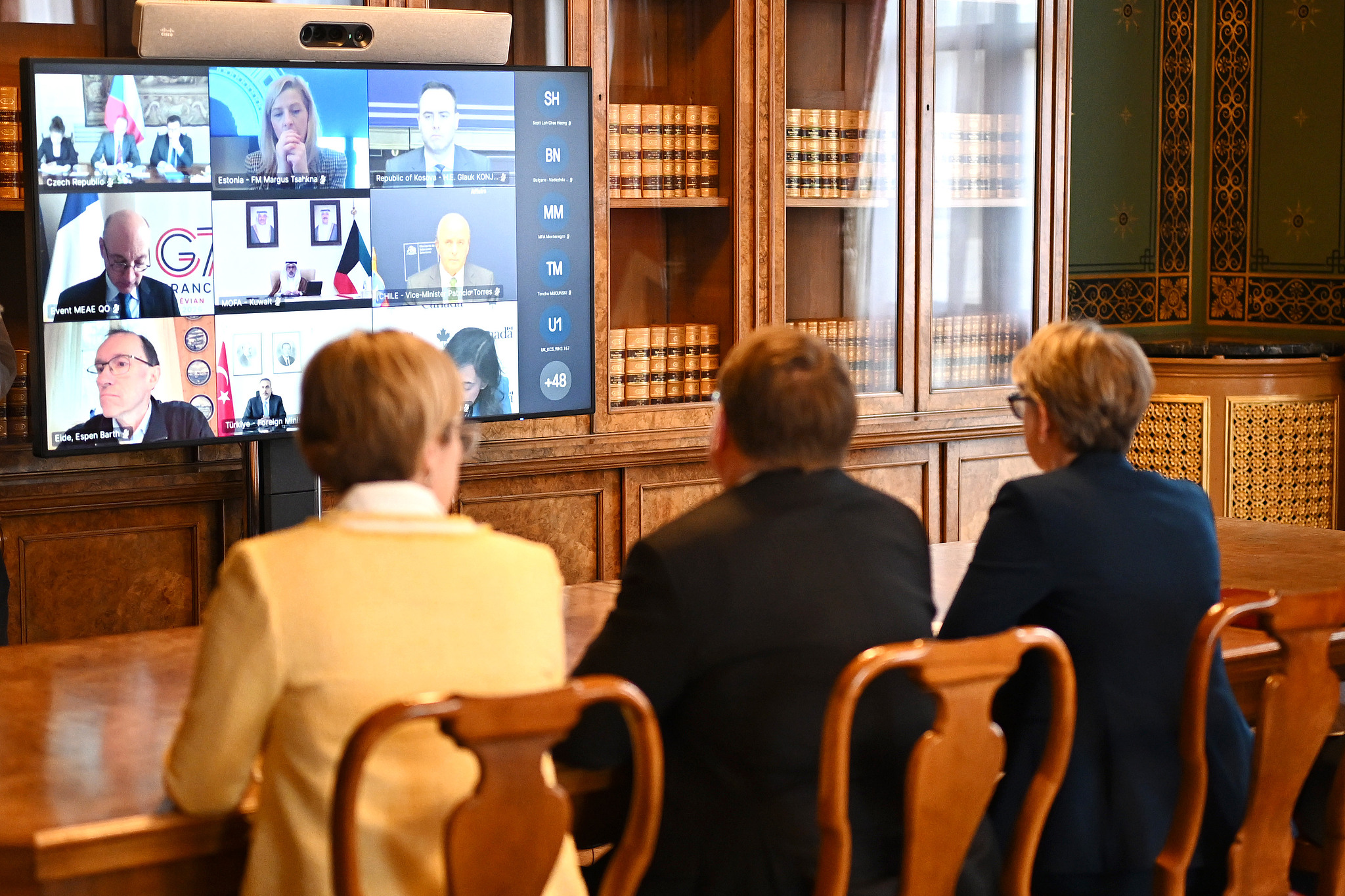
Britain's Foreign Secretary Yvette Cooper attends a virtual summit with around 35 countries to discuss ways of reopening the Strait of Hormuz in London, UK, April 2, 2026. (Photo: VCG)
Concerns of US allies
Trump recently said he is strongly considering pulling the United States out of the North Atlantic Treaty Organization (NATO) after the alliance failed to join the attacks on Iran.
When asked if he would reconsider America's membership in the alliance after the conflict, he said the question is "beyond reconsideration," adding: "I was never swayed by NATO. I always knew they were a paper tiger." Trump also expressed dissatisfaction with NATO for "not being there," saying it was "actually hard to believe."
Responding to Trump's threats to pull out of the alliance, UK Conservative leader Kemi Badenoch has said that any sign of division within NATO could represent a "gift" to countries such as Iran and Russia, according to BBC reports.
"I think that we need to make sure that we do not give gifts to countries like Russia or Iran, making it seem as if there is a split in the Western alliance," Badenoch said. "If they see that the Western countries are squabbling, that's a gift to them."
French President Emmanuel Macron said on Thursday that it would be unrealistic to launch a military operation to force open the Strait of Hormuz, after Trump challenged US allies to work towards reopening it.
Asked about Trump's criticism of NATO allies and threats to pull the US out of the alliance, Macron told reporters during a trip to the Republic of Korea that he doesn't wish to offer a running commentary on a military operation that the Americans have chosen to conduct alongside Israel on their own terms, adding that France's priority is to achieve peace as soon as possible.
Leaders from 35 countries have recently signed a joint statement, voicing their readiness to contribute to "appropriate efforts to ensure safe navigation through the Strait of Hormuz."
Many of their foreign ministers are set to join a virtual summit on Thursday, tasked with exploring "viable diplomatic and political solutions" to reopen the vital waterway.
While the UK, France, Germany, Australia and Gulf states are expected to participate in the virtual summit, notably, the United States will not be among them.
Overnight, Trump suggested the strait – one of the world's most critical shipping lanes – could reopen "automatically" once the conflict ends. However, other countries remain far less convinced.