


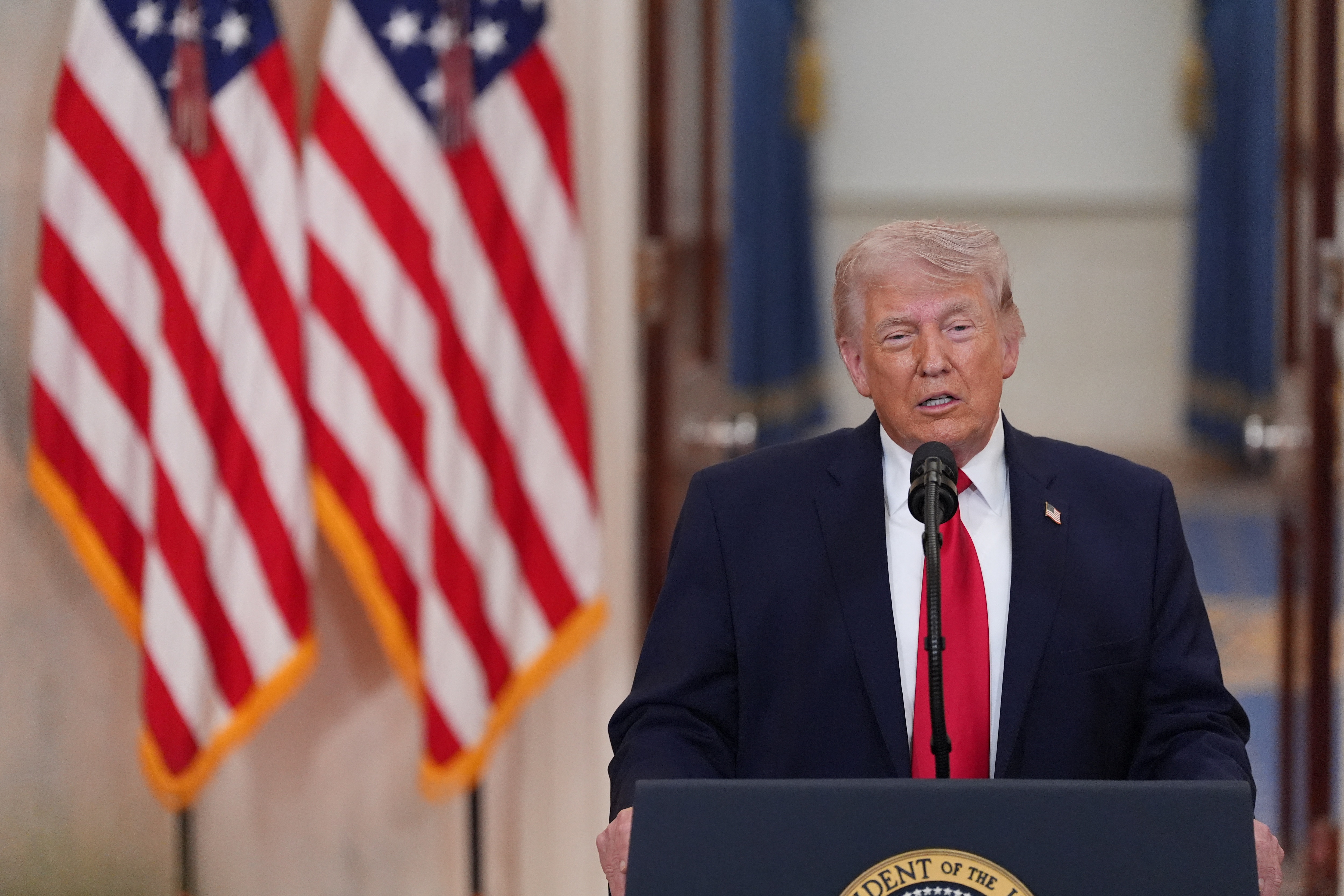
US President Donald Trump speaks from the Cross Hall of the White House on April 1, 2026 in Washington, DC. (Photo: AFP)
US President Donald Trump on Friday signed an executive order aimed at regulating US collegiate sports in the wake of rule changes that allow student athletes to be compensated financially.
The order, which is the second that Trump has issued on college sports, directs the National Collegiate Athletic Association (NCAA) to create rules that allow college athletes to play for "no more than a five-year period."
He also asked that rules be put in place that would allow them to transfer schools just once before they graduate without having to sit out a season.
The changes are scheduled to go into effect on August 1, and institutions who allow athletes who don't meet the criteria risk losing federal funding.
Trump said that the loosening of "consistent rules or limits concerning eligibility, transfers, and pay-for-play schemes has created an out-of-control financial arms race... that is driving universities into debt."
Friday's order came as the hugely popular NCAA basketball tournament reached its closing stages.
The women's semi-finals took place on Friday and the men's Final Four semi-finals were scheduled for Saturday.
In addition to demanding eligibility and transfer limits, it calls on governing bodies to ban "improper" financial arrangements and urges Congress to pass legislation to address the issues.
It follows an order issued by Trump in July that sought to block some recruiting payments by third parties to college athletes in big-money sports like football and men's basketball in order to preserve funds available for women's and non-revenue sports.
The president said last month that the rising value of name, image and likeness (NIL) contracts for players in high-visibility sports like football has created a burden for colleges that forces some to abandon other sports.
Some of those sports -- such as athletics, swimming and gymnastics -- have long been pipelines for US Olympic teams.
The NCAA long prohibited student athletes from accepting any compensation for use of their name, image and likeness, but after a 2021 Supreme Court ruling, the rules were changed so that some collegiate athletes could receive financial compensation.