


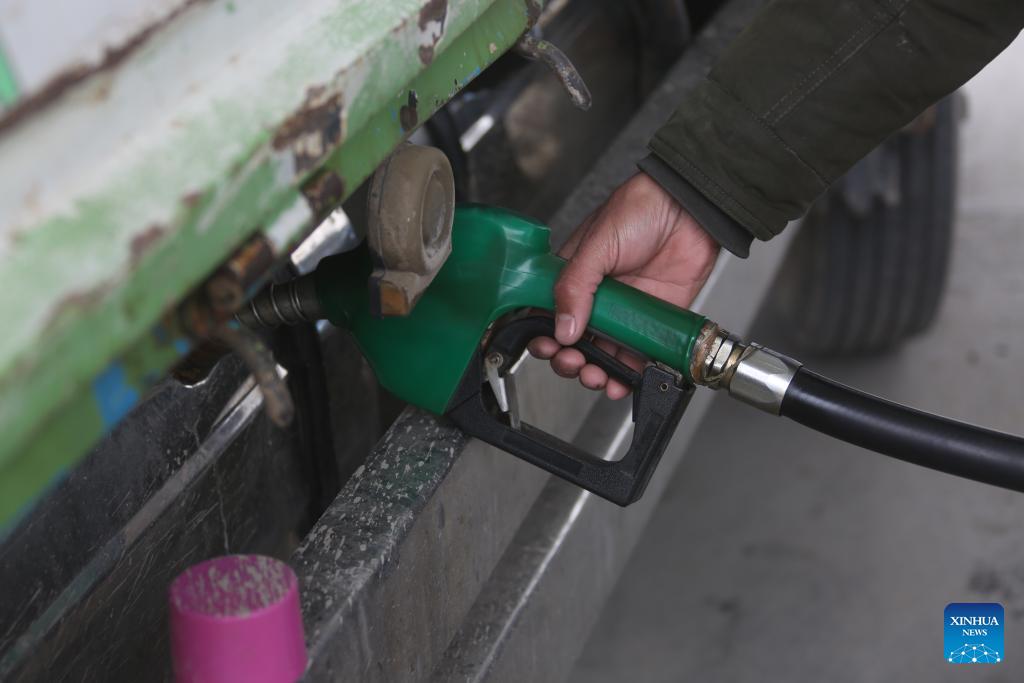
A man refuels his vehicle at a gas station in Kabul, Afghanistan, April 1, 2026. (Photo by Saifurahman Safi/Xinhua)
KABUL, April 4 (Xinhua) -- In the bustling streets of Kabul, Abdul Mateen, a 33-year-old taxi driver, sits behind the wheel of his car, awaiting passengers who have become increasingly scarce. His livelihood, like many others in Afghanistan, is under pressure as fuel prices surge, plunging him into a state of financial uncertainty.
"I used to earn 2,000 to 2,500 afghanis (about 31 to 39 U.S. dollars) a day," said Abdul Mateen, his voice laced with concern. "Now, I'm lucky to make 600 to 1,200 afghanis, and passengers have become scarce."
Driven by a combination of global supply disruptions, reduced fuel imports, and escalating transportation costs, the price of fuel in Afghanistan has surged dramatically from 55 afghanis per liter to 67 afghanis, creating a ripple effect that is felt across the nation. This price hike has placed an unbearable strain on taxi drivers, small business owners, and ordinary citizens in an already fragile economy.
For Abdul Mateen, the struggle is balancing the rising fuel prices with a dwindling number of passengers. "Business has slowed down, and passengers are becoming scarcer. When we tell them that the fare is 200 afghanis, they get upset. But we can't avoid it; the fuel prices have surged."
In a city like Kabul, where many rely on taxis for daily transportation, the rising fuel prices have made travel unaffordable for some. "Before, my fare was 100 afghanis; now it's 150 afghanis," said Jahangir, a Kabul resident who commutes by taxi every day. "It's a significant jump."
The fuel crisis in Afghanistan extends beyond skyrocketing prices -- it also involves a growing shortage in supply. Afghanistan's reliance on imported fuel, especially from neighboring Iran, has left it vulnerable to disruptions in the supply chain. Delays in transportation and limited fuel imports have led to scarcity, further driving up prices.
"We used to import fuel regularly from Iran, but now shipments are limited, and the price has gone up significantly," Ikramuddin, a fuel distributor in Kabul, explained the challenges this has created.
The impact of rising fuel prices stretches far beyond the transportation sector. As fuel costs climb, the prices of everyday goods and services also rise, creating a heavy burden on a population already struggling with financial uncertainty. For many Afghans, this economic strain is becoming unbearable.
"When fuel prices rise, everything is affected because everything depends on fuel," said Jahangir.
In response to the mounting crisis, the Afghan government has attempted to regulate fuel prices through official price lists, which are regularly updated to reflect market conditions.
"The government has put measures in place to prevent price gouging, but the situation is challenging," Nematullah Barikzai, spokesperson for a representative of Kabul Municipality, told Xinhua.
Despite these efforts, market volatility continues. The limited fuel supply, combined with rising global demand, has made it difficult for the Afghan government to stabilize prices. "When the global market fluctuates, we can only do so much to regulate local prices," Barikzai added.
For many Afghans, the future remains uncertain. As the cost of living continues to rise and incomes stagnate, the financial strain on families is becoming overwhelming.
"If this continues, we'll have to face even higher prices," warned Fuel trader Sangarwal. "It could rise above 100 afghanis per liter, and that means even more people will be unable to afford the fuel they need to survive." ■
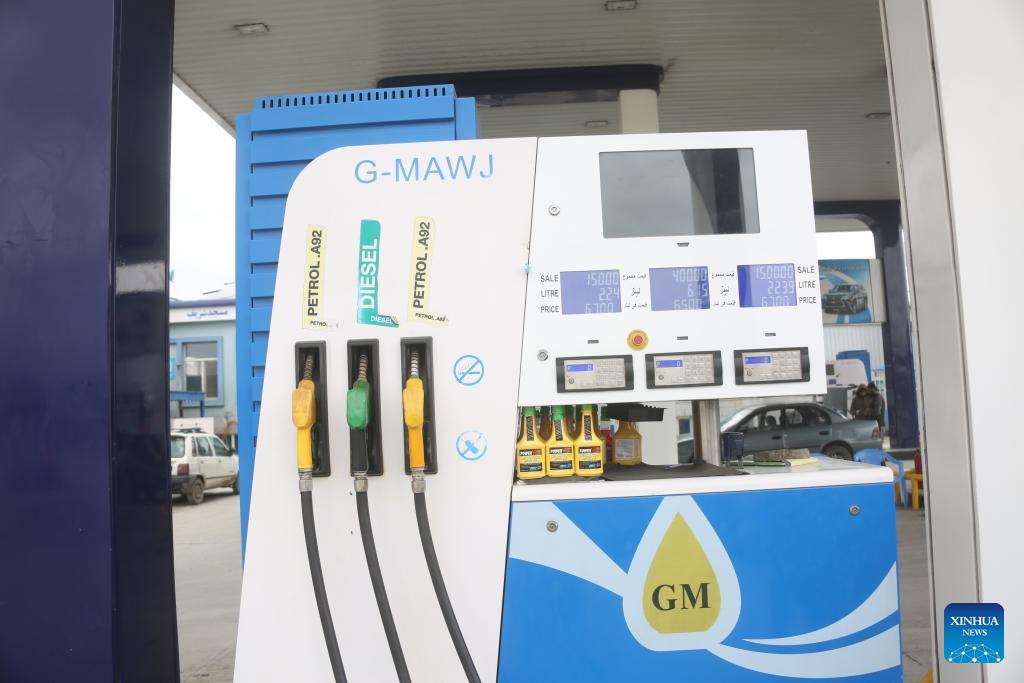
This photo taken on April 1, 2026 shows a gas station in Kabul, Afghanistan. (Photo by Saifurahman Safi/Xinhua)
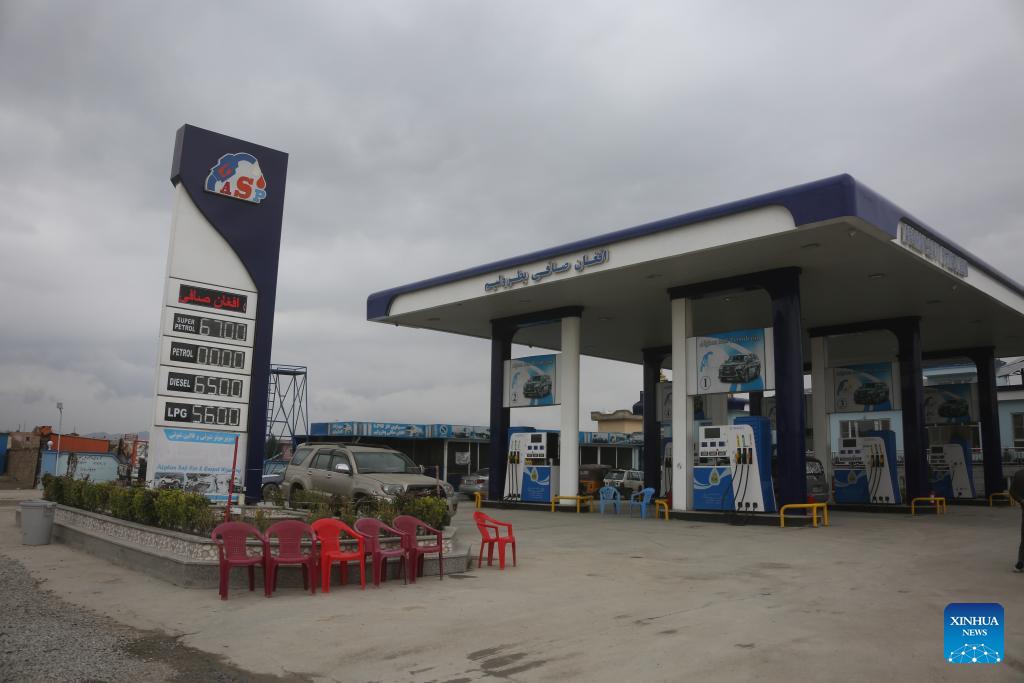
This photo taken on April 1, 2026 shows a gas station in Kabul, Afghanistan. (Photo by Saifurahman Safi/Xinhua)