


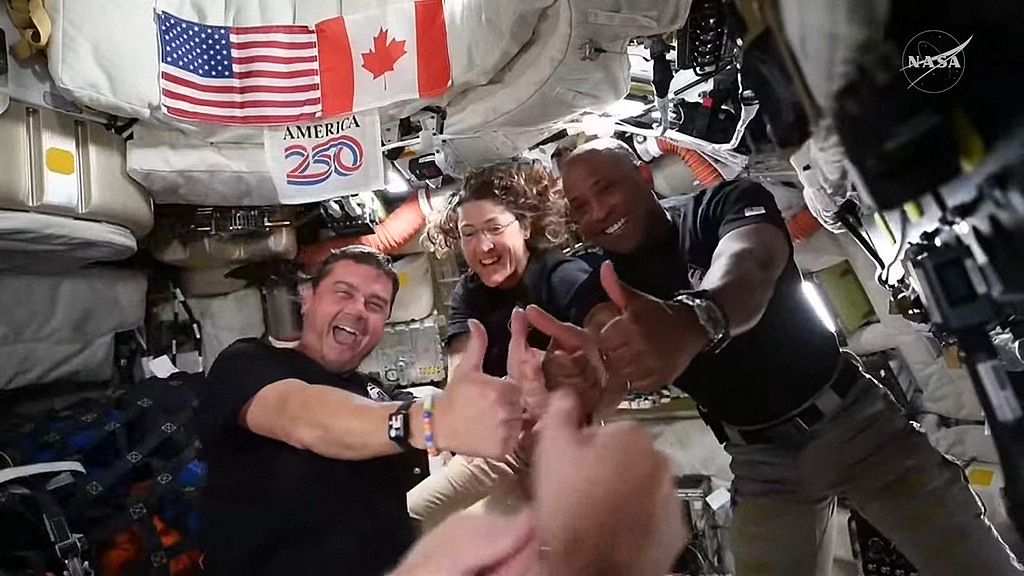
Artemis II crew members Reid Wiseman (L), Christina Koch (C) and Victor Glover give their thumbs up aboard the Orion spacecraft, April 6, 2026. (Photos: VCG)
Artemis II astronauts are now on course to return to Earth after a historic journey around the lunar far side, during which they broke the record for the farthest distance from Earth ever traveled by humans.
During their journey, the crew witnessed a rare total solar eclipse from space, which they called "truly hard to describe." They will downlink detailed observations of the moon to Earth.
Communication with mission control was temporarily lost for about 40 minutes as their Orion spacecraft passed behind the moon. Upon emerging from the blackout, astronaut Christina Koch said, "It is so great to hear from Earth again."
"We will always choose Earth; we will always choose each other," said Koch.
The Artemis II team broke the distance record set by the Apollo 13 mission in 1970, which they were expected to surpass by over 6,600 kilometers when they reached the journey's anticipated furthest distance from Earth, about 406,771 kilometers.
Astronaut Jeremy Hansen said the moment was "to challenge this generation and the next, to make sure this record is not long-lived."
During a roughly six-hour observation of the lunar surface, the astronauts provided vivid human perspectives.
Victor Glover called the terminator – the line separating lunar night from day – "the most rugged I've seen it from a lighting perspective." Koch described lunar craters as "like a lampshade with tiny pinprick holes and the light shining through."
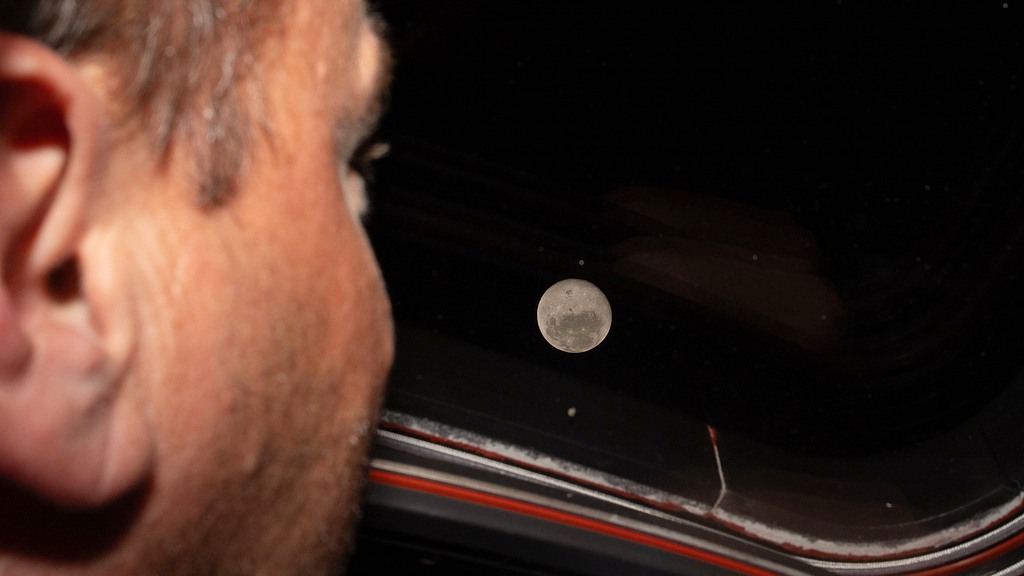
Artemis II commander and NASA astronaut Reid Wiseman looks out one of the Orion spacecraft's main cabin windows at the moon ahead of the crew's lunar flyby, April 6, 2026.
Moon memorials
The crew also proposed names for two previously unnamed craters.
The first they requested to name was in honor of their spacecraft's nickname, "Integrity."
They offered a second name, "Carroll," for another crater, which they asked be named after the late wife of mission commander Reid Wiseman, who died of cancer.
"It's a bright spot on the moon," said Hansen, his voice breaking with emotion. "And we would like to call it Carroll."
The astronauts embraced, and mission control in Houston held a moment of silence.
NASA said they would formally submit the name proposals to the International Astronomical Union, the body charged with naming celestial bodies and surface features.
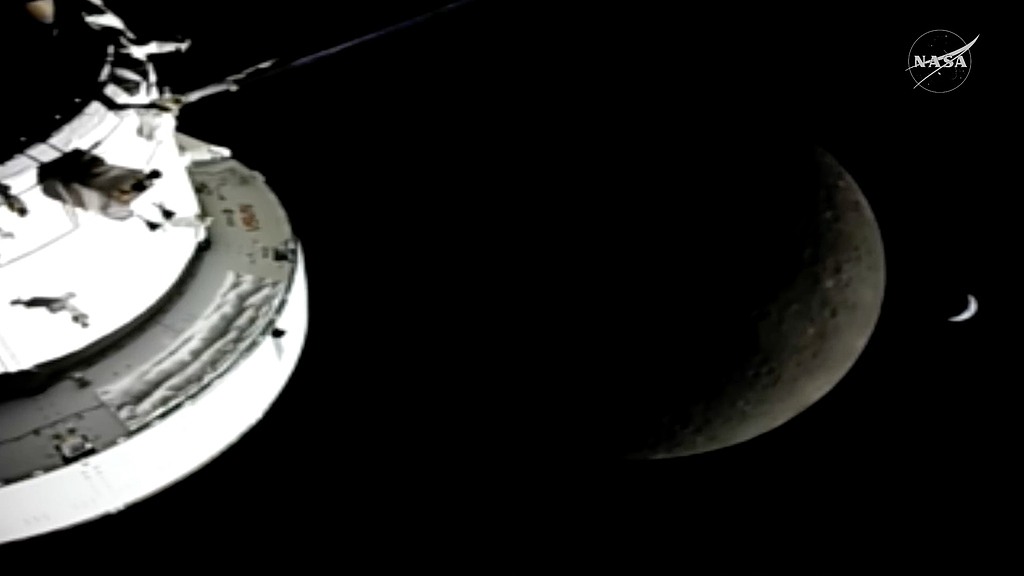
The Orion Spacecraft, the Earth and the moon seen from a camera as the Artemis II crew and spacecraft travel farther into space, April 6, 2026.
Artemis II features several firsts: Glover is the first person of color, Koch the first woman and Hansen the first non-American to orbit the moon.
NASA astronaut Jim Lovell, a veteran of Gemini VII, Gemini XII, Apollo 8 and Apollo 13 who died on August 7 at the age of 97, recorded a message for the Artemis II crew before his death, which the crew heard during their wake-up call on Monday morning. "Good luck and Godspeed from all of us here on the good Earth," Lovell said in the recording.
The mission does not include a lunar landing. Splashdown is scheduled for April 10 in the Pacific Ocean off San Diego, California.
(With input from agencies)