


File photo of the White House in Washington, DC, US. (Photo: VCG)
More than half of people in Southeast Asia see US leadership under President Donald Trump as their greatest geopolitical worry, according to a survey released on Tuesday.
The State of Southeast Asia: 2026 Survey Report shows that 51.9% of respondents now identify Trump's US as their top geopolitical concern, up from third place last year, when it stood at 46.9%.
Economic concerns overwhelmingly shape public views on what could erode positive perceptions of the US, the report noted.
The US' use of sanctions, tariffs and other trade-related measures was cited most frequently, at 43.4%, a surge of 21.3% from 2025, across the Association of Southeast Asian Nations (ASEAN), it said.
"This marks a notable shift towards geo-economic anxieties as the primary source of unease regarding Washington's role in the region," read the report. "The strength of this concern is strikingly consistent across ASEAN member states."
It ranks first in most members, including Vietnam (60.6%), Timor-Leste (60.0%), the Philippines (50.0%), Singapore (50.0%), Myanmar (45.5%), Thailand (43.9%) and Malaysia (40.3%).
Even in Cambodia (34.2%) and Indonesia (33.3%), where other concerns are also salient, trade measures remain one of the top factors that could damage perceptions of the US.
US urged to respect international law
The report also outlined regional expectations for improving US-ASEAN relations, with a strong emphasis on upholding international law.
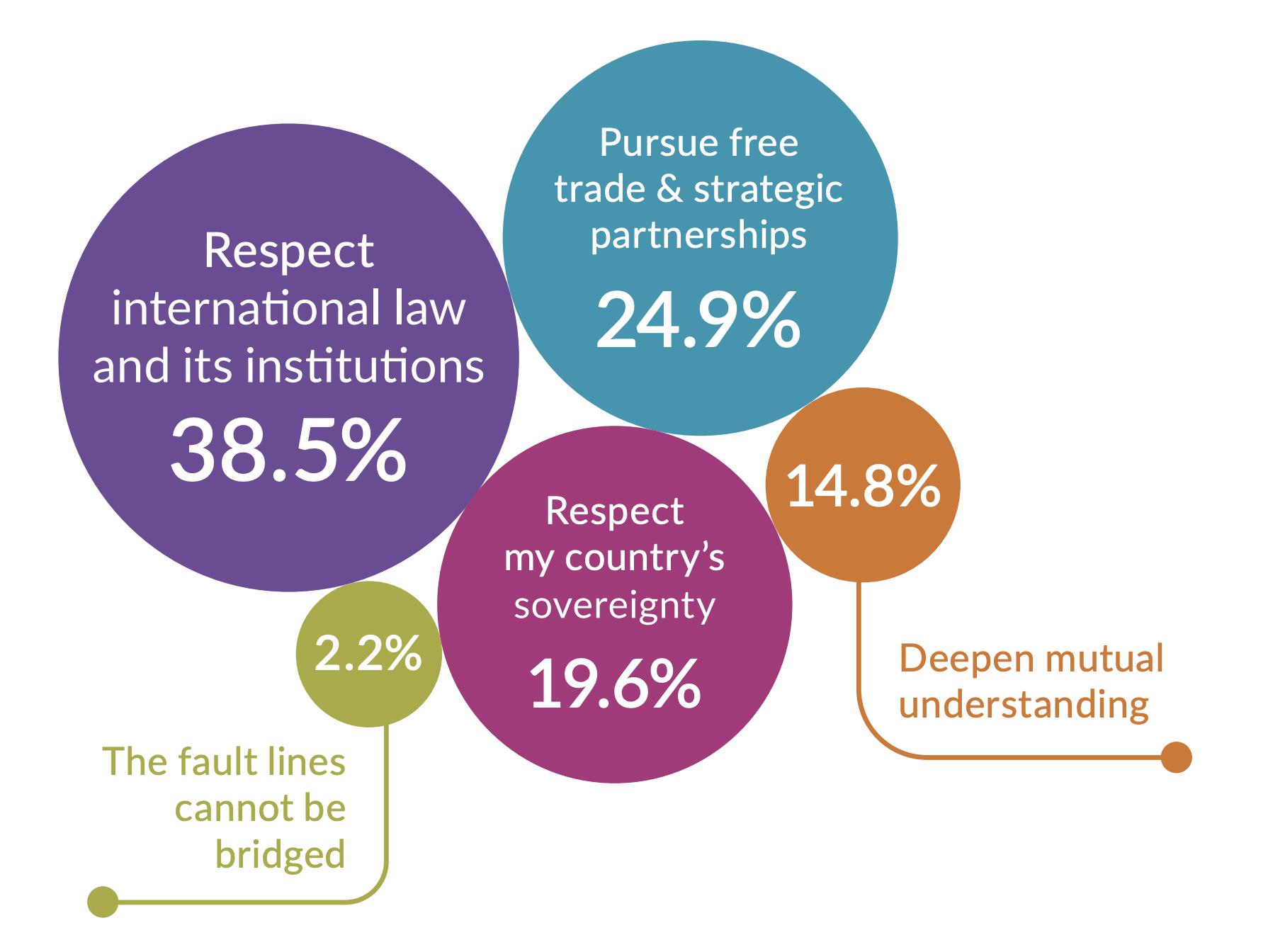
A screenshot of respondents' answers when asked "What can the United States do to improve relations with your country?" in the State of Southeast Asia: 2026 Survey Report, April 7, 2026. (ISEAS-Yusof Ishak Institute)
At the regional level, 38.5% of respondents identified "respecting international law and its institutions without undermining the global system" as the top step Washington should take to enhance ties.
This was followed by two other key recommendations: pursuing free trade and strategic partnerships instead of punitive tariffs (24.9%), and respecting the national sovereignty and foreign policy autonomy of ASEAN member states (19.6%).
"The prominence of international law reflects a strong regional preference for predictability, multilateralism and institutional stability," read the report.
It went further to say the view is particularly pronounced in Singapore (53.3%), Timor-Leste (47.1%), Indonesia (47.0%), Malaysia (42.4%) and the Philippines (41.3%).
"These figures suggest that concerns over unilateral actions, sanctions or the weakening of global trade rules weigh heavily on regional assessments of US leadership."
The survey by the ASEAN Studies Centre at the ISEAS-Yusof Ishak Institute in Singapore was conducted from January 5 to February 20, before the US-Israel strikes against Iran.