


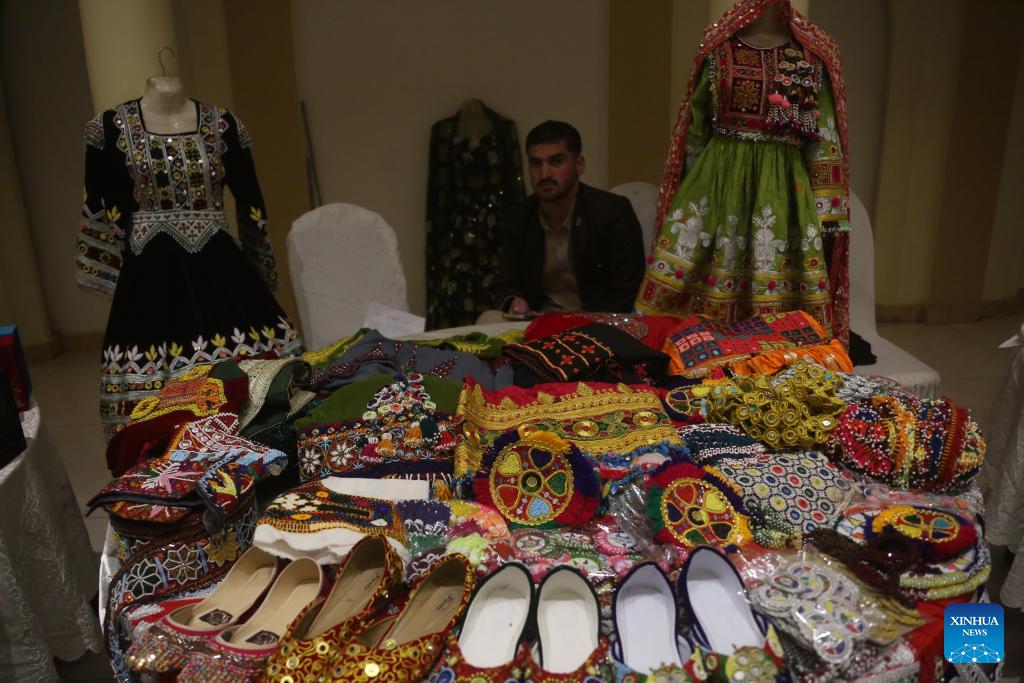
This photo taken on April 9, 2026 shows women-made handicrafts at an event titled "Afghanistan's Economic Dawn" in Kabul, Afghanistan. (Photo: Xinhua)
KABUL, April 11 (Xinhua) -- "Exhibitions are a gateway to recognition, a space where we introduce ourselves, connect with others in our field, and build partnerships that can lead to real contracts," said Maryam Ahmadi, fatigue still etched across her face after a grueling 305-km journey from her home in northern Balkh province to the capital, Kabul.
Her words echo through the exhibition hall, where determination and quiet ambition shape every conversation. The event, titled "Afghanistan's Economic Dawn," opened on Thursday with a clear purpose: to showcase achievements, support domestic products, strengthen economic ties, and attract investment.
For Ahmadi, who has been in business for just three years, the journey from modest beginnings to modest triumph is deeply personal. She has created steady jobs for ten other women and watched her small enterprise grow.
"We started with 20,000 afghanis (about 312 U.S. dollars)," she recalled with pride. "Today, our capital has reached 10,000 U.S. dollars. The results are good, the progress is real. It is acceptable for us, and it gives us hope."
"These exhibitions are vital for the growth of women's businesses," said Zarifa Sarak, another businesswoman. "Here, we showcase our achievements. We meet donors, connect with other women and find customers who believe in what we create."
To her, exhibitions like this are not luxuries but necessities. "Here, women can showcase their achievements," Sarak explains.
Her voice carries both gratitude and urgency as she calls for more such initiatives.
At the heart of the event stands its organizer, Ziaurrahman Zalmai, who describes the exhibition as a platform of opportunity. "We organized this (exhibition) so people from different provinces can present their products and productions," he said.
With 120 companies displaying their work across 80 booths, the exhibition reflects a growing, though still fragile, economic movement driven by local enterprises, especially by women, Zalmai added.
Among the most striking displays were the hand-woven carpets and textiles of Sangima Sepehr from Jawzjan province. Her work, rich in color and tradition, has directly and indirectly provided livelihoods for more than 100 women in her community.
Sepehr believes that supporting women's work and production is far more than a matter of improving family livelihoods. It is, she says, essential for Afghanistan's economic self-sufficiency, a force that drives national growth and plants a profound sense of hope across society.
Official figures from the Ministry of Commerce and Industry underscore the scale of this quiet revolution: more than 130,000 Afghan women are now active in women-owned businesses spanning agriculture, livestock, health, industry, logistics and services.
In a nation still mending from decades of conflict, these women stand as more than participants in an exhibition, they are architects of a rising economic future. Each knot in a carpet, each carefully dyed thread, and every agreement reached within these vibrant halls speaks to something greater: dignity restored, independence reclaimed, and the quiet emergence of possibility.
As the exhibition unfolds through the weekend, a clear and powerful message resonates from Kabul: when Afghan women are given space to lead and create, they do far more than bring products to market, they shape resilience, sustain communities, and illuminate a path toward self-sufficiency.
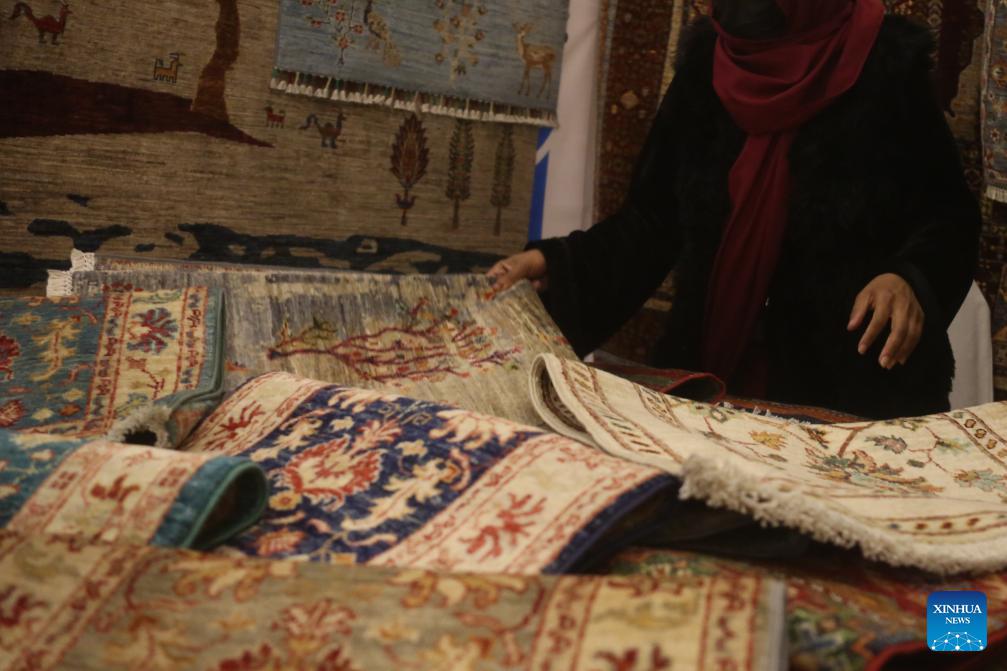
This photo taken on April 9, 2026 shows women-made handicrafts at an event titled "Afghanistan's Economic Dawn" in Kabul, Afghanistan. (Photo: Xinhua)