


BRUSSELS, April 22 (Xinhua) -- The European Commission on Wednesday proposed a package of measures aimed at protecting European households and industries from energy crisis and accelerating the shift to clean, homegrown energy.
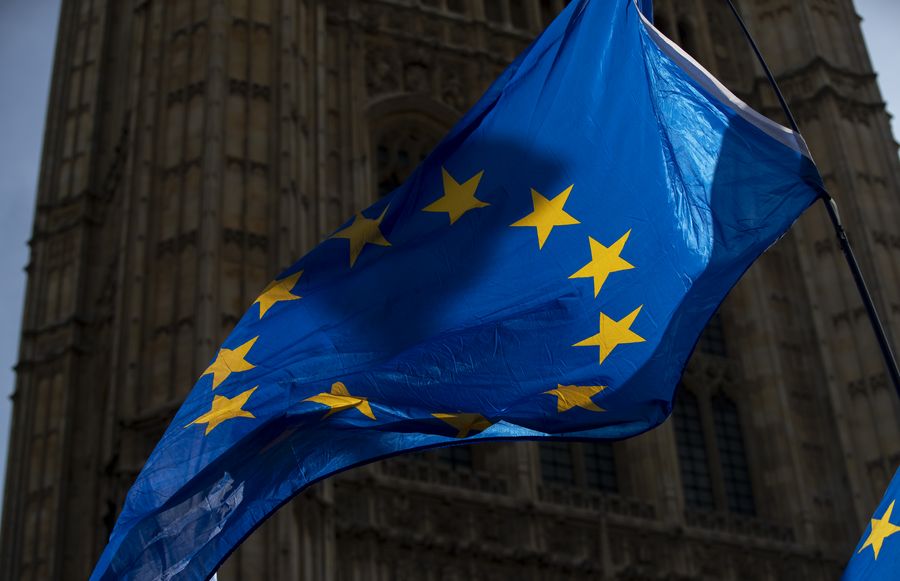
The photo shows the EU flag. (Photo: Xinhua)
In a statement, the commission said that, for the second time in less than five years, Europeans were paying the price of Europe's dependency on imported fossil fuels. Since the escalation of the conflict in the Middle East, the European Union (EU) has spent an additional 24 billion euros (28.2 billion U.S. dollars)on energy imports due to higher prices, without receiving any extra energy.
The package, called "AccelerateEU," includes both short-term and structural measures to reduce dependence on volatile fossil fuel markets and strengthen Europe's resilience through homegrown clean energy and electrification.
According to the commission, the proposed actions include closer coordination among members on refilling underground gas storage, the use of flexibilities in filling rules, and any exceptional releases of oil stocks. A new Fuel Observatory will also be established to track EU production, imports, exports and stock levels of transport fuels.
The commission said measures to protect consumers and industry from price peaks may include targeted income support schemes, energy vouchers, social leasing schemes and lower excise duties on electricity for vulnerable households. It also said it would adopt a State Aid Temporary Framework to give national governments additional flexibility to support the most exposed economic sectors.
The commission said it would present an Electrification Action Plan by the summer, including an electrification target and measures to remove barriers in the industrial, transport and building sectors. It also said it would present a legislative proposal on network charges and taxation to ensure that electricity is taxed less than fossil fuels.
The commission said the measures would be discussed by EU leaders at the informal European Council in Cyprus on April 23 and 24.