


CAIRO, April 24 (Xinhua) -- Egyptian Foreign Minister Badr Abdelatty held separate phone calls on Friday with his German and Bahraini counterparts, during which all sides stressed the importance of resuming negotiations between Iran and the United States.
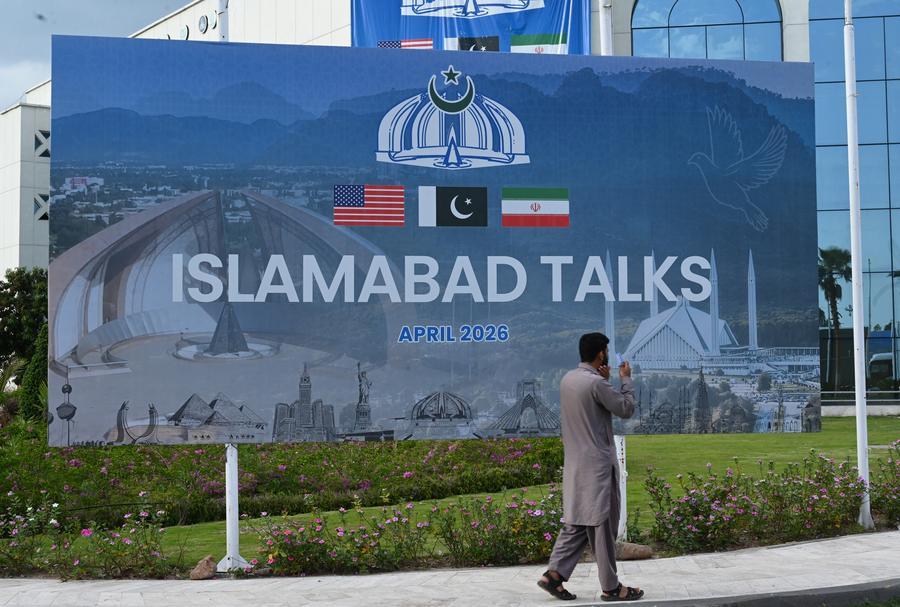
This photo taken on April 11, 2026 shows a billboard for the U.S.-Iran talks in Islamabad, Pakistan. U.S. (Photo: Xinhua)
In a call with German Foreign Minister Johann Wadephul, Abdelatty discussed the rapid developments in the Middle East, according to a statement by the Egyptian Foreign Ministry.
Both sides emphasized the need to solidify a U.S.-Iran ceasefire and support negotiation tracks to reduce escalation and restore regional security and stability.
Abdelatty also highlighted the importance of a European role in de-escalation efforts.
In a subsequent call with Bahraini Foreign Minister Abdullatif bin Rashid Al Zayani, Abdelatty reviewed developments concerning the resumption of U.S.-Iran talks, according to the statement.
The two ministers underscored the importance of reaching an agreement to contain tensions and establish foundations for regional stability.
Earlier on Friday, Pakistani government sources told Xinhua that an Iranian delegation led by Foreign Minister Seyed Abbas Araghchi is expected to arrive in the Pakistani capital of Islamabad on Friday night.
The sources said U.S. logistics and security teams are already on the ground to facilitate the negotiation process.
Iran's official IRNA news agency later reported that Araghchi will visit Pakistan, Oman, and Russia, starting Friday evening.
A fragile ceasefire, which took effect on April 8 after 40 days of fighting, remains in place. Pakistan has been mediating indirect talks between Tehran and Washington, hosting the first round in Islamabad on April 11 and 12.
The tensions follow joint U.S.-Israeli attacks on Tehran and other Iranian cities beginning Feb. 28, which killed Iran's then Supreme Leader Ali Khamenei, senior commanders, and civilians. Iran responded with waves of missile and drone strikes targeting Israel and U.S. assets in the Middle East.