


NAIROBI, April 25 (Xinhua) -- Sustained investment in malaria vaccines holds the key to eliminating the disease in high-endemic African countries by 2030, a senior official from Gavi, the Vaccine Alliance, said on Saturday on World Malaria Day.
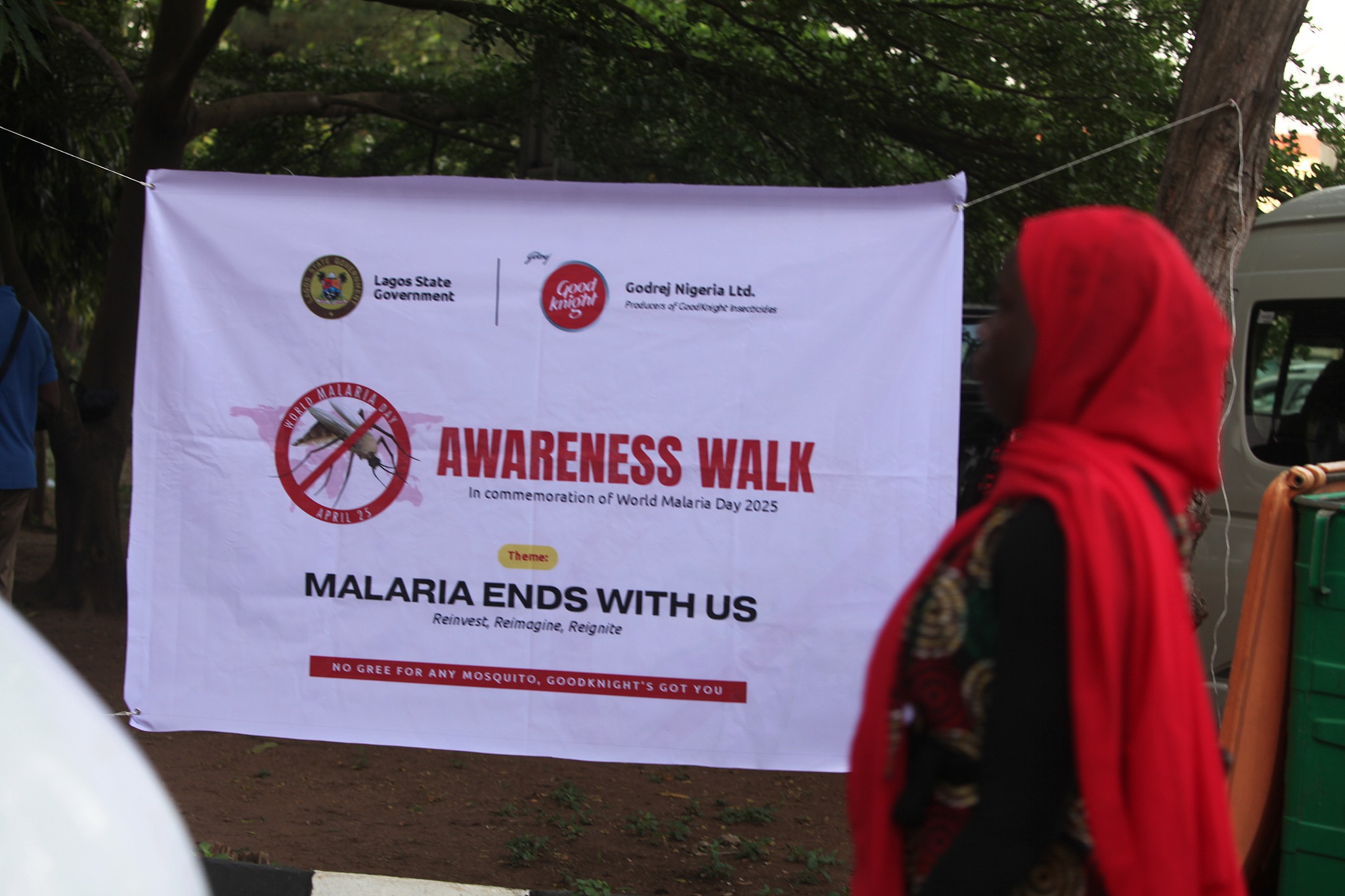
A woman walks past a banner during an awareness walk and stakeholder engagement event organized by the Lagos State Ministry of Health and its partners to mark World Malaria Day in Lagos, Nigeria, April 25, 2025. (Photo: VCG)
Currently, malaria vaccines have become part of routine immunization in 25 African countries, while 52 million doses have been delivered on the continent since 2023, according to Thabani Maphosa, chief Country Delivery officer at Gavi.
He said vaccines have been an addition in the toolbox for battling malaria across Africa, including insecticide-treated nets and therapeutics, averting severe illness and death among children below five years and pregnant mothers.
"We are already seeing encouraging real-world impact. Countries such as Kenya, Malawi, Ghana and Cameroon are reporting fewer severe malaria cases and hospital admissions among vaccinated children," Maphosa said in a statement released by Gavi in Nairobi, the Kenyan capital.
The first malaria vaccine, RTS, S/AS01, was introduced in Africa in 2019, with Ghana, Kenya and Malawi selected for the pilot program to gauge its efficacy and overall safety.
Maphosa said Gavi and its partners are aiming to reach 50 million children with a full course of malaria vaccines by 2030, building on existing routine immunization systems.
World Malaria Day 2026 is marked under the theme "Driven to End Malaria: Now We Can. Now We Must," underscoring the urgency for eradicating a centuries-old disease transmitted through the bites of some infected female Anopheles mosquitoes.
Statistics from the World Health Organization indicate that Africa accounted for nearly 95 percent of all global malaria cases, equivalent to 265 million, and 95 percent of deaths, or 579,000 fatalities, in 2024.