


Families in southern Lebanon are being forced from their homes once again, just months after many had returned to rebuild their lives following the 2024 war.
Since the latest escalation began on March 2, more than 1.1 million people have been uprooted, including hundreds of thousands of children. Many are now living in schools, tents and crowded shelters across the country.
Although a ceasefire is in place, fresh evacuation orders have deepened fears that many families may not be able to return home any time soon — if at all.
In Beirut, a school once built for lessons has again become a shelter. Classrooms have been turned into bedrooms. Outside, tents have become temporary homes for families who say they have already lost too much.
For many, this is not the first time they have fled. They escaped the war in 2024, returned to damaged villages to rebuild, and have now been displaced again in 2026.
"It is something that kills you," says Narman Al-Shreem, a displaced woman from Houla in southern Lebanon. "It is like a fish being taken out of water. Your home is your country. You lived there. You raised your family there. Your whole life is there."
The scale of the crisis is growing fast. More than 390,000 children are among those uprooted, while more than 139,000 people are sheltering in 680 official collective shelters across Lebanon.
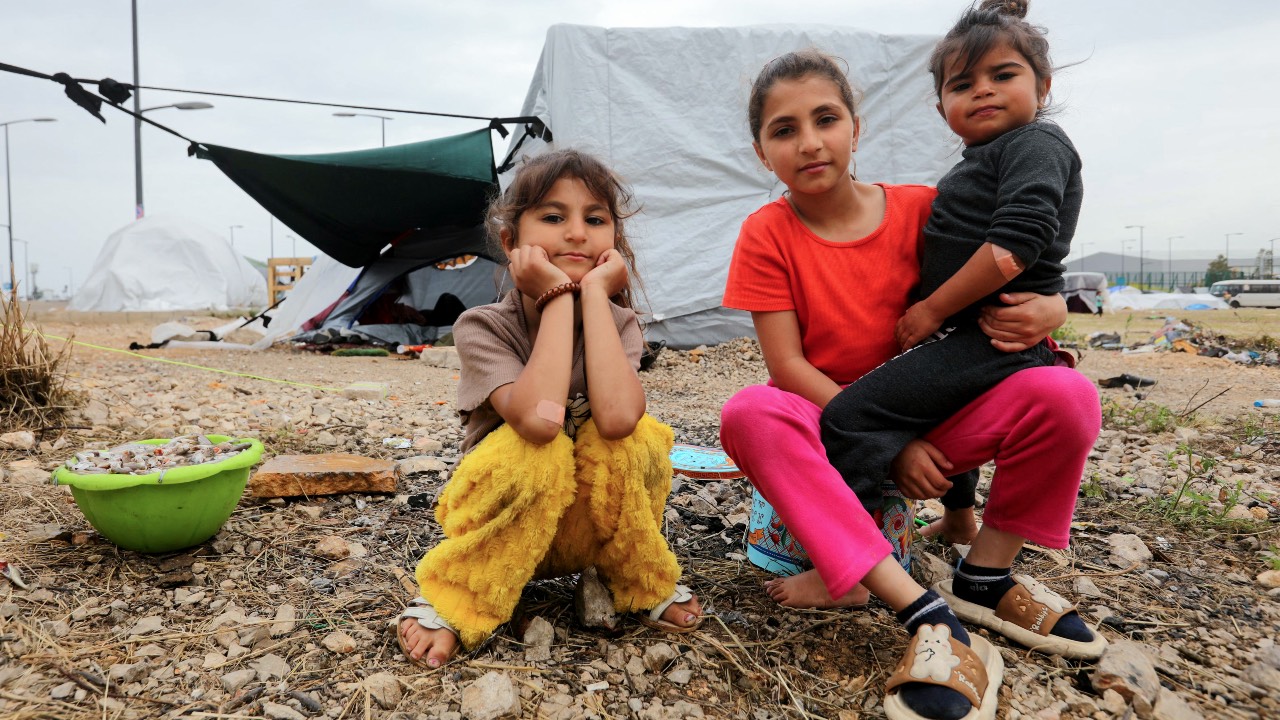
Displaced Lebanese hildren sit outside their tent at an unofficial camp for the displaced at Beirut's waterfront area. (Photo: Ibrahim Amro/AFP)
Inside the shelters, the strain is clear. Families are packed into overcrowded buildings, waiting through long days of uncertainty while trying to keep some sense of normal life.
Shelter Director Hussein Shreim says one building was meant to hold around 200 people, but now houses about 300. At times, he says, the number has even reached 400.
"We had people sleeping in the playground and outside," he says. "And there are only four bathrooms."
In the tent city, the wider crisis is impossible to miss. Families are not just fleeing once. They are fleeing again, with no clear answer about when, or whether, they can return home.
For mothers like Narman, displacement means raising children in fear.
"When my baby was born and she cried for the first time, I cried too," she says."I said to her, 'what will your fate be?'"
Parents are packing the same bags again. Children are losing classrooms again. And across southern Lebanon, villages are emptying once more.
The question now is not only when families can return — but whether temporary displacement is becoming permanent.