


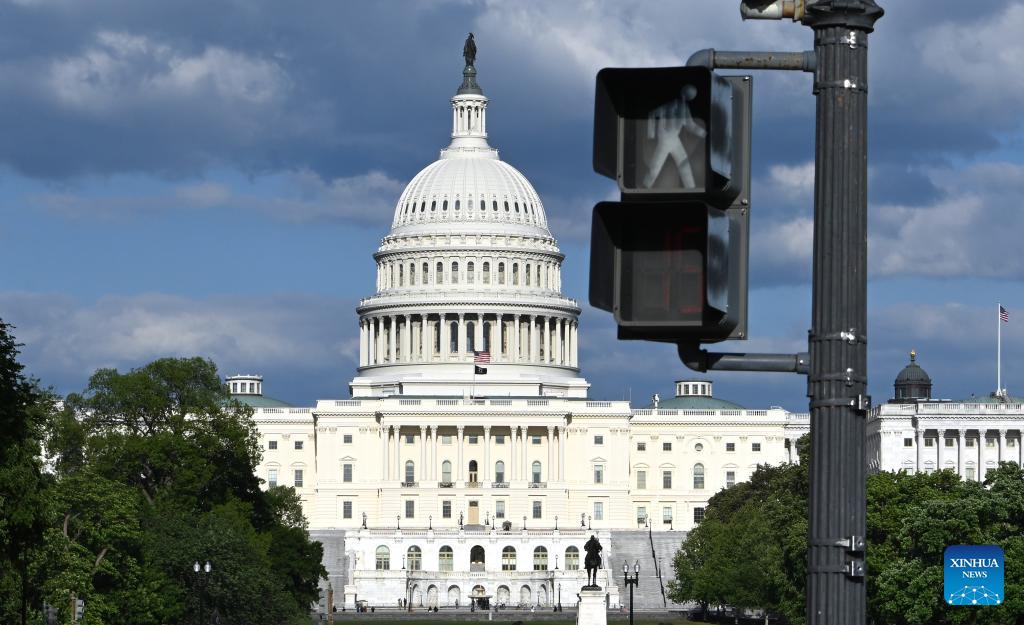
This photo taken on April 30, 2026 shows the U.S. Capitol building behind a traffic light in Washington, D.C., the United States. The U.S. House of Representatives on Thursday approved the Senate-passed funding bill that would fund much of the Homeland Security Department (DHS), in an attempt to end the record 75-day shutdown of the agency. (Photo: Xinhua/Li Rui)
WASHINGTON, April 30 (Xinhua) -- The U.S. House of Representatives on Thursday approved the Senate-passed funding bill that would fund much of the Homeland Security Department (DHS), in an attempt to end the record 75-day shutdown of the agency.
The bill will reopen DHS without allocating new funds for Immigration and Customs Enforcement (ICE) or the U.S. Border Patrol, as Democrats have been demanding major reforms to immigration enforcement following two fatal shootings of U.S. citizens by federal immigration agents in January.
The timing of the bill's passage is critical, as DHS Secretary Markwayne Mullin recently warned that his department will run out of money to pay employee salaries the first week of May.
Once President Donald Trump signs the funding bill, DHS agencies, including the Federal Emergency Management Agency, the Coast Guard, the Transportation Security Administration and the Secret Service, would be funded through the fiscal year ending Sept. 30.
Afterward, Republicans will attempt to fund ICE or the Border Patrol separately, without Democrats' support.
Democrats have called for reforms to ICE operations following the fatal shootings of two U.S. citizens by federal agents in Minneapolis in January, while Republicans have rejected those demands, leading to a deadlock in negotiations.
Against that backdrop, DHS funding expired on Feb. 13. Democrats' demands include mandating body cameras and limiting raids in sensitive locations.
In late March, the Senate approved legislation to fund most DHS agencies, excluding ICE and the Border Patrol. But House Speaker Mike Johnson rejected the plan at that time.
Trump then signaled his support for a two-track strategy favored by Senate Majority Leader John Thune -- funding most of DHS through a bipartisan deal with Democrats and then using the reconciliation process to secure funding for ICE and the Border Patrol -- and urged Congress to act swiftly to approve DHS funding.