


German photographer retraces family footsteps to document China's transformation
In January, a photo exhibition in Germany offered a glimpse into China's transformation over the past six decades through a series of comparative images.
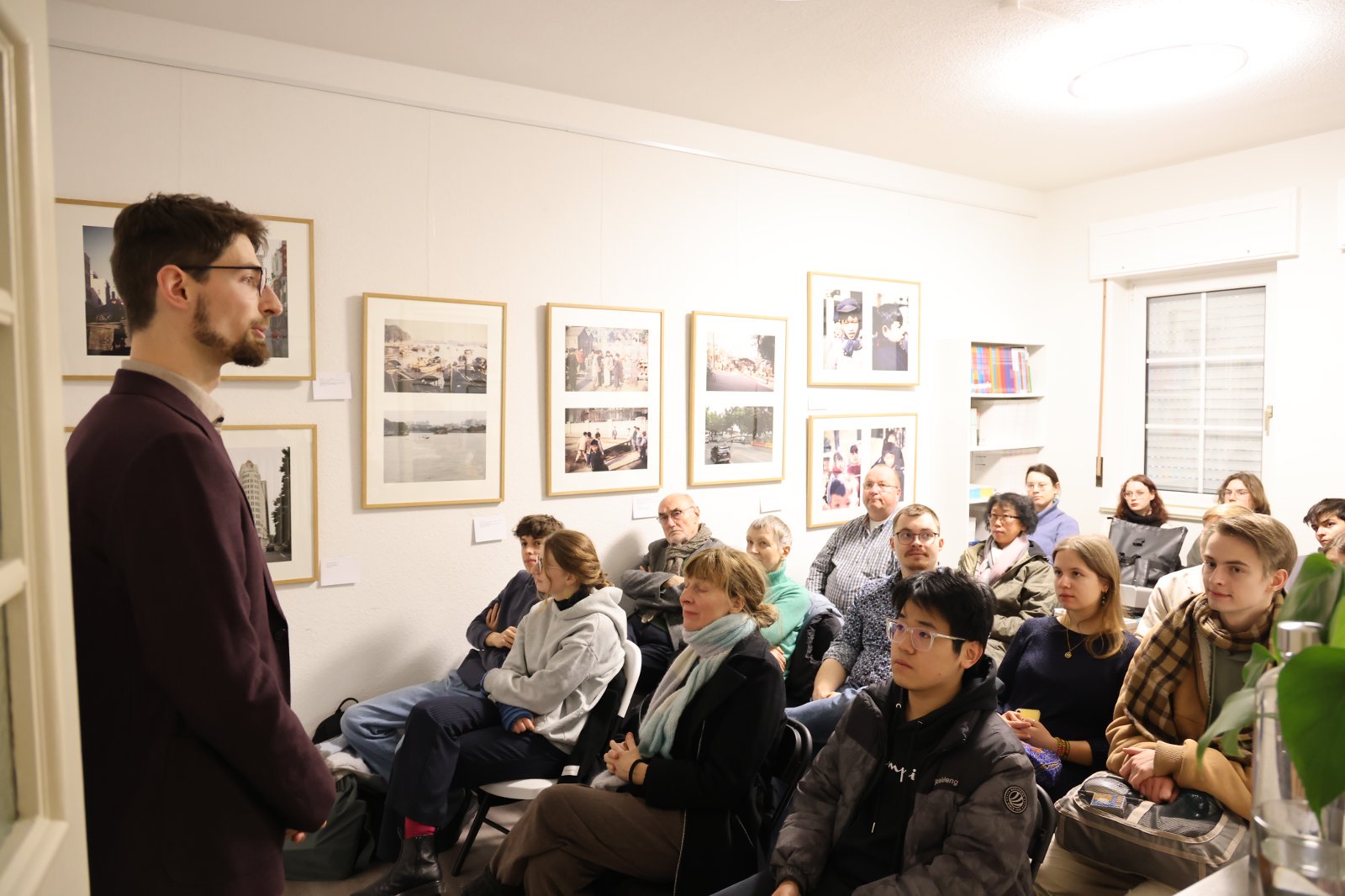
Becker (left) interacts with visitors during the photography exhibition at the Erfurt Confucius Institute in Germany. (Photo: Liu Zhonghua/People's Daily)
The closing ceremony for the "China 1961-2021 - Traces of Change" exhibition was held at the Erfurt Confucius Institute on January 23, 2026. The exhibition featured color photographs of China taken by German doctor Horst Köntopp in 1961 displayed alongside modern photos taken by his great-grandson, Jakob Moritz Becker.
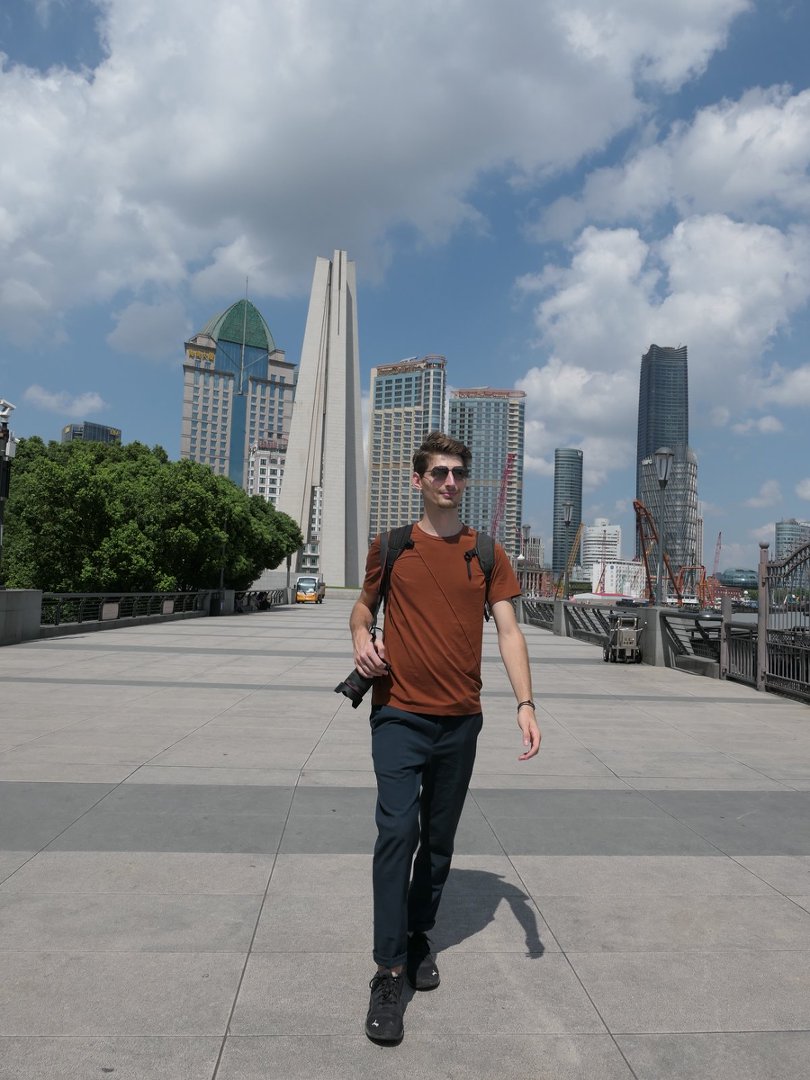
Jakob Moritz Becker (Photo provided to People's Daily)
In 1961, Köntopp visited China as part of a medical delegation and documented what he saw along the way, capturing nearly 300 images across cities including Beijing, Tianjin, Shanghai and Guangzhou, as well as rural areas in southern China.
The photographs depicted street scenes, public spaces and the daily lives of ordinary people. As color photography was not yet widespread in China at the time, the preserved color slides have become valuable visual records of Chinese society of that time.
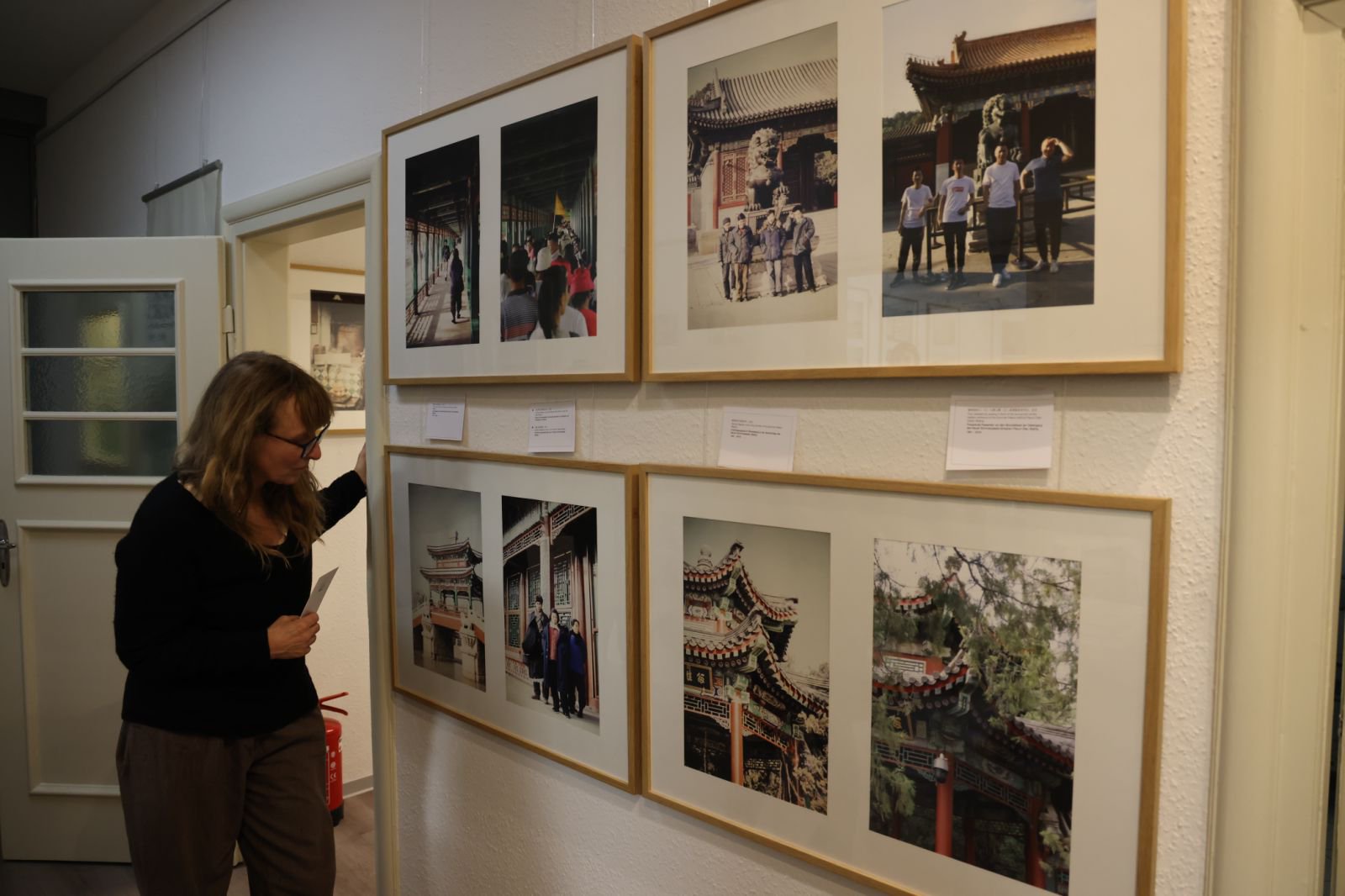
A local visitor explores the photography exhibition held by Becker at the Erfurt Confucius Institute in Germany. (Photo: Liu Zhonghua/People's Daily)
Inspired by these images, Becker traveled to China several times between 2017 and 2019 to recreate the original shots. With no detailed travel records available, he relied on photographic composition, shooting angles and brief film notes, along with architectural features and street layouts, to pinpoint each location.
In some cases, well-preserved historical buildings provided key references that enabled him to restore the original perspectives. In others, the scenes had been replaced by modern infrastructure, making it impossible to reproduce the images. Becker said such contrasts offered him a direct understanding of the scale and pace of China's development.
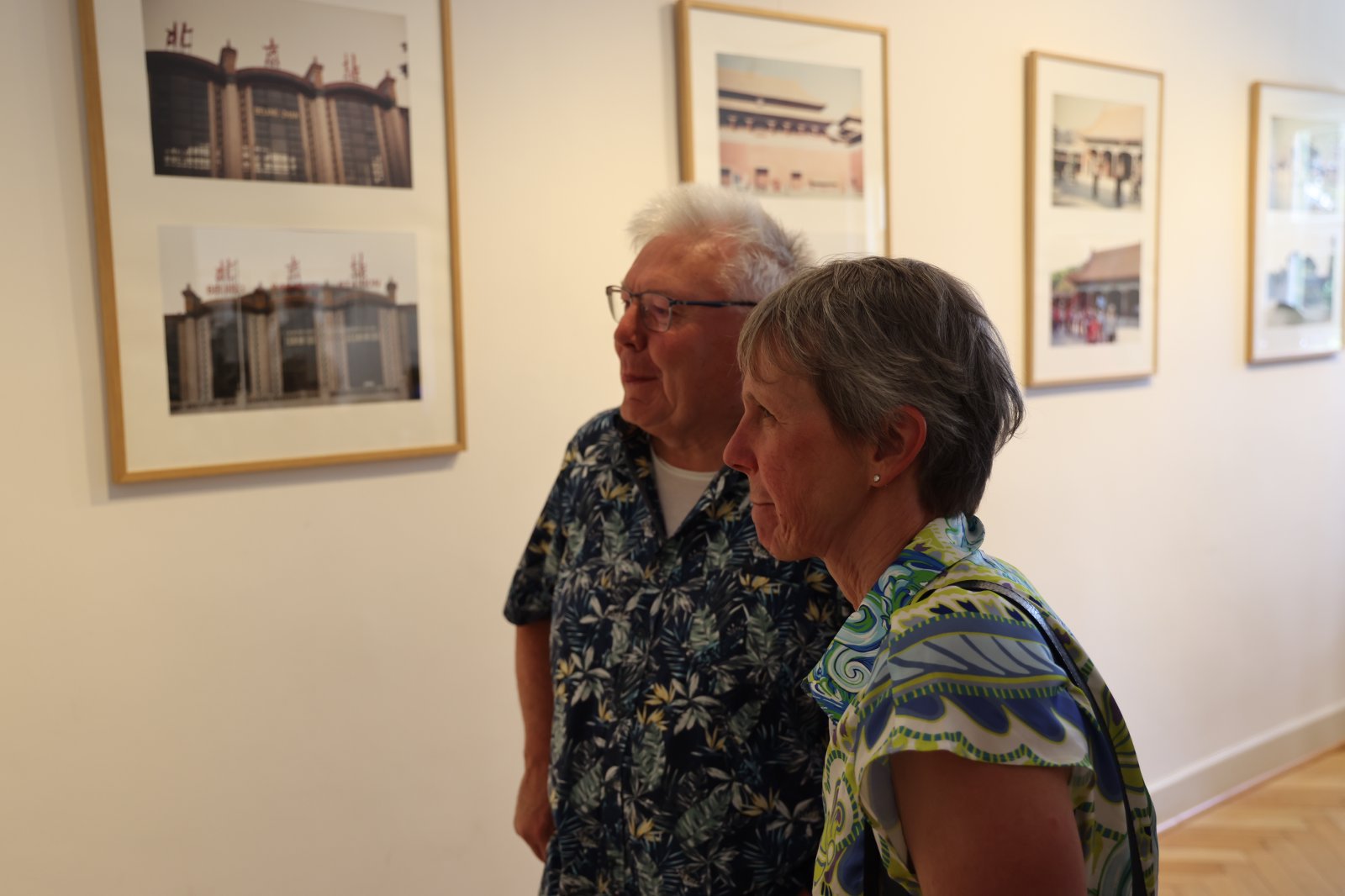
Local visitors explore a photography exhibition held by Confucius Institute Munich, Germany. (Photo: Liu Zhonghua/People's Daily)
He also noted that the changes were reflected not only in physical structures, but also in people's lifestyles. Earlier images show slower-paced, community-centered environments, while contemporary scenes highlight greater mobility, efficiency and modernization.
In 2021, Becker published a photo book, presenting the old and new images side by side. Initially created as a family keepsake, the book was later released in Chinese, English and German, attracting readers from multiple countries.
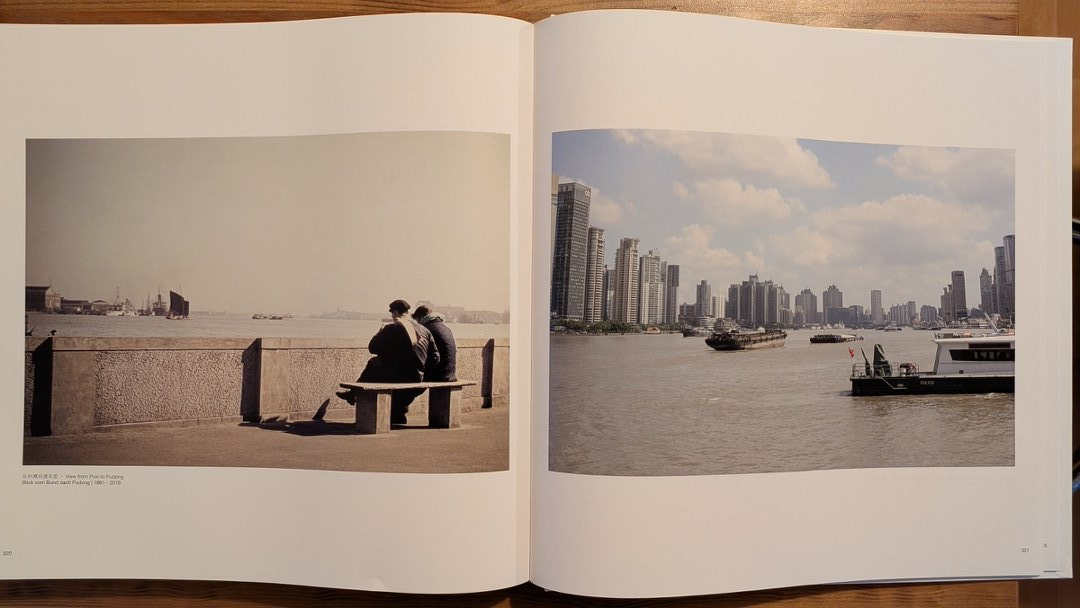
Comparison of old and new photos of Shanghai's Pudong area from the photo book China 1961-2021 - Traces of Change (Photo: Liu Zhonghua/People's Daily)
During his research and travels, Becker received support from local residents, scholars and overseas Chinese communities, who helped identify locations and provide historical context. He described the process as a meaningful form of cross-cultural collaboration.
Since 2022, Becker has held more than 10 exhibitions in cities including Munich, Hanover and Zurich. He also built a website called "tracesofchange.de" to share vivid stories of China's development with audiences around the world.
(Story compiled by Wang Jingyu)