


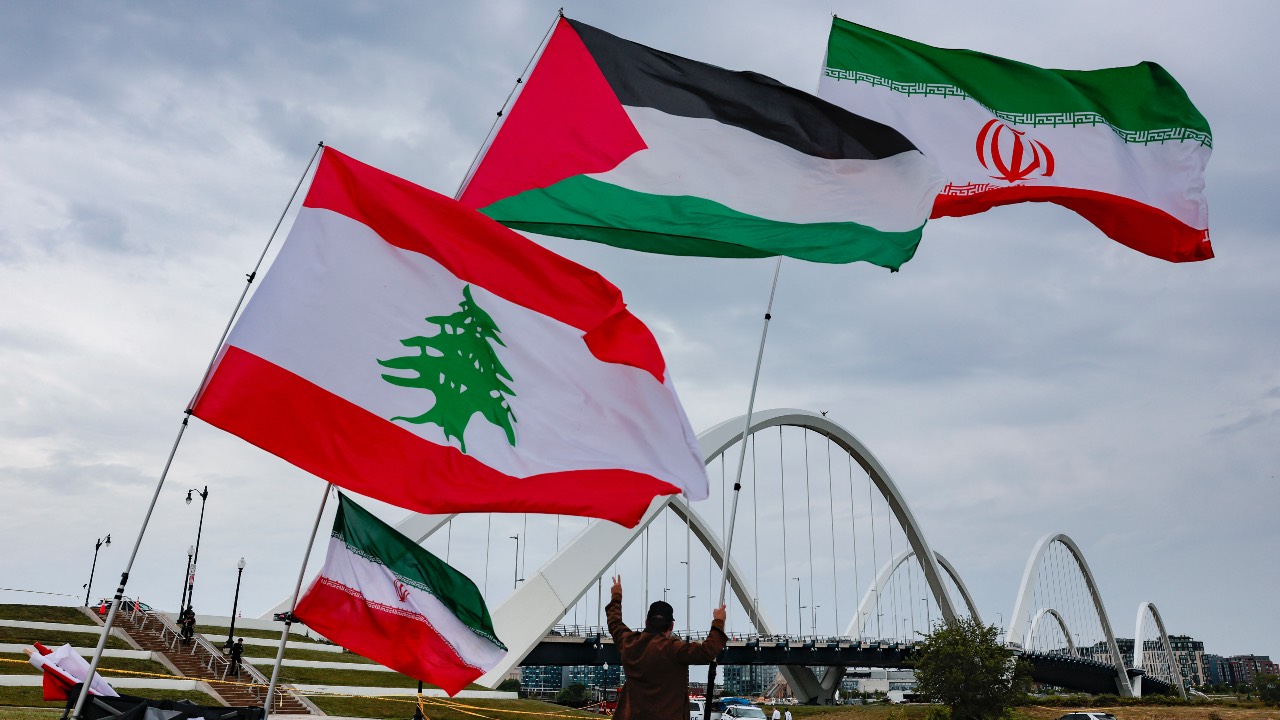
A protester against the US war in Iran gives a peace sign to protester Guido Reichstadter who stands atop the Frederick Douglass Memorial Bridge in Washington, DC. (Photo: AFP)
Iran retaliates as US disables its tankers
A US fighter jet on Friday disabled two Iranian-flagged tankers, prompting retaliatory attacks and rattling a shaky truce as President Donald Trump said he was awaiting Tehran's reply to his latest proposal to end the Middle East war.
Iranian officials accused the United States of violating the ceasefire with the tanker strikes and hampering diplomatic efforts to end the conflict.
US Central Command said an F/A-18 Super Hornet used precision munitions against two ships in the Gulf of Oman - gateway to the vital Strait of Hormuz - to prevent them from continuing to Iran.
An Iranian military official told local media the country's navy had "responded to the violation of the ceasefire and to American terrorism with strikes" and "the clashes have now ceased."
The latest incident came after another flare-up overnight in the strait, which an adviser to Iran's supreme leader compared to having "an atomic bomb."
US Secretary of State Marco Rubio reiterated on Friday that it was "unacceptable" for Tehran to control the crucial oil conduit.
Speaking to reporters in Rome, Rubio said Washington was expecting Iran's response to its latest proposal later in the day and expressed hope it would be "a serious offer."
Trump, at the White House, later added: "I'm getting a letter supposedly tonight, so we'll see how that goes."
Washington has sent Iran, via Pakistani mediators, a proposal to extend the truce in the Gulf to allow for talks on a final settlement of the conflict launched 10 weeks ago with US-Israeli strikes on Iran.
Iran's foreign ministry spokesman Esmaeil Baqaei said that the proposal was still "under review," according to the ISNA news agency.
Israeli strikes continue in southern Lebanon despite ceasefire
Lebanese state media reported Israeli strikes on the country's south after Israel's army issued an evacuation warning to several villages, as well as in other areas.
The Israeli military called on residents of more than half a dozen villages in southern Lebanon to immediately evacuate ahead of expected attacks against Hezbollah despite a truce with Lebanon intended to halt the fighting.
"In light of the terrorist Hezbollah's violation of the ceasefire agreement, the IDF is compelled to act against it forcefully," the military's Arabic-language spokesman Avichay Adraee posted on X, listing nine villages.
"For your safety, you must evacuate your homes immediately and stay away from the villages and towns by a distance of no less than 1,000 meters to open areas," he added.
Despite the ceasefire agreement in effect since mid-April, Israeli forces and Iran-backed Hezbollah have traded fire daily, mostly in southern Lebanon.
In an earlier statement, the Israeli military said it had struck more than 85 Hezbollah infrastructure sites "from the air and on the ground" in the past 24 hours.
It said these included weapon storage facilities, launchers, and structures used by Hezbollah "to advance terrorist activities against Israeli civilians and IDF soldiers."
The military also said it had struck an underground Hezbollah weapons production site in the Beqaa valley in eastern Lebanon, as well as fighters who were "advancing terrorist activities against IDF soldiers operating in southern Lebanon."
On Friday, Hezbollah said it launched missiles and drones at military bases in Israel in retaliation for a recent attack on Beirut and ongoing strikes in the south.
Lebanese authorities reported 11 people killed in Israeli strikes on the south on Friday.
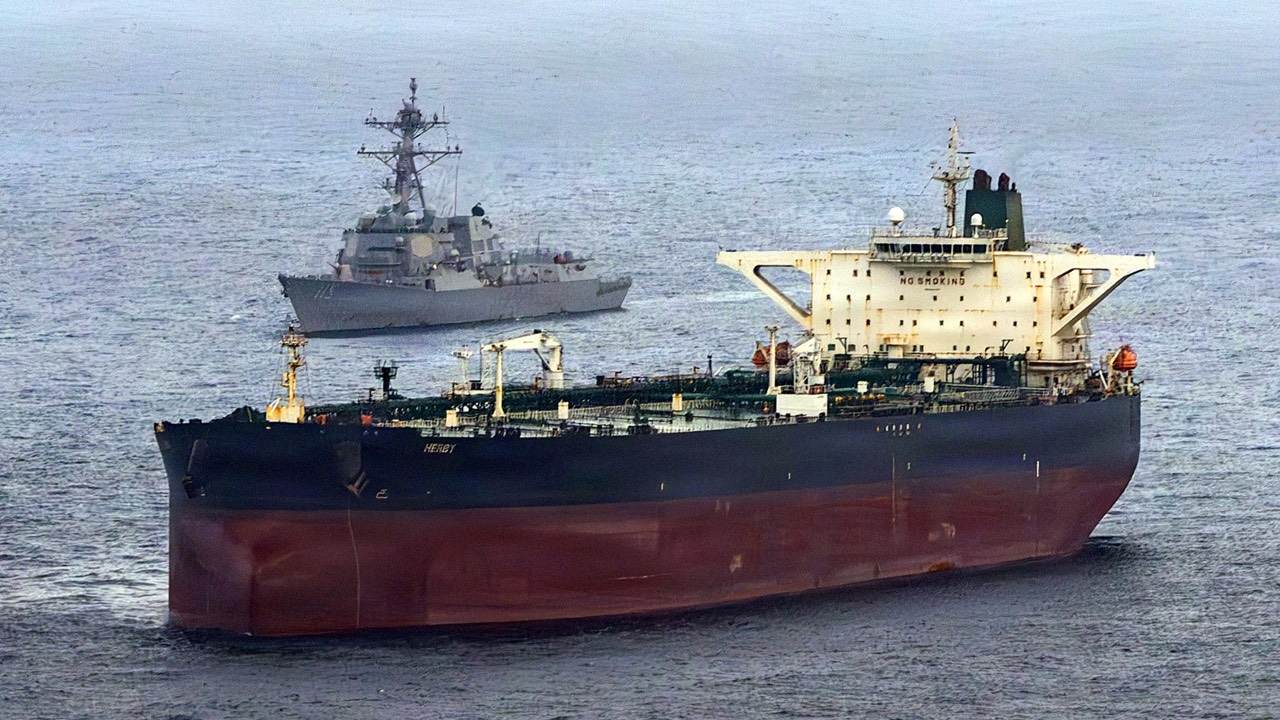
The Arleigh Burke-class guided-missile destroyer USS Rafael Peralta (DDG 115) implementing a maritime blockade against the Iran-flagged crude oil tanker vessel Herby while the latter was attempting to sail toward an Iranian port. (Photo: AFP)
Charity warns thousands of seafarers trapped and traumatized in Gulf
Several maritime charities have warned against the isolation and trauma that seafarers stuck in the Gulf for more than two months face due to the ongoing conflict in the region.
From captains to cooks, engineers and other officers, seafarers have found themselves not just stranded but in some cases right in the firing line of the US-Israel war on Iran.
At least 11 seafarers have been killed, according to the International Maritime Organization.
Gavin Lim, head of the Crisis Response Network for the Sailors' Society, a UK-based seafarers' charity, spoke with one crew whose vessel was hit in an attack.
"They thought: 'We were going to die,'" Lim said.
"They see drones flying, they see missiles flying, and then we see instances where the ships get hit," said Lim. "You can imagine that anxiety and fear building up."
The Seafarers' Charity cites hypervigilance, burnout, fatigue, loneliness, depression and anxiety as some of the mental strains facing the 20,000 seafarers stranded by the blockade of the Strait of Hormuz since February 28.