


ADDIS ABABA, May 10 (Xinhua) -- United Nations (UN) experts and officials have called for new policy approaches that place social inclusion, resilience and regional integration at the heart of Africa's development strategies to overcome inequalities, youth unemployment and accelerating climate threats.
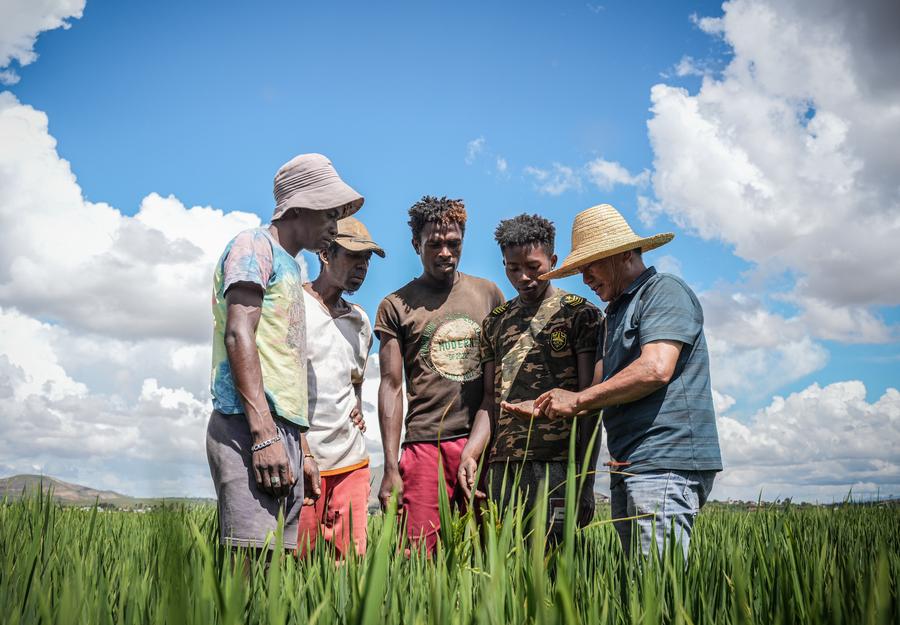
Chinese agronomist Hu Yuefang explains the growth of rice to local farmers at the China Hybrid Rice High-Yield Demonstration Base near Antananarivo, Madagascar, March 25, 2025. (Photo: Xinhua)
They made the call at a high-level global policy dialogue, themed "Africa's Development Pathways in a Fragmenting World," which was convened by UN Department of Economic and Social Affairs, in collaboration with the UN Economic Commission for Africa (UNECA) on Friday in the Ethiopian capital of Addis Ababa.
Experts at the policy dialogue, among other things, explored pathways to advance social inclusion, expand opportunities for youth employment and strengthen regional integration to support Africa's path to inclusive and sustainable growth.
Addressing the gathering, UNECA Executive Secretary Claver Gatete said that global shocks continue to expose Africa's vulnerabilities, from fuel and fertilizer disruptions to inflationary pressures and constrained fiscal space.
He emphasized the need to address immediate shocks and long-term challenges through strategic infrastructure corridors, deeper regional integration and accelerated industrialization.
Gatete highlighted the African Continental Free Trade Area and UNECA's work across 94 regional value chains as concrete pathways to boost intra-African trade, investment and manufacturing.
With the world's youngest and fastest-growing population, abundant natural resources and growing regional cooperation, participants of the dialogue said that the continent holds significant potential for inclusive and sustainable economic transformation.
Highlighting Africa's debt as a critical concern, they noted that Africa's debt stands at 1.2 trillion U.S. dollars, with 16 African countries at high risk of distress, limiting fiscal priorities. In addition, persistent inequalities, acute youth employment challenges and accelerating climate impacts are undermining progress and demand urgent and coordinated attention.