


Iran's Foreign Minister Abbas Araghchi said on Tuesday that Tehran is currently in consultations to develop regulations governing arrangements for the Strait of Hormuz based on international law.
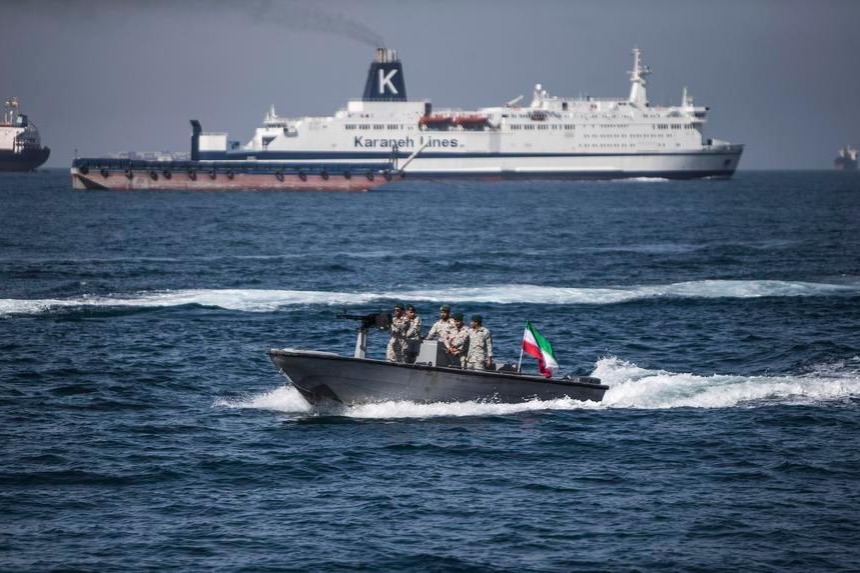
Photo via China Daily
Araghchi made the remark during a meeting in Tehran with Norway's Deputy Foreign Minister Andreas Motzfeldt Kravik, formalizing what senior officials have been signaling in recent weeks — that Iran intends to establish a new legal order for the waterway.
Last month, International Maritime Organization Secretary-General Arsenio Dominguez said that countries have no right to blockade international straits or impede the freedom of navigation through straits used for international transit.
Iran's arrangements for the Strait of Hormuz could face setbacks as a United Nations Security Council draft resolution calling for freedom of navigation in the strait is gaining traction with 112 cosponsors, Al Jazeera reported on Wednesday.
Qatar, Saudi Arabia and Kuwait have joined Bahrain and the United States as principal sponsors, according to the report. India, Japan, South Korea, Kenya, Argentina and most European Union member states have also signed on, it added.
More than one month after a tenuous ceasefire took effect, US and Iranian demands to end the war remain far apart.
Washington has called for Tehran to scrap its nuclear program and lift its chokehold on the strait, while Iran has demanded compensation for war damage, an end to the US blockade and a halt to fighting on all fronts, including in Lebanon.
The Lebanese Health Ministry said Israeli drones struck three vehicles on the main highway south of Beirut on Wednesday, killing eight people, including a woman and her two children.
Iran has urged the United States and Israel to accept its rights and demands, warning that any new aggression would be met with a swift and regretful response.
Iranian Brigadier General Reza Talaei-Nik told reporters that the US and Israel would have to submit to Iran's legitimate and definitive rights, either on the battlefield or at the diplomatic table.
"If the enemy does not yield to Iran's rightful demands in diplomacy, it should expect a repeat of its past defeats on the military field," Talaei-Nik said, the Mehr News Agency reported.
The conflict is weighing heavily on global energy markets. Global oil supply will fall by around 3.9 million barrels per day across 2026 and undershoot demand because of disruptions caused by the crisis, the International Energy Agency said on Wednesday, with more than 1 billion barrels of Middle East supply already lost.
Brent crude futures edged down slightly to around $107 per barrel, after a three-day rally driven by the Hormuz deadlock.
Energy deals
Meanwhile, Iraq and Pakistan have cut deals with Iran to ship oil and liquefied natural gas from the Gulf, according to five sources with knowledge of the matter, Reuters reported.
In a deal between Baghdad and Tehran that has not been previously reported, Iraq secured safe passage for two very large crude carriers, each carrying about 2 million barrels of crude, that passed through the strait on Sunday.
Iraq is working to secure Iran's approval for more transits, an Iraqi oil ministry official familiar with the initial deal and current talks told Reuters, as the government seeks to safeguard the oil revenues that make up 95 percent of its budget.
A second ministry official and a shipping industry source also confirmed the talks with Tehran. All of the sources requested anonymity as they were not authorized to speak on the matter.
Similarly, two tankers loaded with Qatari liquefied natural gas are headed to Pakistan following a separate bilateral agreement between Islamabad and Tehran, two industry sources with knowledge of the matter told Reuters, also asking not to be named as they were not permitted to speak with media.
In another development, the Arab League urged Iran on Tuesday to cease all hostile acts against Arab states and condemned the alleged infiltration of the Islamic Revolutionary Guard Corps into Kuwait's Bubiyan Island, which resulted in the injury of one of the Kuwait Armed Forces' personnel.
Arab League Secretary-General Ahmed Aboul Gheit said the armed infiltration of Kuwaiti territory "constitutes a dangerous precedent that cannot be tolerated and represents a serious escalation".
Iran's Foreign Ministry rejected the claims as "baseless", saying four Iranian officers had entered Kuwait's territorial waters because of a navigation system disruption during a routine maritime patrol mission and called on Kuwaiti authorities to resolve the issue through official channels.