


WINDHOEK, May 21 (Xinhua) -- Namibia has launched two major initiatives aimed at securing sustainable financing for the country's community-based conservation program.
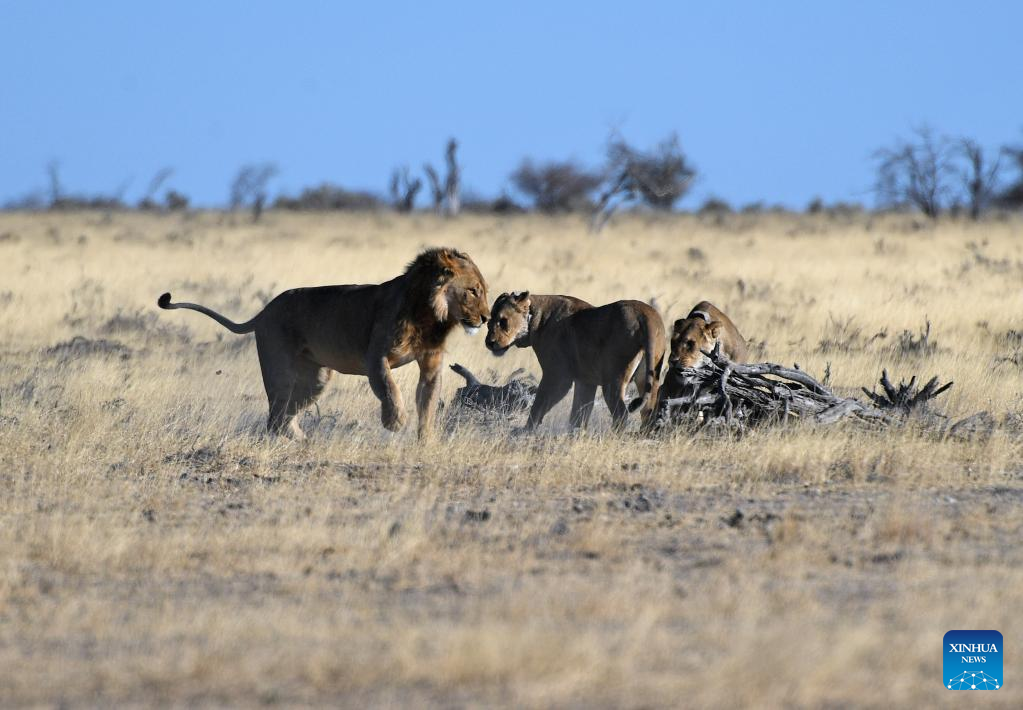
Lions are pictured in the Etosha National Park in Namibia, Aug. 15, 2022. (File photo: Xinhua)
The Namibia for Life initiative, a 1-billion-Namibian-dollar (about 60 million U.S. dollar) program, was unveiled late Wednesday. It is among Namibia's most significant conservation financing agreements and Africa's first Project Finance for Permanence model.
Through the initiative, the government, in partnership with communal conservancies and international stakeholders, aims to secure the conservation of more than 20 million hectares of land, representing over 20 percent of Namibia's territory.
The community-based conservation approach has helped revive key wildlife populations in Namibia over the years, with black rhino numbers increasing from only a few hundred in 1990 to about 2,000 today. Significant recoveries have also been recorded among elephant and desert-adapted lion populations.
The program currently supports 87 communal conservancies and is expected to expand to as many as 100 over time, benefiting more than 283,000 people whose livelihoods depend on wildlife and natural resources.
Delivering a keynote address at the launch, Prime Minister Elijah Ngurare said the program would strengthen long-term conservation efforts by empowering local stakeholders, consolidating political support, and aligning resources around shared goals.
"It also enhances management efficiency while broadening funding opportunities through diversified financial sources," he said.
In addition, a dedicated Socio-Economic Development Fund was also launched to help address community priorities by supporting local enterprises, creating jobs, building skills, and investing in small-scale infrastructure. The fund is intended to ensure that conservation continues to generate tangible economic benefits for rural communities.