


BERLIN, May 21 (Xinhua) -- The European Commission on Thursday cut its 2026 growth forecast for Germany to 0.6 percent from 1.2 percent, citing persistent headwinds from US tariffs, high energy prices and geopolitical uncertainty.
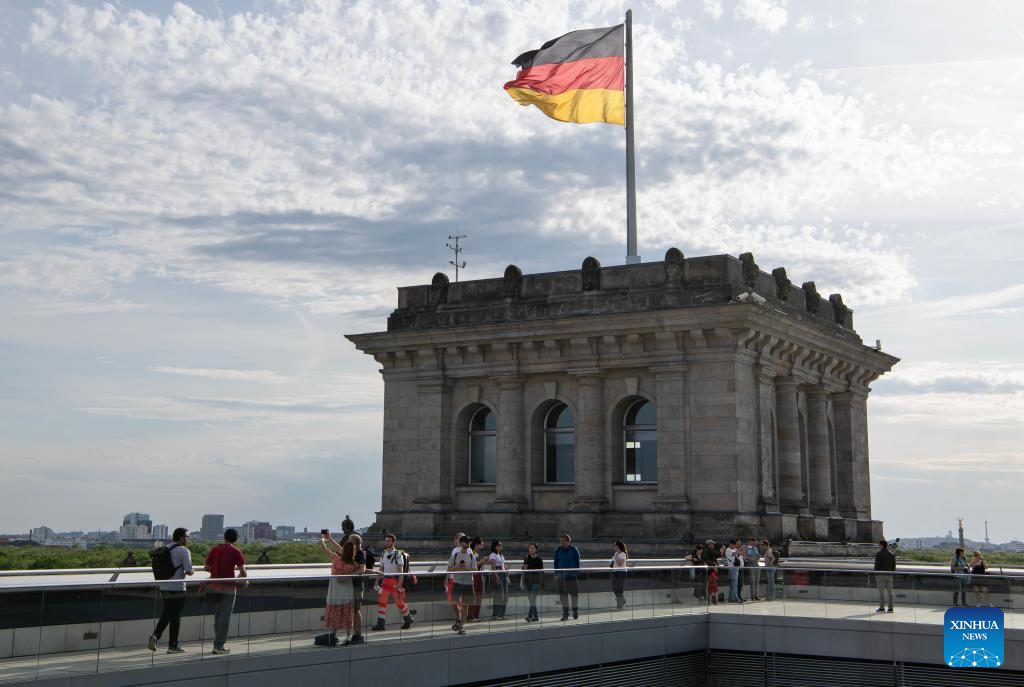
People visit the Reichstag building in Berlin, Germany, May 3, 2026. About 11,700 guests visited the Reichstag building during its open day event on Sunday. (File photo: Xinhua)
According to the Commission's spring forecast, Europe's largest economy has recorded one of the weakest post-pandemic recoveries among advanced economies, as weak exports and subdued investment offset resilient household consumption, with its economy projected to grow 0.9 percent in 2027.
After two consecutive years of contraction and growth of just 0.2 percent in 2025, exports are expected to remain broadly stagnant, with trade tensions and geopolitical risks deepening structural challenges in the country's export-oriented industrial base, the report said.
High energy costs remain a key drag on the outlook. The Commission said the Middle East conflict is expected to keep inflation elevated in 2026 by pushing up energy prices, eroding household purchasing power and squeezing corporate profit margins. Analysts said the impact on demand will continue to burden an economy heavily reliant on imported raw materials.
Labor market conditions are also expected to weaken as structural adjustments continue. Manufacturing employment is projected to decline further, partly offset by job gains in public services such as healthcare and education. The unemployment rate is forecast to rise to 4.0 percent in 2026, before easing slightly to 3.9 percent in 2027.
Stronger fiscal support would be needed to boost growth through higher public investment and defence spending. However, delays in budget approval and administrative bottlenecks were limiting the near-term impact of such measures.
Looking ahead, Germany is banking on multi-billion-euro investments in infrastructure and defence to support growth over the coming years, with some results expected by 2027. Economists say the country is facing growing pressure to push structural reforms in pensions, taxation, labour markets and bureaucracy to restore long-term competitiveness.
The report said the outlook could improve if energy market conditions stabilise, but warned that the duration of the Middle East conflict and continued uncertainty over US tariff policy remain key risks to the recovery.