


Two villages in Kenya, ninety kilometers apart, share a story of transformation powered not by government programs, but by the sun.
In Kitonyoni village, life used to pause when the sun went down. Shops closed early, classrooms went dark, and clinics struggled to provide even the most basic care. Today, solar energy is transforming daily life.
"Initially, business was slow because there were few clients," says William Ndolo, a tailor in Kitonyoni. "But after the solar energy installation, things improved. We can work for longer hours because we can open from 6:00 a.m. to 10:00 p.m. It is also cleaner, because instead of using a charcoal iron, we now use an electric iron."
"We used charcoal at first. But it took a long time to light it. It could take up to 30 minutes. And after ironing a small section, it would go cold."
Monthly earnings have risen from less than $231 to between $385 and $462, depending on the season.
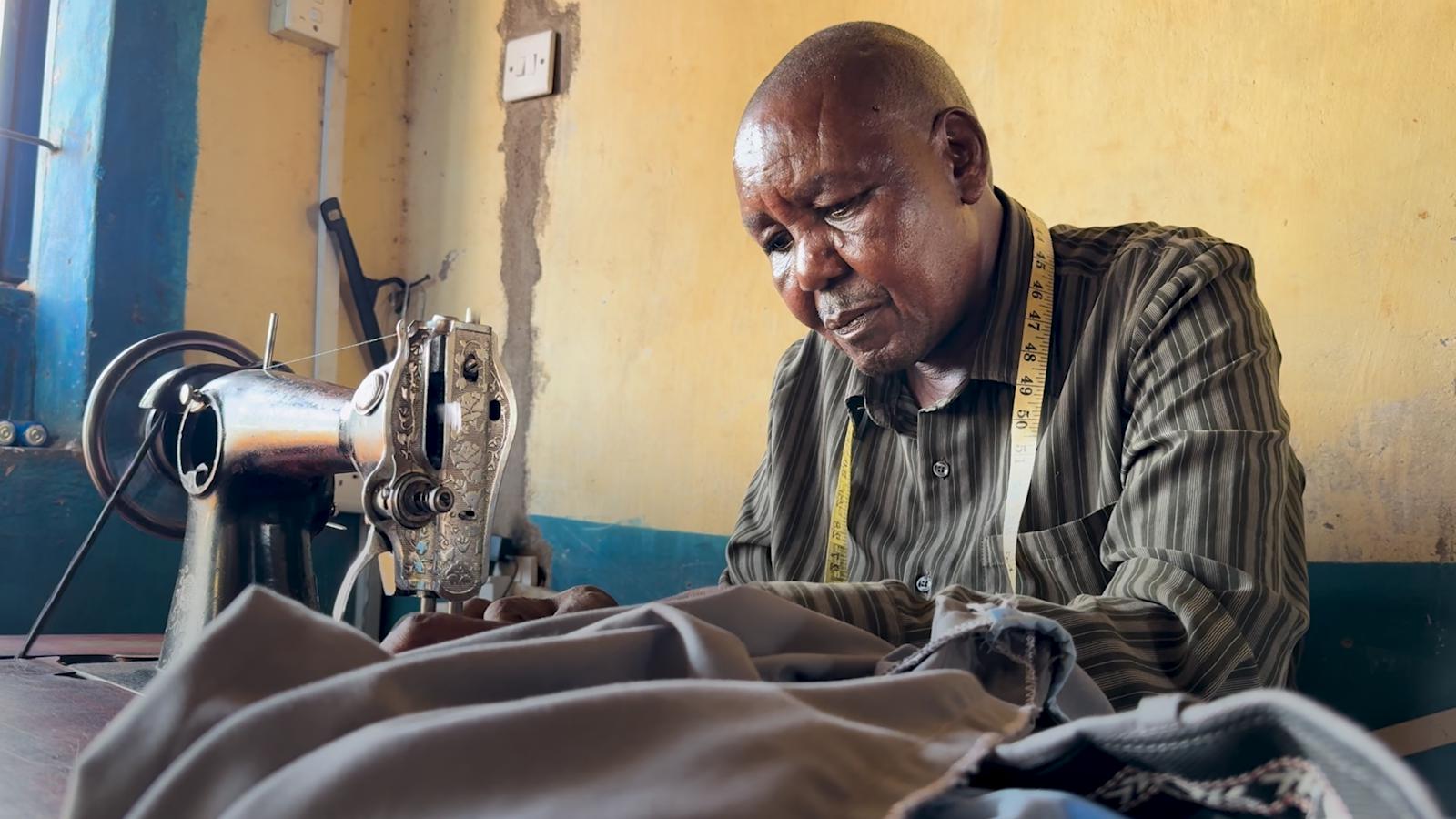
William Ndolo, tailor, at his shop in Kitonyoni village in Makueni county, Kenya. (Photo: CGTN Africa)
For Harrison Munyungu, a community leader involved in the solar project, the benefits go beyond business.
"Before we had solar power, we used kerosene lamps, but now we have solar-powered lights in our shops. It has benefited us a lot," he said.
Even the local dispensary has felt the impact. Nurse Elizabeth Munyao describes the difference with quiet pride.
"At least you can attend to patients comfortably because there is light. Compared to before, or even in some other facilities, you find that there is no electricity. I have worked in places where there was insufficient electricity, where you have to use your phone torch to provide services," Munyao says.
Solar energy has allowed the clinic to run services uninterrupted, power essential medical equipment, and maintain vaccines and laboratory operations.
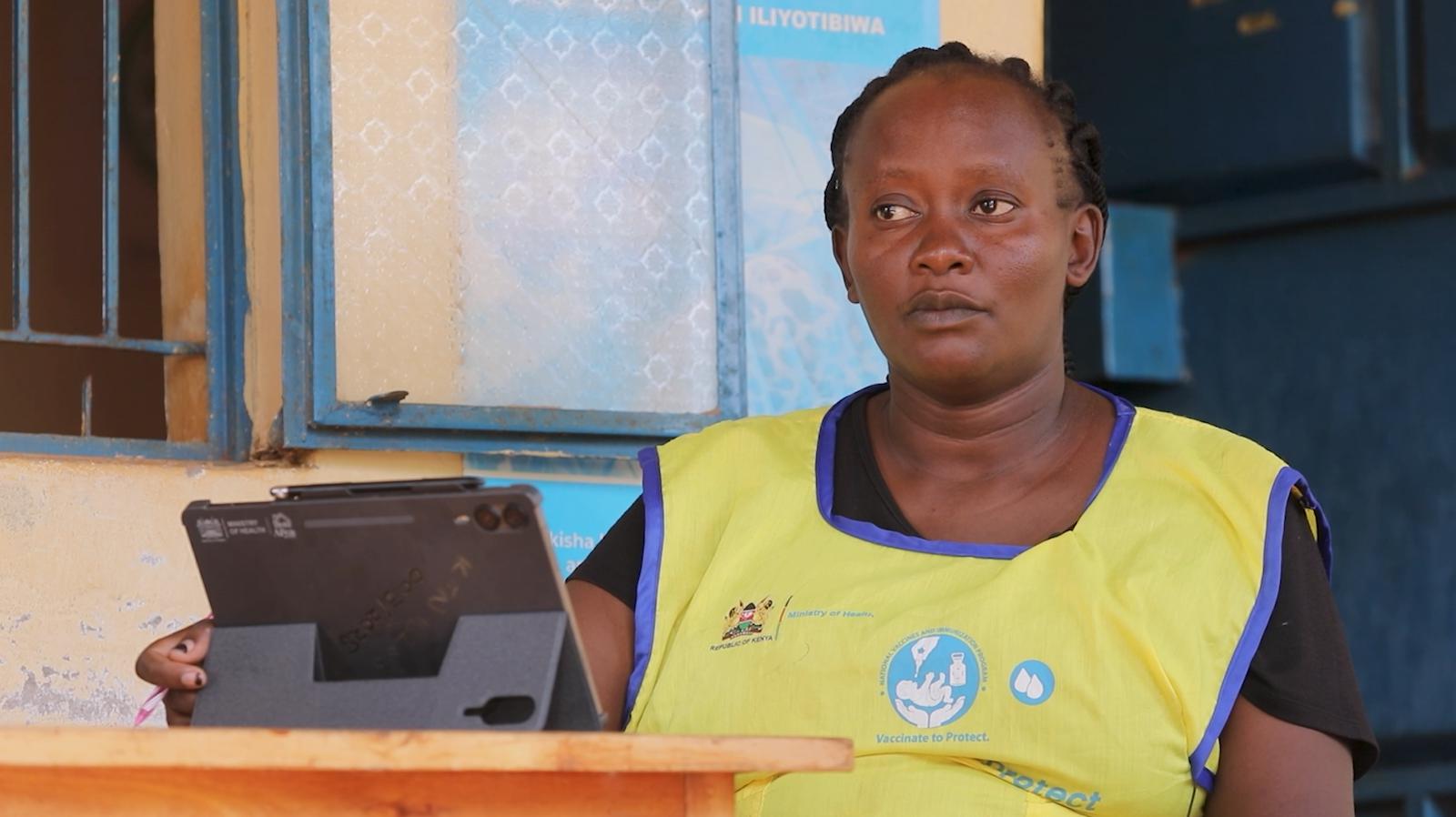
Elizabeth Munyao, nurse, at the Kitonyoni dispensary in Makueni county, Kenya. (Photo: CGTN Africa)
At Kyaka Comprehensive School, students and teachers have found their own rhythm, illuminated by the sun.
"We had a lot of problems," says Senior Teacher Martin Munguti. "We used torches and lamps for light, but now solar energy has helped us greatly. It has made learning easier for students. We can also charge our computers and phones and use them for teaching."
While Kitonyoni has relied on solar energy for nearly a decade, ninety kilometers away, Kitonyini Primary School has adopted it more recently, extending its use to pump water for the school and the surrounding market.
"There was a problem with electricity. It was on and off. So solar energy is available all the time," says Headteacher Judith Mutiso. "We also wanted a borehole and a farm for irrigation, and we needed water in the school. Using electricity would have been far more expensive, so we switched to solar."
Children who once carried jerry cans to clean classrooms now rely on solar-powered water systems. Their tablets, computers, and even farming equipment run on solar energy.
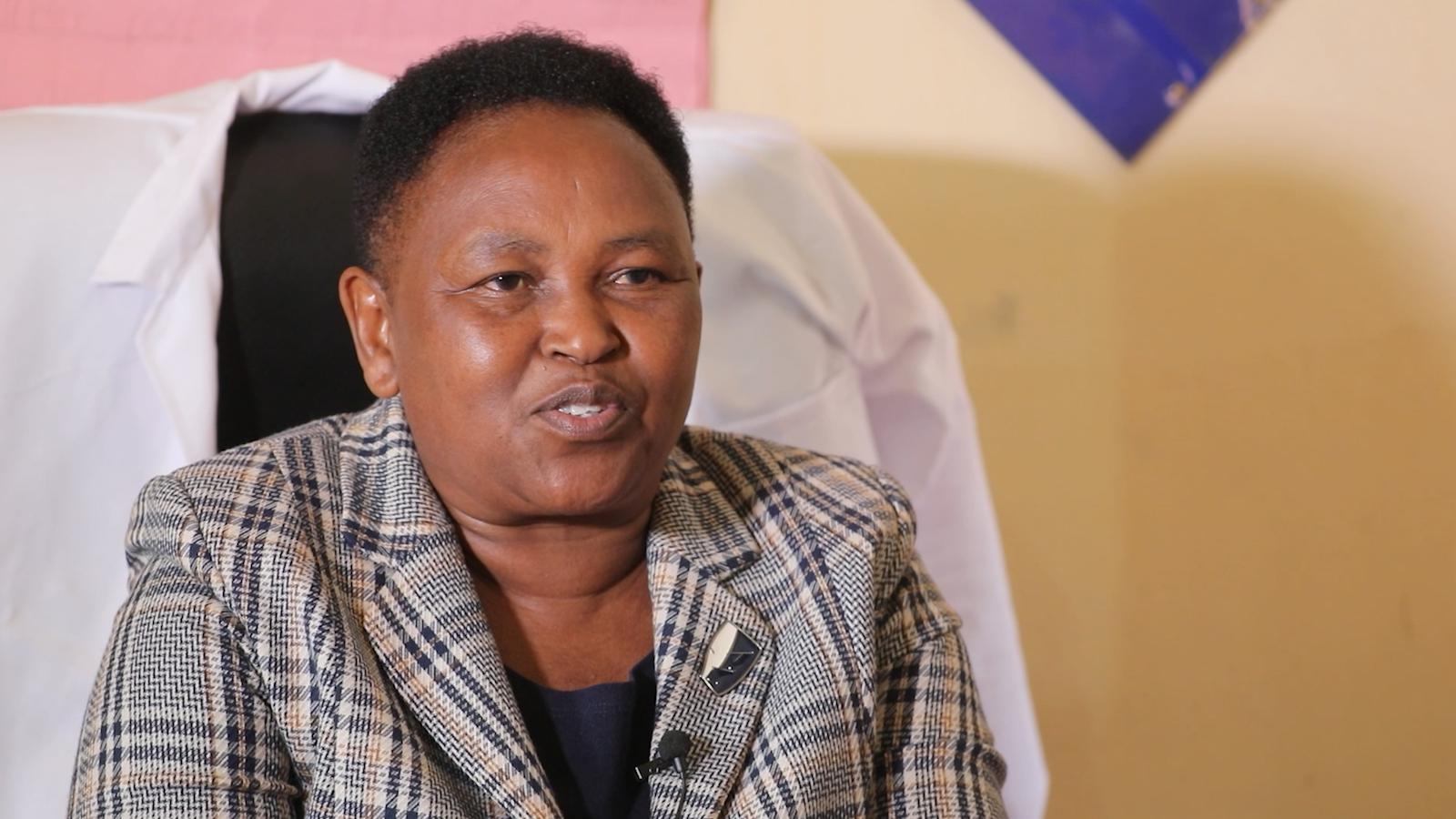
Judith Mutiso, headteacher, Kitonyini Primary School in Makueni county, Kenya. (Photo: CGTN Africa)
Winfred Muasya, who oversees the school's water distribution, explains the delicate balance required to ensure solar-powered water reaches every corner.
"If the solar panels are fully charged, water reaches all areas. But when there is no sunlight, I have to ration the supply," she says.
Even the wider community has felt the ripple effects.
For local market tailor Timothy Mutiso, the change is immediate and practical.
"We used to fetch water from far away, but now it is just close to us. When I am ironing clothes, I use water. Sometimes I can wash some of the clothes. So it helps me a lot," he said.
Mutiso and other school leaders hope solar energy can be used to teach students not only academics, but also practical skills for the future.
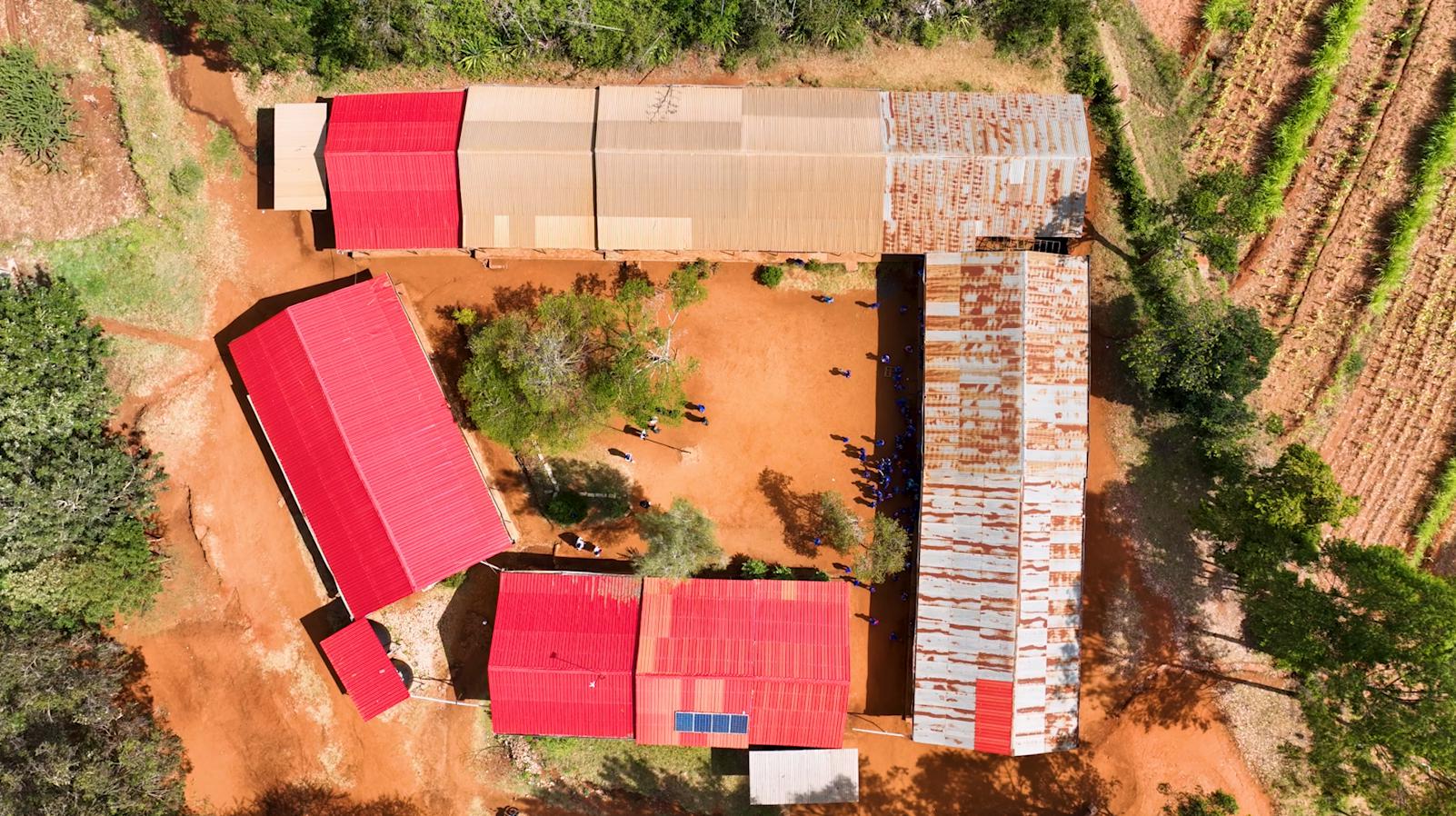
Aerial view of Kitonyini Primary School in Makueni county, Kenya.
"We have CBC," she says, referring to Kenya’s Competency-Based Curriculum. "Children have learned that solar energy comes from the sun. When they grow up, they will know an alternative, more economical source of energy. Some of them are even learning how to connect batteries. They will be able to choose to work with solar energy, to build their own systems, and to work in this field."
From Kitonyoni to Kitonyini, the story is the same: a quiet revolution under the sun, empowering communities, classrooms, clinics, and markets.
Solar power here is not just about light. It is about life, opportunity, and the promise of a brighter future.