


In the heart of Madaba, known as the "City of Mosaics," ancient history is not only preserved in archaeological sites but also recreated by a new generation of artisans. The Madaba Institute for Mosaic Art and Restoration (MIMAR) has become a center for preserving and revitalizing the ancient craft, even as regional instability creates new challenges for the local economy.
Located 30 kilometers south of Amman, MIMAR is one of only three institutes in the Middle East dedicated to mosaic preservation and production. Through its specialized diploma program, the institute trains local students to restore deteriorating archaeological mosaics while also creating contemporary designs. More than a school, MIMAR has become part of a broader cultural revival, helping preserve an art form that once decorated the palaces and temples of ancient civilizations and remains an important part of Jordanian identity.
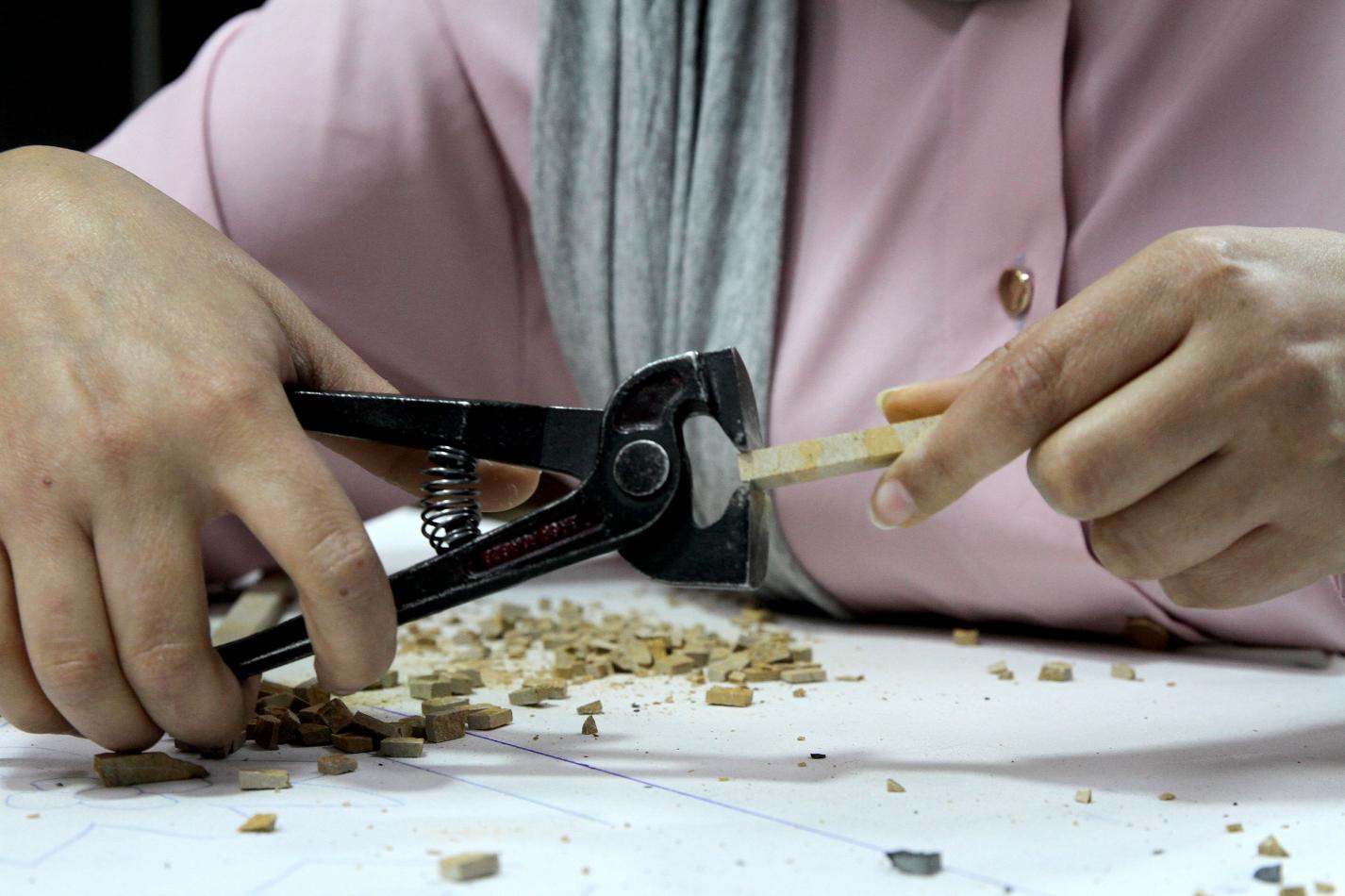
An artisan makes mosaic tiles. (Photo by Nader Daoud/People's Daily)
As regional conflicts continue to weigh on tourism, mosaic craftsmanship has become an important source of economic stability for local residents.
For 26-year-old Rania, a MIMAR graduate, the relatively low production costs of mosaic art have allowed her business to continue even as tourist numbers decline. Working from her family home and on projects commissioned through the MIMAR workshop, she is currently creating a vibrant mosaic of the black iris, Jordan’s national flower.
"I studied at the institute for two years before starting my own business," Rania said. "Now I collaborate with MIMAR on large-scale projects. It gives me a stable income and helps me support my family."
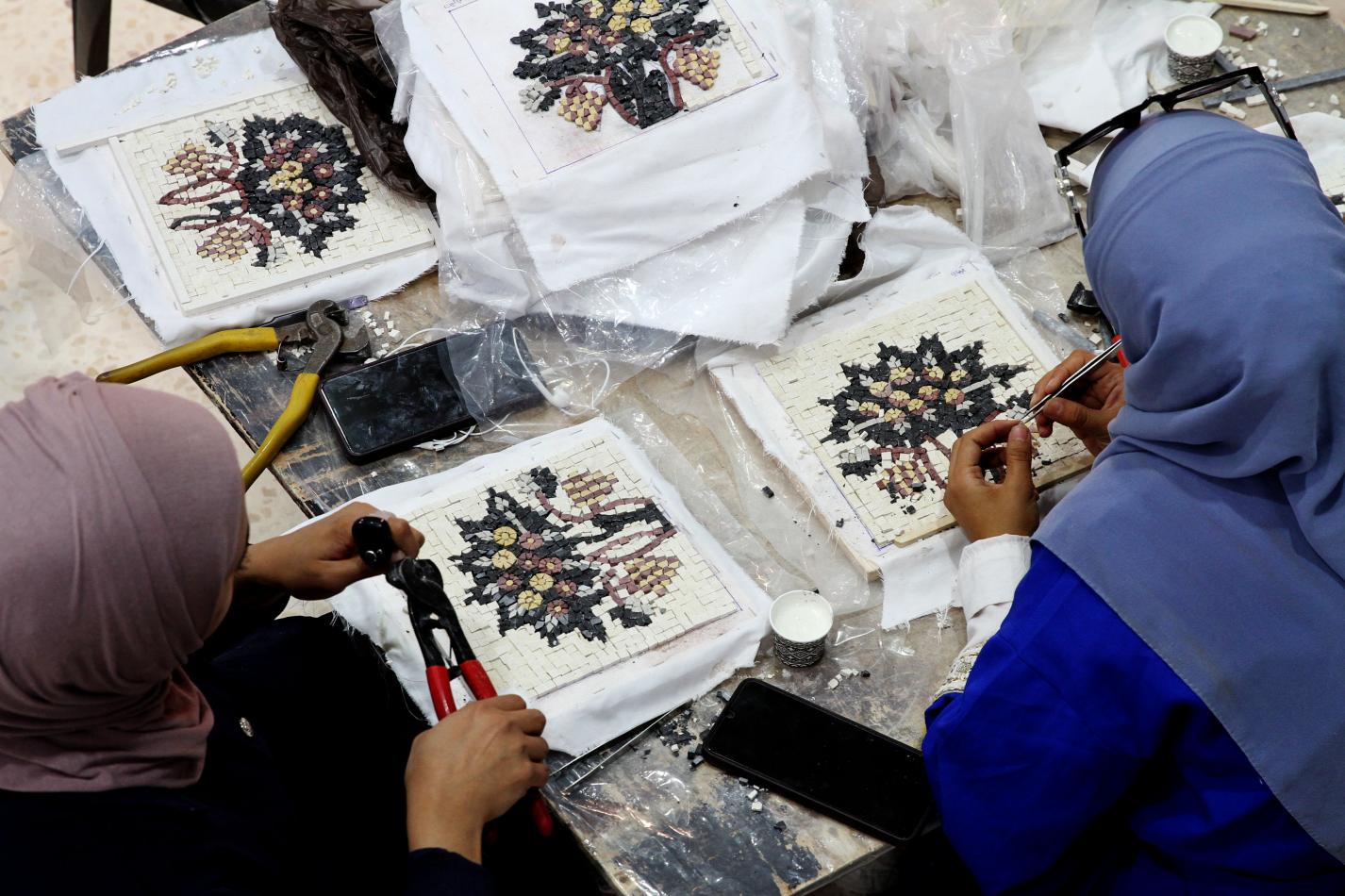
Artisans create mosaics with olive trees, which are a traditional motif. (Photo by Nader Daoud/People's Daily)
The institute has also become a platform for female empowerment. Aisha, 32, shifted to mosaic art after earning a degree in tourism management and now supervises 70 female artisans at the workshop.
"We love this profession because it represents our city,” Aisha said. “After 10 years here, I've seen how this work creates economic stability and improves the social standing of women in our community."
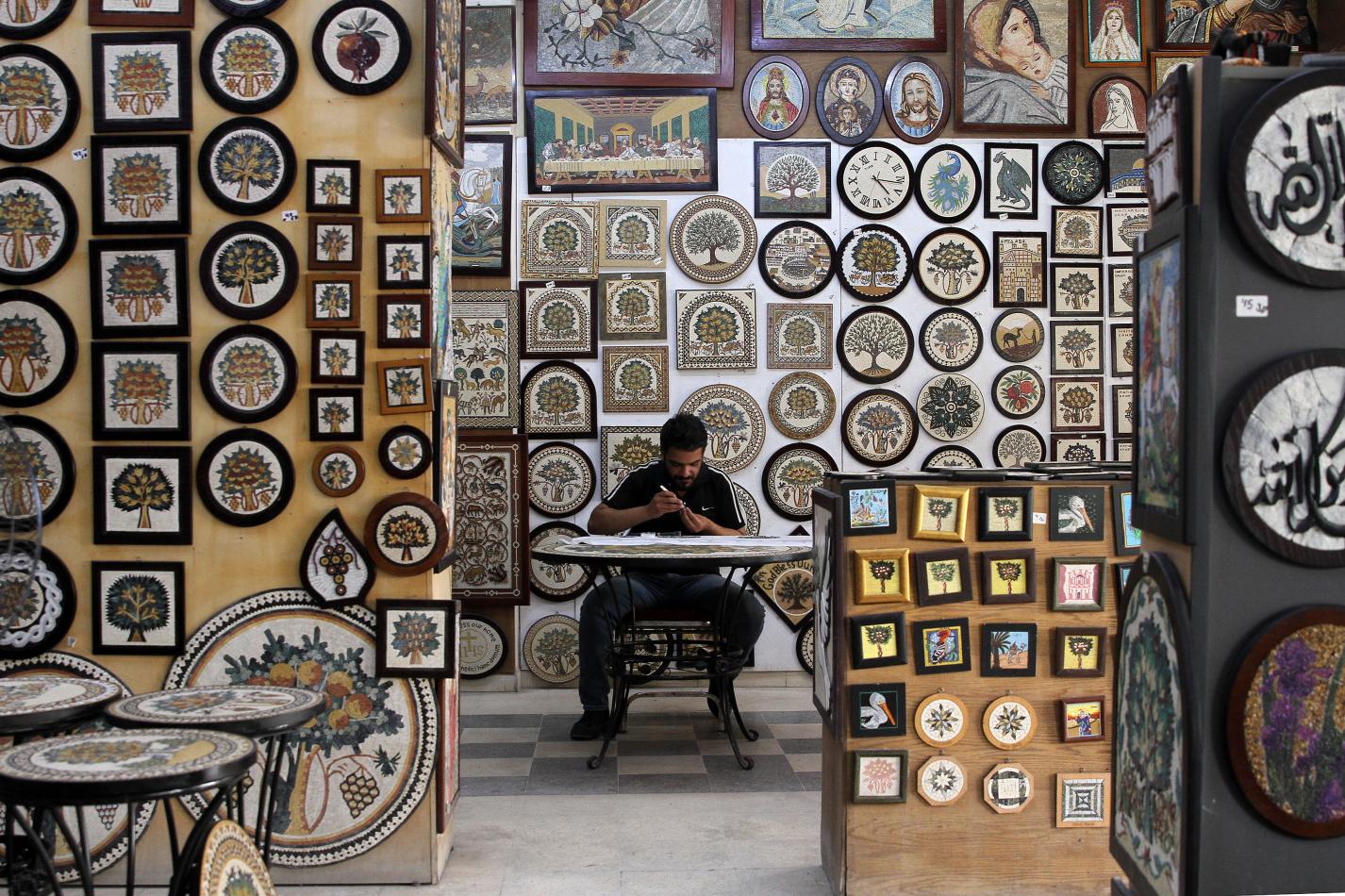
Mosaic artworks cover the walls. (Photo by Nader Daoud/People's Daily)
Although Jordan remains stable, the wider regional conflict that erupted in late February has affected tourism across the country.
"This country is surrounded by war, but Jordan itself is calm, safe and beautiful," Aisha said.
Still, the impact is visible in Madaba. International tourist arrivals have dropped sharply, leaving souvenir shops and historic streets unusually quiet.
"It is very difficult for the tourism sector to survive with so few visitors," Aisha said. While the workshop continues producing high-quality mosaic art, the quieter streets reflect the vulnerability of the local tourism industry.
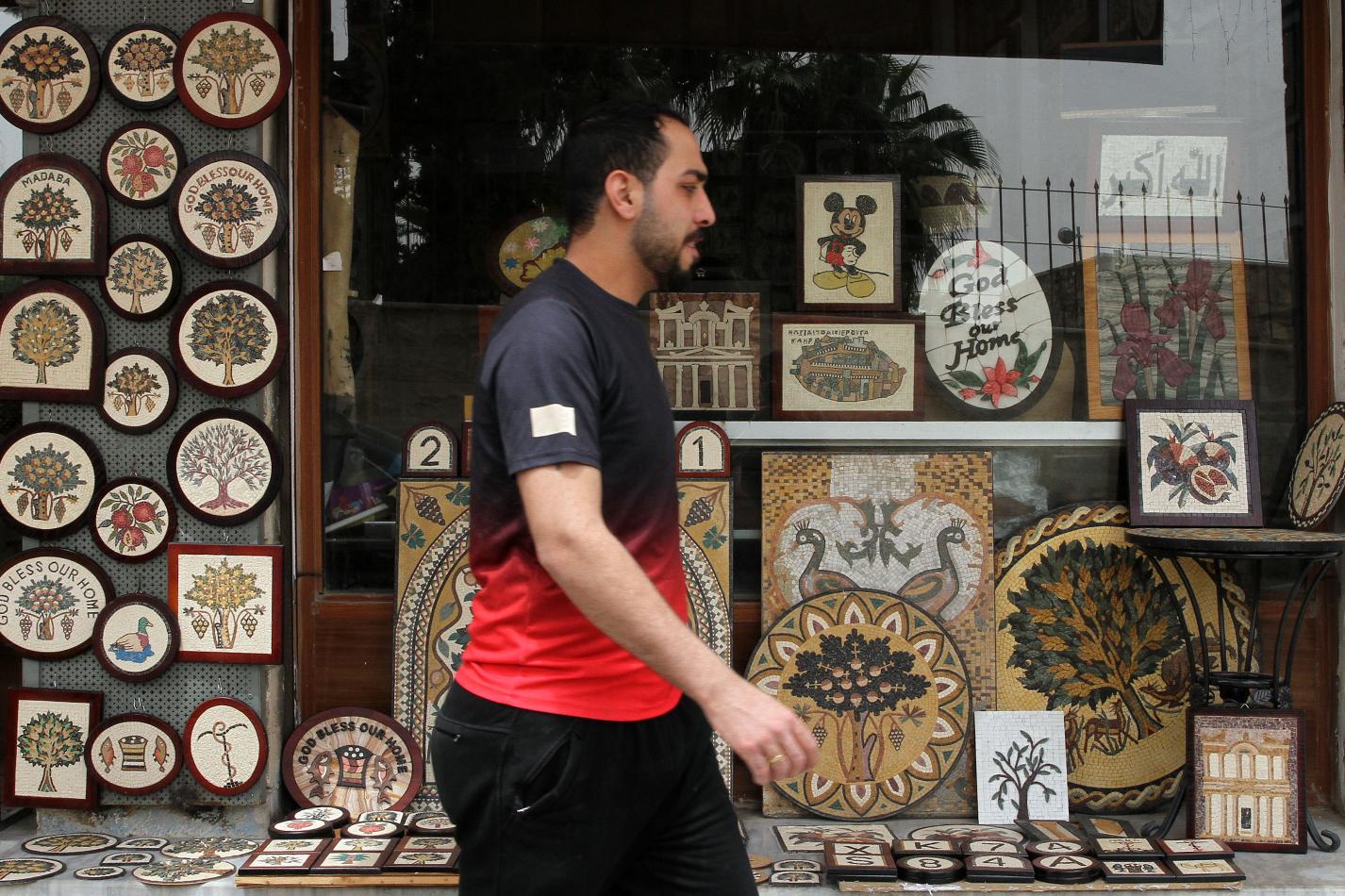
A man walks past a window of displayed mosaics. (Photo by Nader Daoud/People's Daily)
The artisans of Madaba hope to send a clear message: The city remains a place of peace, creativity and cultural heritage. By supporting the local mosaic industry, visitors are not only purchasing artwork but also helping sustain specialized education programs and supporting resilient women determined to preserve Jordan's rich history, one tile at a time.