


Denmark's caretaker prime minister, Mette Frederiksen, has again been called on to lead negotiations to form a government, after two rounds of failed coalition talks following inconclusive elections in March.
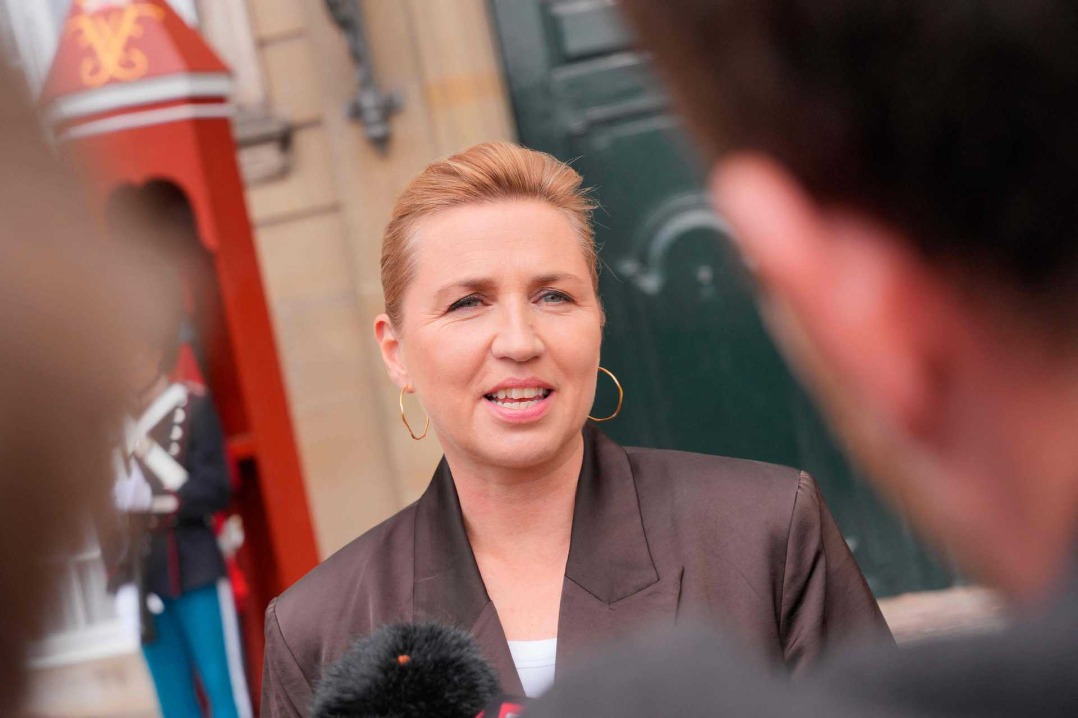
Photo via China Daily
Frederiksen was reappointed by Denmark's King Frederik X on Saturday, after Deputy Prime Minister Troels Lund Poulsen, leader of the center-right Venstre party, announced on Friday that talks had broken down.
"Parties representing a majority in the Folketing (Denmark's Parliament) have recommended that acting Prime Minister Mette Frederiksen be appointed to lead negotiations on the formation of a government," the palace said in a statement.
After failing to form a new coalition in the first round of talks, Frederiksen handed the mandate to Poulsen on May 8.
"I did my best … Now, I'm going home to recharge. And yes … maybe mow some grass instead of untangling political knots," Poulsen said in a social media post.
Under a procedure known as the King's Round, each parliamentary party meets the king to declare its preferred leader for government talks. The candidate who secures the broadest backing can attempt to form a government.
"We'll start tomorrow and in the days that follow," Frederiksen said on Saturday after meeting with the king, Danish broadcaster DR reported.
Negotiations have remained deadlocked for more than 60 days — the longest government-formation process in Denmark's history — at a sensitive moment, with tensions involving Greenland and the United States adding political pressure.
Greenland, which is an autonomous Arctic territory within the Kingdom of Denmark that hosts the US Pituffik Space Base and that has significant deposits of strategic minerals, has become a focal point of US, Danish, and European foreign policy.
As melting ice unlocks new Arctic shipping routes and valuable rare-earth mineral deposits, the territory is increasingly tied into global defense and economic planning, according to the European Parliament.
US President Donald Trump last year renewed past threats to annex the island, prompting concerns over the stability of the transatlantic NATO alliance.
Greenland, Denmark, and the US are currently engaged in diplomatic talks regarding the island's strategic future and to ease tensions.
No bloc secured a majority in Denmark's March 24 election, which left Parliament severely fragmented.
Frederiksen's Social Democrats posted their weakest result since 1903, yet still remained by far the largest party.
The royal household said the king had tasked Frederiksen with exploring a center-left coalition that could include the Socialist People's Party and the social-liberal Radikale Venstre, Agence France-Presse reported.
Denmark's traditional far-right party, the Danish People's Party — long influential but weakened in 2022 — more than tripled its tally of votes, to 9.1 percent.
Together, the three anti-immigration parties took 17 percent, a level that has held roughly steady for Denmark's populist right over the past two decades.