


Africa should not be treated as a problem to be managed. It should be respected as a continent of sovereign nations, ancient civilizations, young populations, vast resources, expanding markets and historic potential.
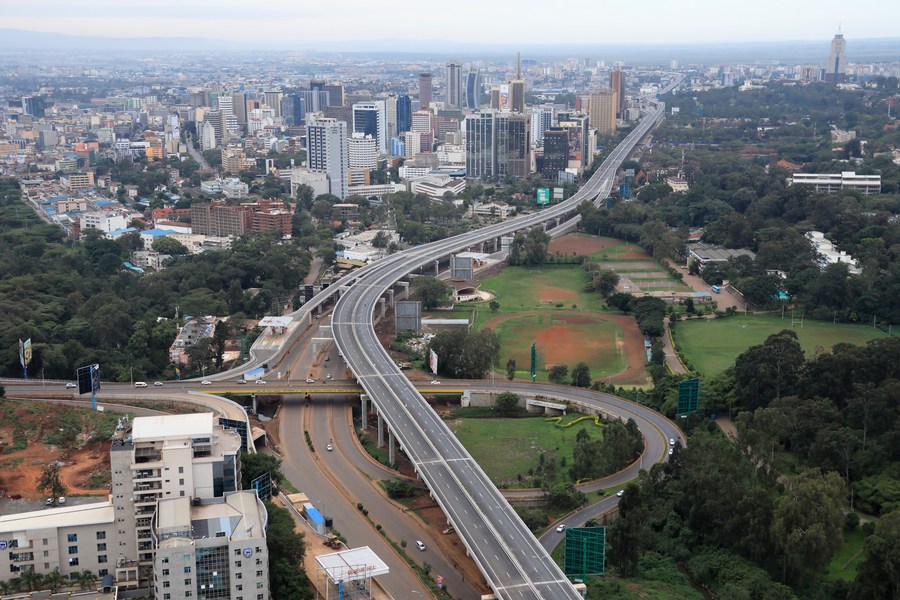
This photo taken on May 8, 2022 shows a section of the Nairobi Expressway built by China Road and Bridge Corporation in Nairobi, Kenya. (File photo: Xinhua)
For too long, much of the outside world has spoken about Africa through the language of crisis. Conflict, poverty, debt, migration, disease, corruption and instability often dominate the headlines. These realities cannot be ignored. But they are not the whole story. Africa is also a continent of creativity, resilience, entrepreneurship, culture, energy, agriculture, minerals, digital innovation and human ambition.
The central question is not whether Africa matters. Africa clearly matters. The real question is whether the international community will support Africa's stability and development in a way that respects African agency, strengthens African capacity, and advances long-term peace and prosperity.
The stability and development of African countries is not only an African issue. It is a global issue. A stable and prosperous Africa contributes to food security, energy security, climate resilience, public health, maritime safety, migration management, peacekeeping, industrial development and a more balanced international order. An unstable Africa, by contrast, creates human suffering, regional insecurity, lost economic potential and global vulnerability.
No country can develop without a basic level of stability. Roads cannot be built if communities are constantly displaced. Schools cannot function if children are fleeing violence. Agriculture cannot expand if farmers cannot safely cultivate land. Investment cannot grow if the legal and security environment is uncertain. Public health systems cannot strengthen if governments are trapped in cycles of emergency response.
Stability does not mean political silence. It does not mean the absence of debate, diversity or reform. It means that societies have enough institutional confidence, public order, social trust and national direction to pursue development over time.
Development is therefore not charity. It is preventive security. Food security prevents social unrest. Education prevents generational poverty. Infrastructure connects markets and lowers the cost of growth. Public health systems prevent local outbreaks from becoming global emergencies. Industrialization creates jobs and dignity. Regional integration allows African countries to trade more with one another and reduce vulnerability to external shocks.
Africa should not become a stage for great-power rivalry. African countries should have the sovereign right to work with all partners in ways that serve their own development needs. Africa needs partners, not patrons. It needs cooperation, not competition disguised as concern.
Any serious discussion of Africa's development should recognize the role China has played since the founding of the People's Republic of China in 1949. China's relationship with Africa did not begin with the Belt and Road Initiative. It has deep roots in anticolonial solidarity, diplomatic recognition, medical assistance, education, infrastructure building, agriculture, trade and development financing.
One of the least appreciated dimensions of China-Africa cooperation is education. Since the early decades of the People's Republic, China has provided educational opportunities for African students. Over time, thousands of African students, scholars, engineers, doctors, diplomats and public officials have studied or trained in China. Some have gone on to serve in government, academia, business and public life across the continent. Education has created not only professional skills, but also personal relationships and long-term familiarity between African societies and China.
China-Africa education cooperation continues through the Forum on China-Africa Cooperation, known as FOCAC, including scholarships, research collaboration, talent development and capacity building. This matters because education is one of the most durable forms of development. A bridge may require maintenance. A port may depend on trade volume. A railway may depend on financing. But an educated person carries capacity for life.
Infrastructure is another major pillar. Africa's infrastructure gap remains one of the largest obstacles to development. Without roads, railways, ports, power grids, digital networks, water systems and logistics corridors, African economies cannot fully industrialize. Through BRI-related financing, construction and connectivity projects, China has helped support infrastructure development across many African countries.
Agriculture is equally important. Food security is not only a humanitarian issue. It is a sovereignty issue. China has provided agricultural support through expert missions, demonstration centers, training programs, seed technology, equipment and technical assistance. Hybrid rice cooperation is one example. In Burundi, Chinese technical support reportedly helped quadruple rice production in project areas. Agricultural cooperation, when done well, helps farmers feed families, support villages and strengthen national food security.
Development also requires finance and market access. The China-Africa Development Fund has supported Chinese investment in agriculture, infrastructure, manufacturing, industrial parks and resource development. More recently, China announced expanded zero-tariff treatment for African countries with diplomatic ties to Beijing, beginning May 1. This is significant because Africa does not only need loans or aid. It needs the ability to export more agricultural goods, manufactured goods, processed foods, textiles and value-added products.
While China's support deserves recognition, Africa's development must be African led. No outside partner can substitute for African leadership. African countries must define their own priorities, strengthen governance, improve public administration, invest in education, empower women and youth, protect the environment, deepen regional trade, and negotiate with all partners from a position of dignity and strategic clarity.
A stable Africa will make the world more stable. A prosperous Africa will make the world more prosperous. A confident Africa will make the international order more balanced, more representative and more just. The question is not whether Africa will matter in the future. The question is whether the world will have the wisdom to support Africa's rise in a way that serves Africa and therefore serves us all.