


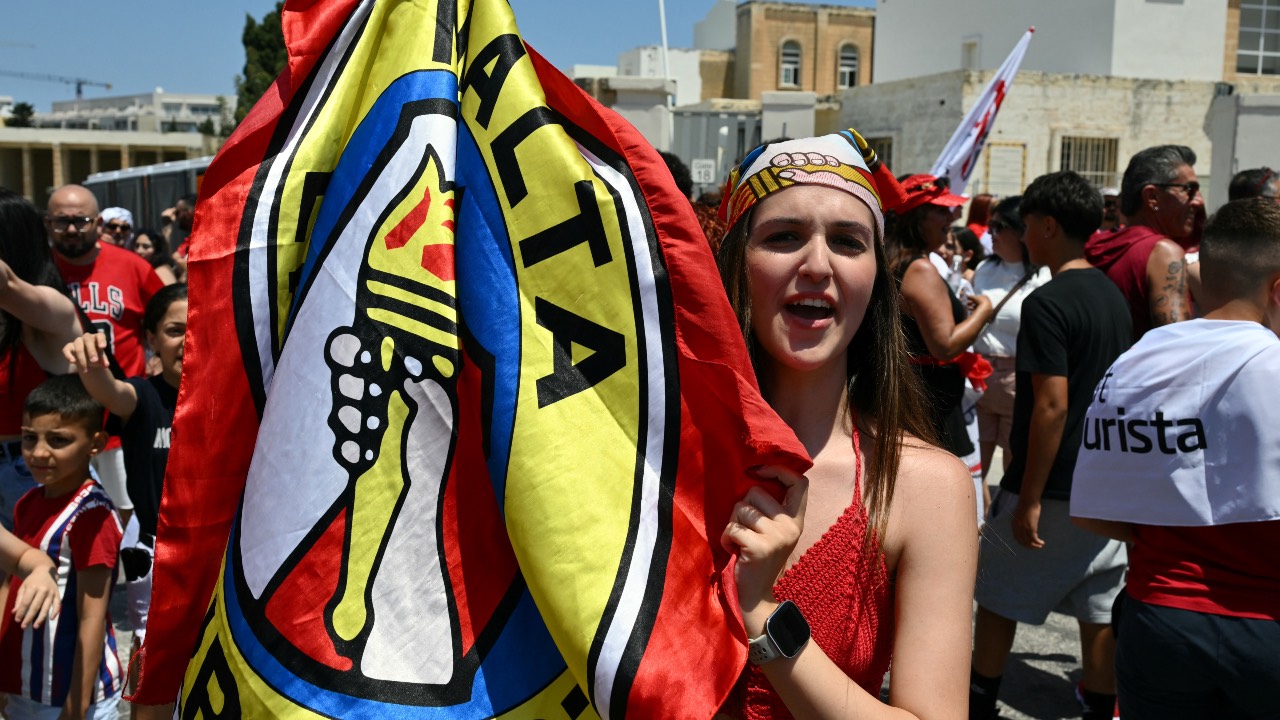
Malta's Labour party has won an unprecedented fourth term in a victory for outgoing Prime Minister Robert Abela. (Photo: AFP)
Malta's Labour party won an unprecedented fourth term in a victory for outgoing Prime Minister Robert Abela, who had called a snap election in light of geopolitical uncertainties.
Fireworks were set off across the tiny Mediterranean island and ecstatic Labour supporters dressed in the party's red, chanted "four times!" after officials in the Counting House in Naxxar said preliminary results gave the election to the governing party.
"I've voted Labour since I was a little girl, I'm thrilled they've made history," 73-year-old Margaret Camilleri said, as Labour supporters drove past on a truck with speakers blaring the song "We are the Champions."
Fresh mandate
Abela, 48, had sent the country to vote a year early, saying the government needed a fresh mandate in order to shield the tiny, import-heavy island from the Middle East crisis.
While Malta's economy grew 4% last year, there are concerns the conflict could have an impact on tourism due to spiraling aviation fuel costs and drive up inflation.
Abela campaigned on Labour's economic record since 2013, pledging stability in a period of uncertainty.
"All indications appear to show that the Malta labour party has made history, winning four elections in a row," he said.
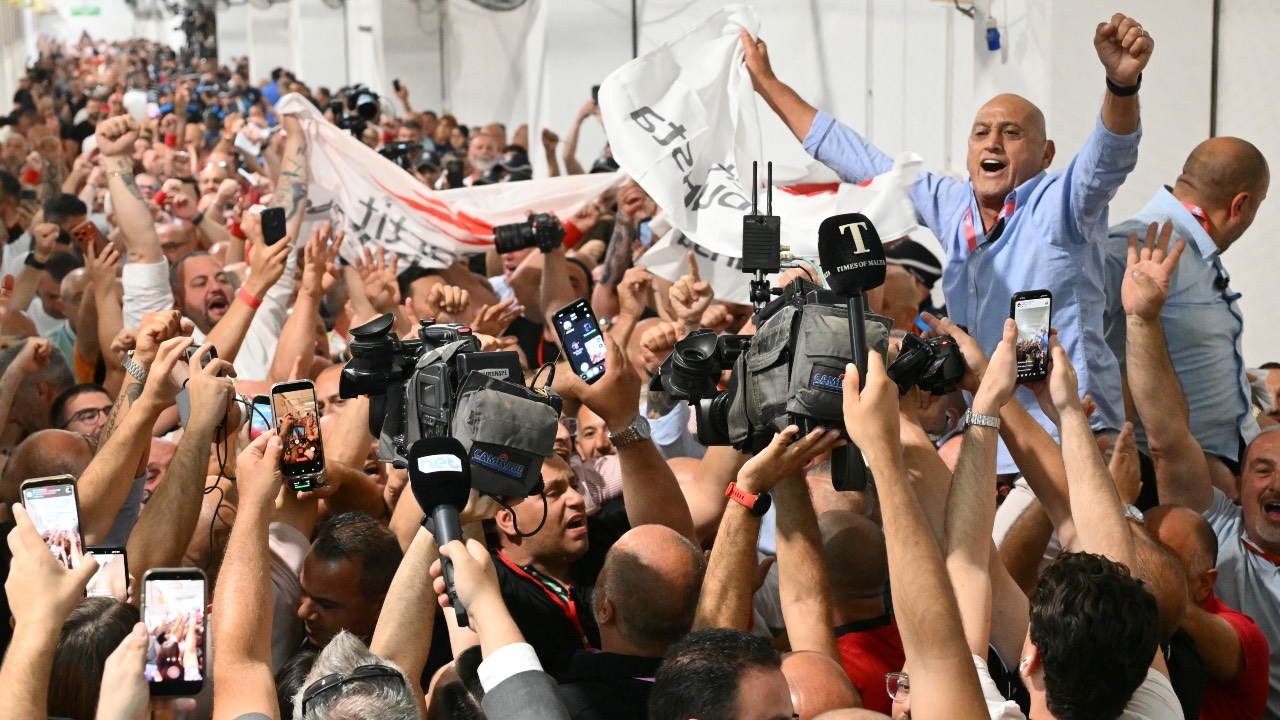
Members of the Malta Labour Party (PL) react at the Electoral Commission Counting Complex in Naxxar, on the island of Malta. /Alberto Pizzoli/AFP
His main rival was Nationalist Party (PN) candidate Alex Borg, a 30-year-old lawyer and former Mr World Malta beauty pageant winner, who has urged the Maltese to vote for change.
Borg conceded on Sunday, saying in an address posted on social media that he had "personally called Robert Abela to congratulate him" on the win.
Corruption not a campaign issue
Abela has led Malta since 2020, when his predecessor quit following a political crisis over the assassination in 2017 of reporter Daphne Caruana Galizia, who exposed corruption at the highest level in the country.
According to a 2025 Council of Europe report, Malta remains significantly behind in the fight against corruption - but the issue was not a hot topic on the campaign trail.
Malta's economic performance trumped other concerns.
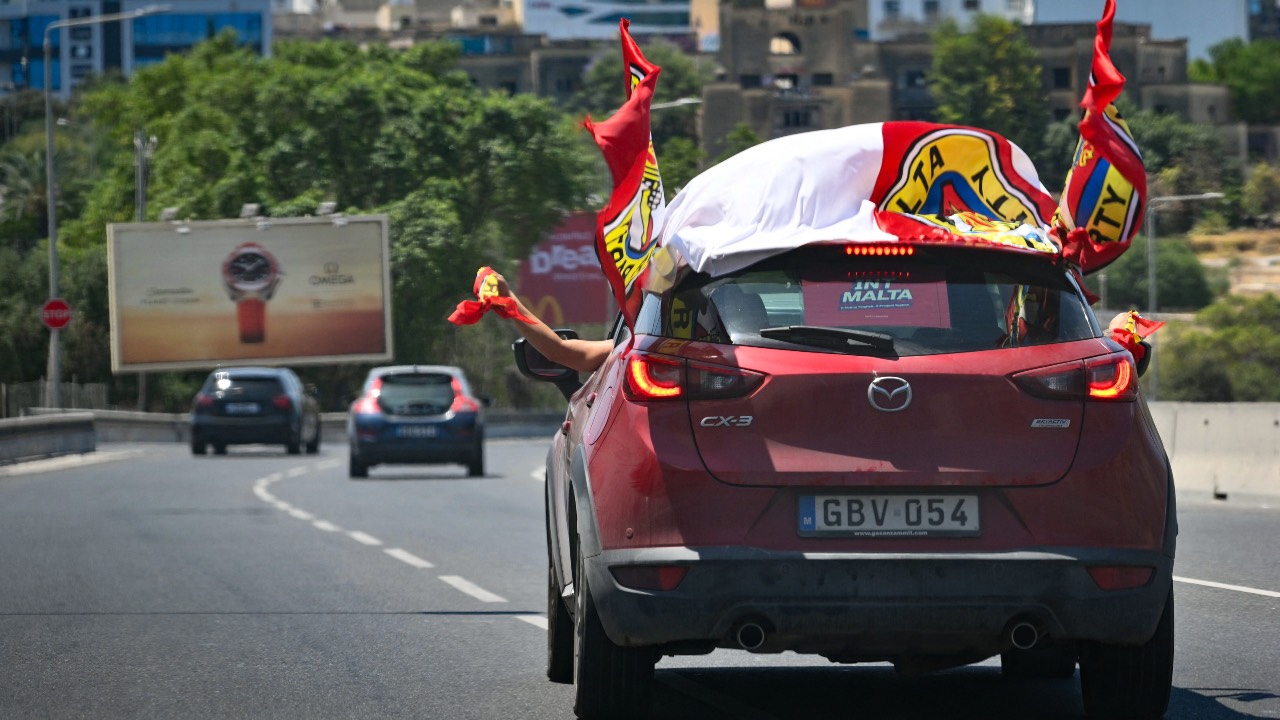
Preliminary results gave the election to Labour, officials in the Counting House in Naxxar said, as fireworks were set off across the tiny Mediterranean island. /Alberto Pizzoli/AFP
Located off the coast of Sicily, Malta is the smallest and most densely populated country in the European Union, with around 550,000 people living in 316 square kilometers (122 square miles).
Thriving economy
The island has a thriving economy based largely on tourism, online gaming and financial services, and one of the lowest unemployment rates in the EU.
But despite a low birth rate, the population has grown nearly 30 percent over a decade, driven largely by foreigners.
That has fueled a construction boom, filling the skyline with cranes, creating traffic bottlenecks and putting a strain on key services.
Heritage groups have denounced environmental degradation and risks to UNESCO world heritage sites in the former British colony.
The country has very few natural resources and imports much of its energy, leaving it exposed to external shocks.
Labour heavily subsidises energy bills and pledged to continue doing so.
Malta is also on the front line of climate change and at risk of desertification and drought, but neither main party made the issue its priority.
There is a green party, the ADPD, but no third party has held even a seat in Malta's parliament since before independence in 1964.