


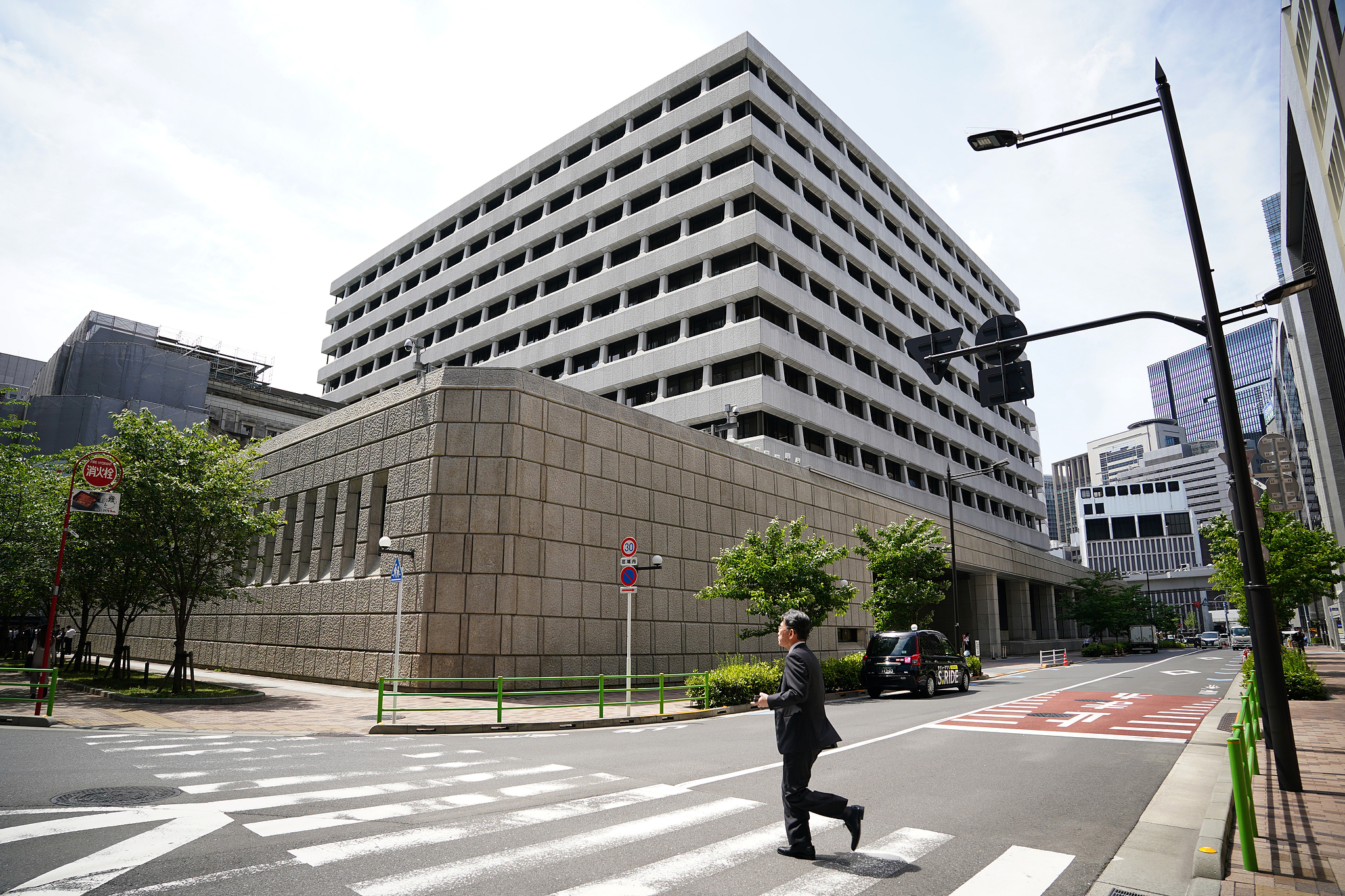
The Bank of Japan (BOJ) headquarters in Tokyo, Japan, Apr 28, 2026. (Photos: VCG)
Japan is gradually bidding farewell to its long-standing ultra-low interest rate environment, with rising rates shaking the stable foundation of its high-debt fiscal structure. Against the backdrop of persistently high debt levels, aging-driven increases in social security spending, and intertwined price and livelihood pressures, the economic operating model that has relied on low-cost financing for years has reached a critical turning point. Policymakers are simultaneously facing three core goals: debt stability, inflation control, and livelihood security. The three constrain each other, forming typical policy constraints. This dilemma is not unsolvable, but in Japan's current reality of weak growth, it is hard to find a feasible path that can balance all three at the same time.
The most intuitive pressure signal comes from long-term interest rates climbing steadily in the bond market. Data from Mitsui Sumitomo DS Asset Management shows that Japan's 10-year long-term interest rate has risen from 2.24% to 2.76% in just over 3 months, getting close to the key threshold of 3%. The Bank of Japan has turned hawkish and launched a reduction in government bond purchases, injecting net 12 trillion yen ($75.1 billion) of government bonds into the market per quarter, amounting to 48 trillion yen for the full year. Combined with the government's annual new government bond issuance of 20 trillion to 30 trillion yen, the annual net supply in the government bond market has reached as much as 70 trillion to 80 trillion yen. Domestic funds cannot fully absorb such a large supply, forcing reliance on overseas investors, whose demand for higher risk premiums has further pushed up rates. The BOJ's balance sheet reduction and fiscal expansion have created overlapping pressures in the bond market, directly dismantling the stable pattern of the low-rate era.
Meanwhile, the Nikkei index is running at a high level, but the market is highly sensitive to rate changes. Interest rate hikes will directly raise corporate financing costs, tighten market liquidity, and put obvious pressure on high-valuation sectors. A stronger yen will also erode export companies' profits, potentially triggering large-scale capital outflows. Even if financial sectors benefit from wider interest spreads, they can hardly offset the overall downward pressure on the market, putting the sustained rally of the Nikkei index under significant pressure.
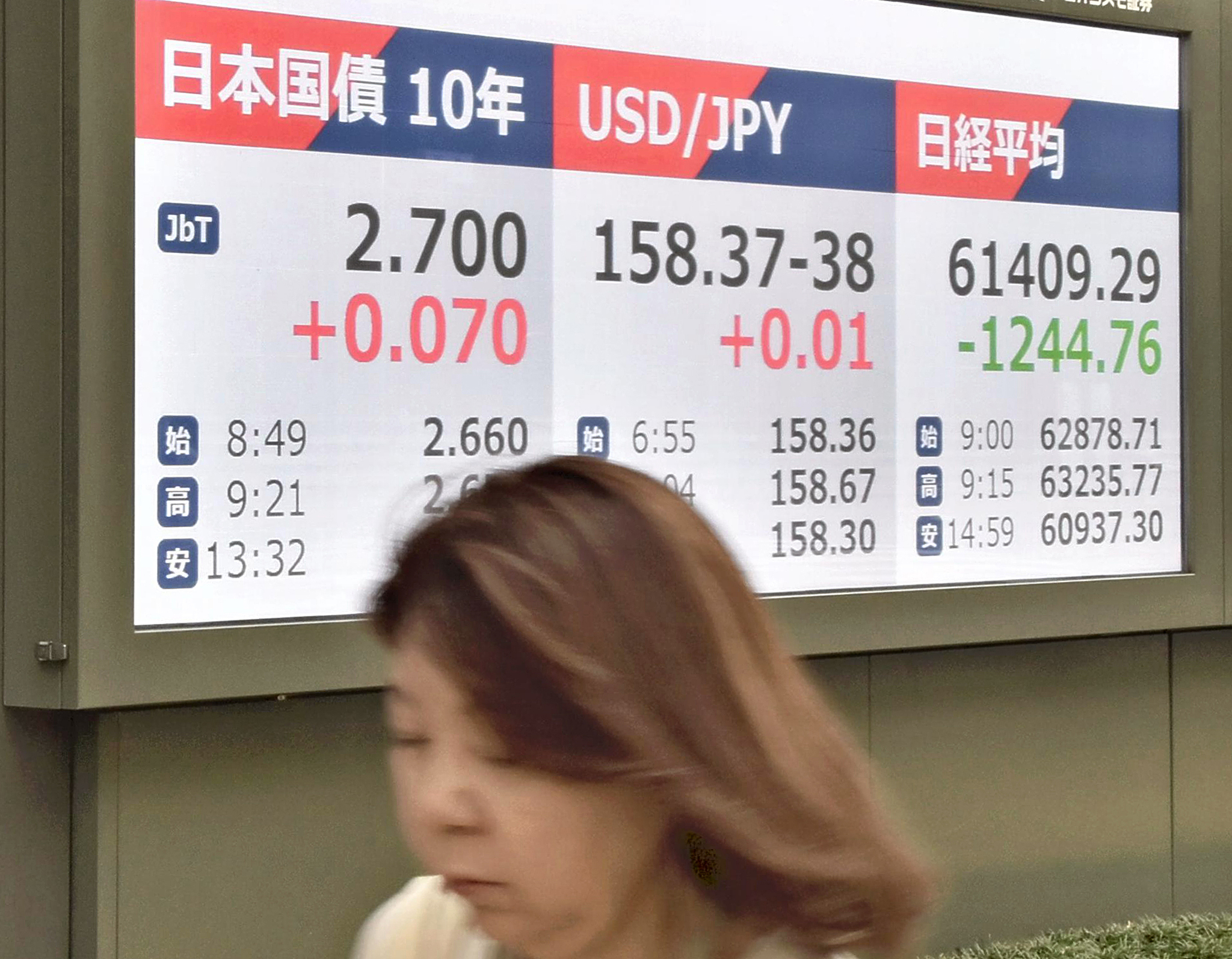
A photo shows (L-R) a 10-year government bond, the exchange rate between the US dollar and the Japanese yen, and the Nikkei Stock Average, in Tokyo, Japan, May 16, 2026.
On the real economy side, the contradiction between inflation control and people's livelihoods is far sharper than the data suggests. In 2025, Japan's real wages fell by 0.5% year-on-year, with income growth continuously lagging behind price rises. Since the start of this year, Japan has suppressed price increases through a series of fiscal subsidies and monetary tightening, but livelihood pressures have not really eased. The effect of inflation control has stayed at the data level, failing to translate into perceptible improvements in people's lives. Supermarket consumption data shows that customers' average single purchase amount fell by 4.1% year-on-year, and the average number of items purchased dropped by 2.5%, with lower spending becoming a universal choice across society. The elderly have borne the most direct impact: 93% of elderly people feel the pressure of rising food prices, 58.7% are noticeably affected by higher utility costs, and 44.0% face rising transport costs. A total of 67.8% have been forced to adjust their consumption habits, opting more for discounted goods, cutting back on dining out, and strictly controlling daily expenses.
What constrains fiscal authorities even more is the rigid expenditure structure long locked in by population aging. In 2025, social security benefits reached 140.7 trillion yen, accounting for 22.4% of GDP. Among them, pension spending hit 62.5 trillion yen, medical benefits 43.4 trillion yen, and long-term care related expenses 14 trillion yen, all showing an irreversible upward trend. Social security related expenses in the national general budget reached 38.3 trillion yen, taking up as much as 56.2% of general fiscal expenditure—meaning over half of all fiscal resources are occupied by social security spending. This rigid structure leaves almost no room for compression, becoming a key driver of continuous debt expansion.
The ongoing tensions in the Middle East have added new burdens to an already strained fiscal situation. The Japanese government has capped the average retail gasoline price at around 170 yen per liter, with the current subsidy per liter exceeding 40 yen. Estimates from Nomura Research Institute show that every 10 yen of subsidy per liter consumes about 100 billion yen of fiscal funds per month. At the current pace, the gasoline subsidy fund will be exhausted by the end of June. To cope with the summer peak in power and gas demand, the government plans to extend subsidies for electricity and gas bills, which will require an additional 500 billion yen just to maintain the previous scale. The 1 trillion yen contingency reserve in the 2026 budget is clearly insufficient, and the ruling coalition is discussing a supplementary budget of about 3 trillion yen, funded mainly by deficit-financing bonds. External energy shocks have directly turned into internal fiscal pressures, intensifying the contradiction between debt and interest rates.
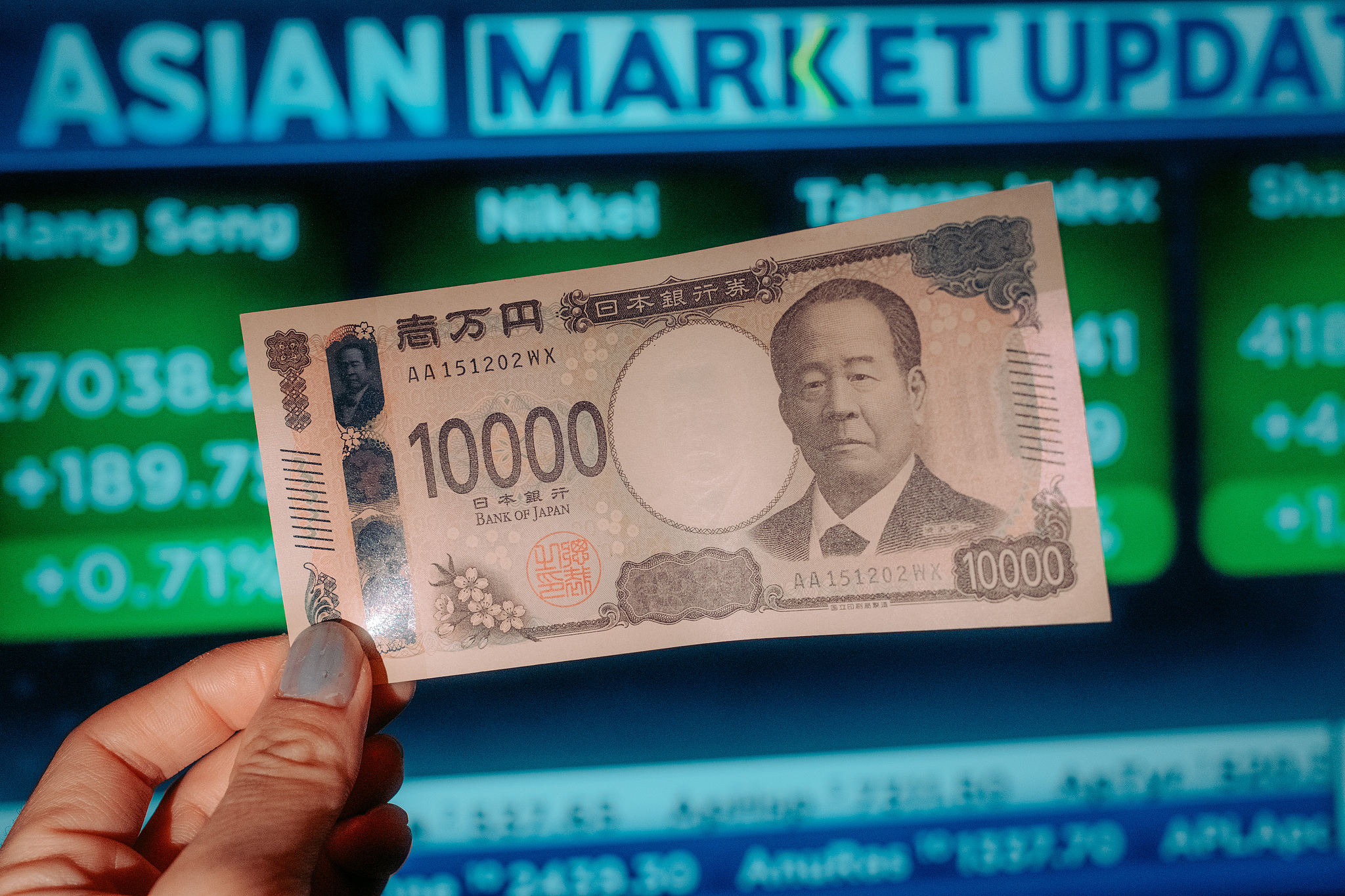
A Japanese 10,000-yen banknote in front of a screen displaying Asian market updates arranged in Kyoto, Japan, Jan 27, 2026.
All these intertwined constraints form the "impossible triangle" of Japan's economy right now. Sticking to monetary policy normalization and BOJ balance sheet reduction will push up rates and exacerbate debt risks. Maintaining large-scale fiscal subsidies to ease livelihood pressures will expand government bond supply and push rates even higher. Keeping rates stable to protect the high-debt model will require continued loose monetary policy, which in turn will fuel inflation and continuously erode residents' real income. None of the three goals can be achieved at the same time, leaving policymakers with no room to maneuver.
In theory, Japan is not without ways to break the dilemma. Beyond achieving economic growth to expand tax revenue and improve fiscal space, the government could also sell some of its financial assets to pay down debt. However, in reality, neither path is feasible. On growth, the latest survey by Teikoku Databank shows the share of firms planning capital investment in 2026 fell to 56.7%, declining for three straight years, with more than half of companies giving up investment due to high uncertainty. Breaking the deadlock through growth remains a distant hope. On asset sales, while the Japanese government holds large financial assets, most are linked to public pension and social security funds that underpin the aging society. Large-scale asset sales would directly undermine livelihoods and social stability, making them politically and socially unrealistic under a rapidly aging population. With both paths blocked, Japan’s economy remains trapped in its "impossible triangle."
The conflict between high debt and BOJ balance sheet reduction has further cemented this dilemma. Japan's government debt scale has long ranked among the highest in major global economies, with interest payments highly sensitive to rate changes. BOJ balance sheet reduction will directly reduce demand for government bonds, intensifying upward pressure on rates. In turn, higher rates will expand fiscal deficits, forcing the government to issue more bonds, creating a self-reinforcing cycle of rising rates and growing debt. The BOJ is caught in a dilemma: continuing to shrink its balance sheet will hit bond market stability, while resuming large-scale bond purchases could spark concerns over fiscal monetization, which would push market rates even higher.

Cherry trees in bloom in front of the Bank of Japan headquarters in Tokyo, Japan, Mar 27, 2026.
Livelihood pressures and political constraints have further narrowed the room for policy adjustment. Public opinion polls from the Daily News show that the approval rating of the Takaichi Cabinet has fallen for three consecutive months, dropping from 53% in April to 50%, hitting a new low since the cabinet took office for the second straight month, with the disapproval rate staying at 33%. With persistent livelihood pressures, policymakers can hardly push for large-scale fiscal tightening, making the path of debt expansion hard to break. Meanwhile, the hardline foreign policy of the Takaichi administration has strained China-Japan relations, disrupting bilateral economic, trade and people-to-people exchanges. Weakening external demand has eroded economic growth momentum, leaving the overall economy in a more passive position.
The end of the low-rate era is, in essence, the end of Japan's old growth model. Debt pressures, structural weaknesses, and livelihood dilemmas that were long covered up by monetary easing have all emerged at once during the rate hike cycle. Sluggish corporate investment, stagnant and even falling wages, continuous contraction in household consumption, and inflexible fiscal spending mean Japan can hardly rely on endogenous growth to escape the "impossible triangle". Policy adjustments only create tough trade-offs between short-term stability and long-term risks, but hardly touch the root of the problem.
The room for Japan's high-debt model to continue is narrowing rapidly. Low interest rates are no longer a permanent safe haven. Aging and social security spending are constantly raising the debt floor, while the external environment and geopolitical games are further compressing room for policy maneuver. In the future, Japan's economy will move forward under the triple constraints of debt, rates, and livelihoods for a long time to come. The huge debt left by the low-rate era will eventually have to stand the test of time in a normal rate environment. This is not only a severe test facing Japan's economy, but also a profound warning for all high-debt economies around the world.