


AL-MARAH, Syria, June 2 (Xinhua) -- For residents of al-Marah, known across Syria as the village of the Damask rose, the annual harvest is more than a seasonal agricultural activity.
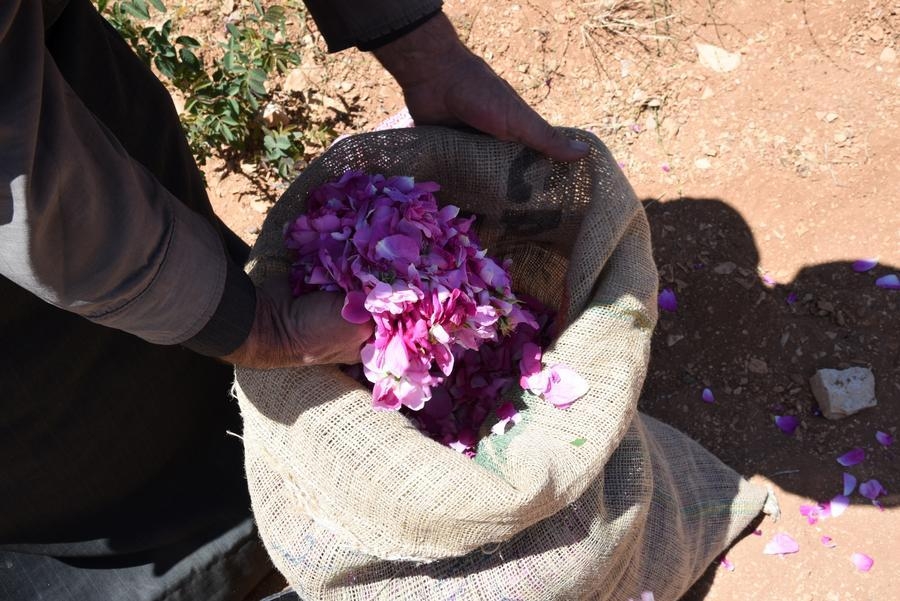
A farmer harvests Damascene rose petals in the town of Al-Marah, Syria, June 14, 2025. (Photo by Monsef Memari/Xinhua)
This year, after several drought-stricken seasons, farmers said the harvest had returned in abundance thanks to improved rainfall. While the fields are once again blooming, many villagers fear the centuries-old tradition itself faces an uncertain future.
Many farmers said the economic return no longer matched the labor required to maintain the crop throughout the year.
"Prices are low, and all sales are local," said Mohammad Jamal Abbas, an octogenarian farmer from the al-Marah village.
"Sometimes, products like rose water remain unsold from season to season. We hope this year's goods will sell, and prices will improve," Abbas told Xinhua.
Wearing a traditional black-and-white headscarf, Abbas moved slowly through the fields while carefully picking petals by hand.
He said many growers continued cultivating the roses despite the low profit as they "cannot leave this profession."
"Their season lasts only 20 to 25 days a year, and we wait an entire year for these days. We work all year just to reach this short season. The roses have become part of our lives," he said.
Aside from weak revenue, another concern among the farmers was that younger generations were gradually abandoning the profession.
"Most people still working with the rose are elderly people. This rose is a culture that has been inherited from our ancestors for hundreds of years. But younger generations see that other jobs are more profitable," Diaa al-Khatib, a Damask rose farmer, told Xinhua.
Families in al-Marah produce a wide range of products from the Damask rose, including rose syrup and natural cosmetic products made using techniques passed down through generations.
Many families say these homemade products help preserve the cultural identity of the village even as the industry struggles economically.
Around 800 visitors, including organized tour groups, have visited al-Marah this year to witness the harvest and traditional distillation process firsthand, villagers said.
While the tourism has helped revive attention around the Damask rose, farmers said preserving the tradition in the long term would require stronger support, better marketing and modern production equipment capable of expanding exports.
Without broader support, many fear the centuries-old tradition could slowly disappear with the aging generation who feel they have a connection with the flower.
"All year long we stay in the fields watering, pruning, fertilizing and taking care of it. If we do not go see the roses every couple of days, it feels like something is missing. There is a relationship between us and this flower," al-Khatib said.