


Rio de Janeiro (People's Daily) — Driving about 40 kilometers west from Brasília, Brazil's capital, the high-rise buildings of the modern city gradually give way to rows of modest houses and neighborhoods. After leaving the paved highway and traveling several minutes along a dirt road, one arrives at Sol Nascente.
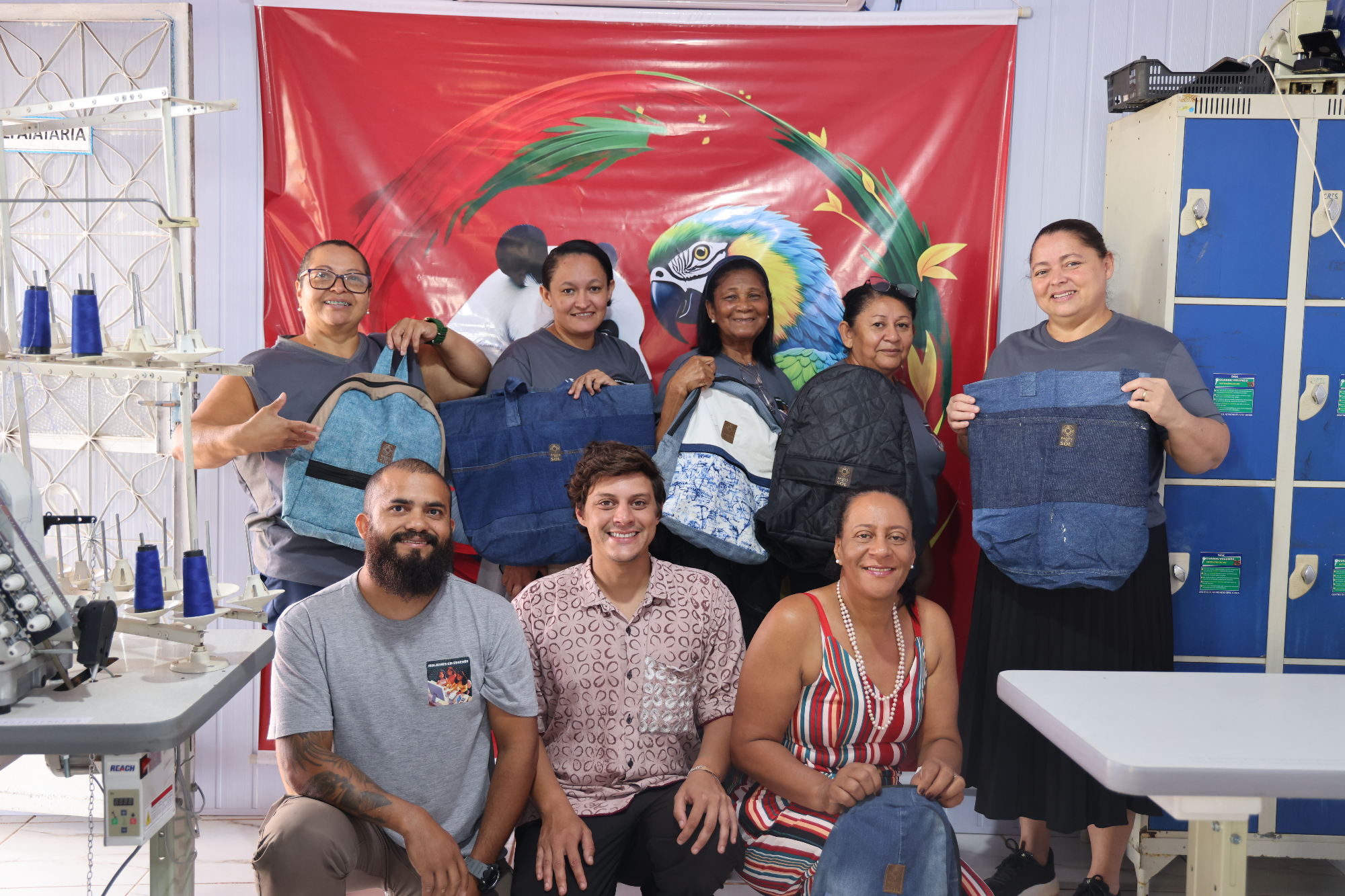
Members of Fehsolna showcase their sustainable fashion products made from recycled materials. (Photo: Shi Yuanhao/ People's Daily)
As one of the fastest-growing communities in the Federal District, Sol Nascente is home to more than 100,000 residents and has long been regarded as one of the largest shantytowns (favelas) in Brazil, or even in Latin America. In recent years, urban renewal projects have transformed the area. More paved roads have been constructed, and access to clean water and reliable electricity has improved significantly.
Yet for many residents, poverty and unemployment remain pressing challenges. Securing a stable income and providing a better life for their families remains their most fundamental aspiration, especially for women.
Sewing is not just a skill—it is an opportunity for them to regain control over their lives
At the sewing training workshop of the Housing Federation of the Sol Nascente (Fehsolna), nearly 20 sewing machines were neatly arranged inside two workshop sheds, filling the air with the rhythmic hum of machinery.
The workshop stands not only as a symbol of China-Brazil friendship but also as a vivid example of the philosophy of "teaching people how to fish," helping residents improve their livelihoods.
"Last year, the Chinese Embassy in Brazil donated a batch of brand-new sewing machines, allowing our students to learn more advanced and professional sewing techniques and turning this place into a truly professional production workshop," said Edilamar Correia, president of Fehsolna.
Inside the two sheds, industrial sewing machines, overlock machines, embroidery machines and other professional equipment were fully operational. Under the guidance of instructors, trainees were busy producing school uniforms and garment samples.
According to Correia, since she joined Fehsolna in 2006, the organization has been committed to helping women enter the labor market through vocational training programs in sewing, hairdressing and handicrafts.
"At the beginning, we rented a small room and had only a few old sewing machines. Conditions were very limited, but everyone hoped that learning a skill could change their lives," Correia recalled.
During the COVID-19 pandemic, in an effort to help unemployed women overcome economic hardship, Correia and her students launched a sustainable fashion brand called Raízes do Sol ("Roots of the Sun" in English). The initiative collects discarded jeans, uniforms and other textile waste and transforms them into backpacks, eco-friendly bags, clothing and other products.
"Our goal is to help women achieve economic independence and enter the workforce," Correia said.
These machines have truly enabled our trainees to enter the labor market
Last year, after learning about the project, the Chinese Embassy in Brazil donated more than 10 sewing machines and one embroidery machine. The embassy also supported the establishment of the sewing training workshop and the recruitment of professional sewing instructors.
"The greatest improvement is not simply efficiency, but quality," Correia said.
Previously, most of the project's equipment consisted of second-hand machines that were frequently out of service and unable to handle more complex work. With the new equipment donated by the Chinese Embassy, trainees can now master more advanced techniques and produce higher-quality products.
She explained that, for the first time, the association participated in a bid for local school uniform production and successfully secured an order for 100,000 uniforms.
"This not only provided additional income for participants, but also demonstrated that Fehsolna is capable of industrial-scale production. It has brought the entire project into a new stage of development," she said.
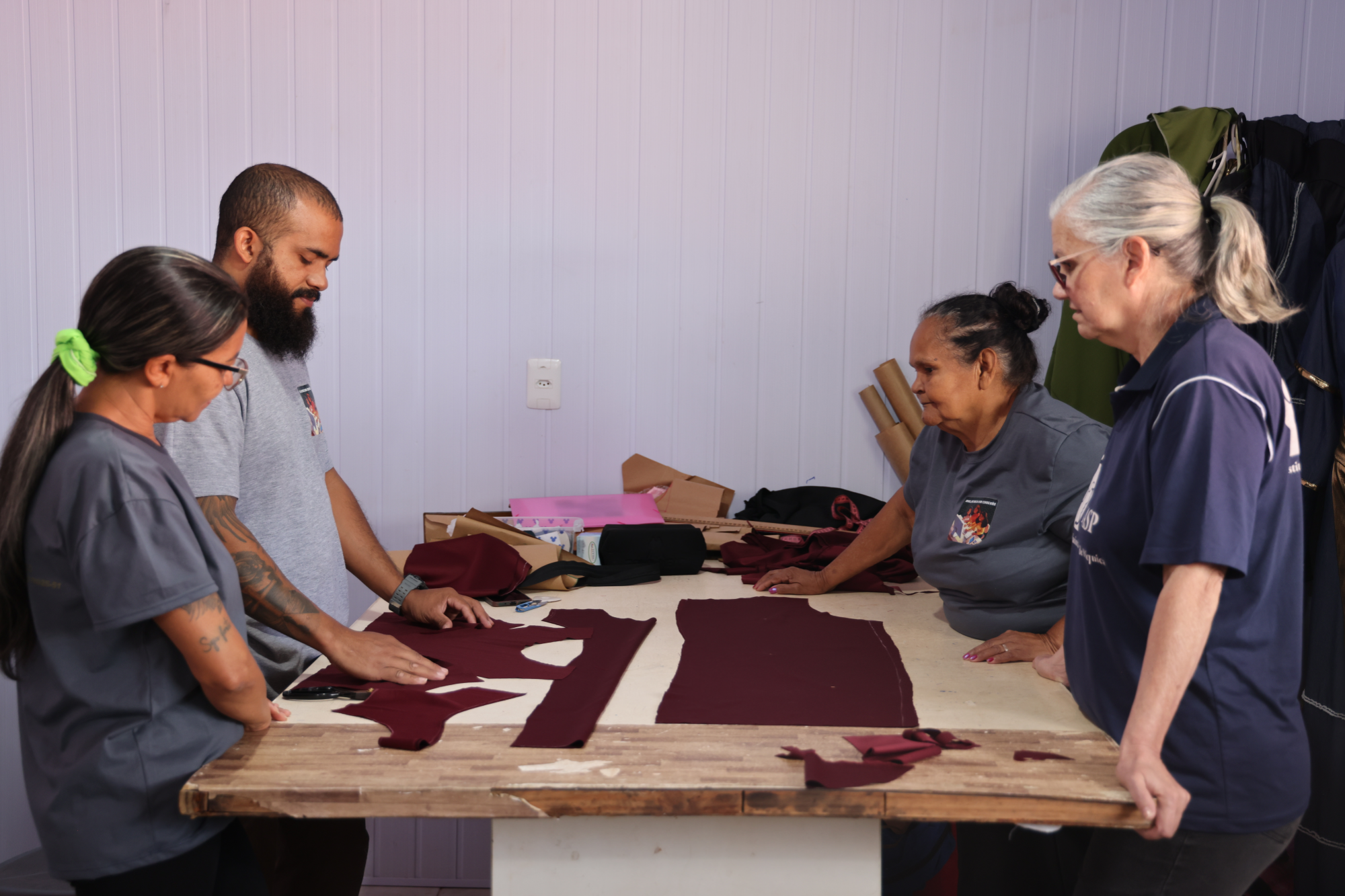
Matheus teaches sewing techniques to three female trainees at the Fehsolna workshop. (Photo: Shi Yuanhao /People's Daily)
Matheus, the professional sewing instructor, has witnessed these changes firsthand and says that the new equipment has made teaching "much more efficient."
"In the past, we spent a lot of time repairing old machines," he added.
"Now the equipment is more reliable, faster and more precise. For beginners, these machines are actually easier to learn because their speed and settings can be adjusted according to each stage of training. These machines have truly enabled our trainees to enter the labor market."
The influx of new equipment has drastically scaled the workshop's operations. Correia noted that, with support from the Chinese Embassy, the number of eligible trainees has tripled, and that the workshop now produces more than 5,000 garments each month.
"When we work together, we are changing not only one person's destiny, but also the destiny of the next generation," she said.
We hope to strengthen exchanges between our two countries in culture, education and many other fields
A large mural on one of the workshop walls, featuring a Brazilian macaw and a Chinese panda standing side by side, symbolizes the friendship between the two peoples. The workshop is filled with laughter and conversation as trainees eagerly share how the project has transformed their lives.
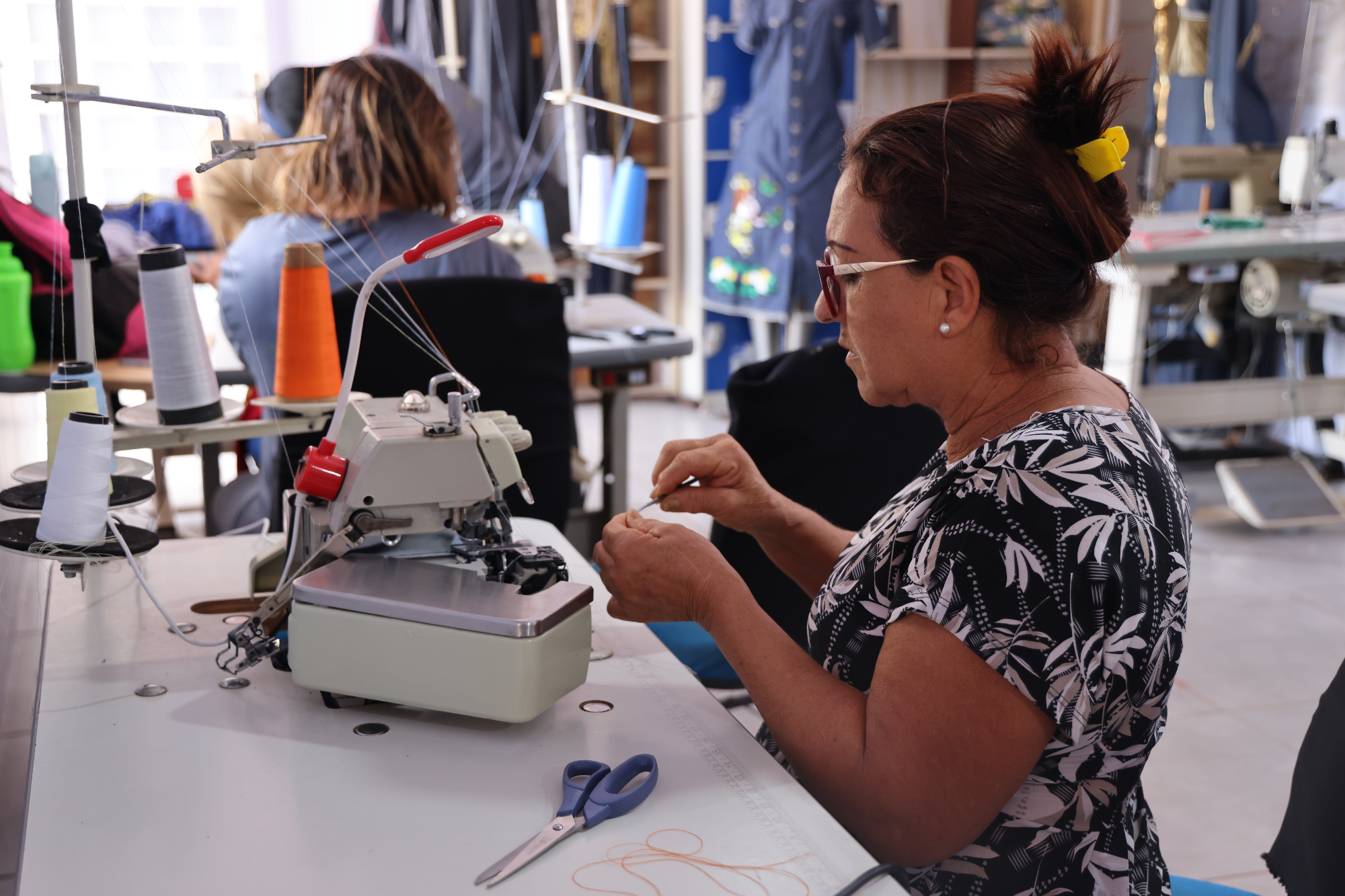
A participant operates a sewing machine donated by the Chinese Embassy in Brazil. (Photo: Shi Yuanhao /People's Daily)
Sixty-one-year-old Nazaré is one of the project's earliest participants. She worked for 22 years for a family in Brasília before leaving due to a shoulder injury. After joining the project, she found a renewed sense of purpose.
"Sewing is not only a way to earn money—it is also a way to stay alive and active," she said. Today, she not only participates in production at the workshop but has also purchased a Chinese-made industrial sewing machine for her home, where she takes on orders for backpacks, clothing and alterations.
"As long as I can still work, I want to keep learning and creating value," she said.
Another trainee, Diravina Lima, returned to sewing after hearing about the new equipment donated by the Chinese Embassy.
"When I heard there were new machines from China, I was eager to come and see them," Lima said.
Today, she is involved in the school uniform production project and has mastered new sewing techniques.
"Modern equipment not only makes the work easier, but also makes the products more professional," she said.
Forty-one-year-old Maria da Silva has witnessed how the project can transform entire families.
"I started here as a student, and today I am a sewing instructor and production supervisor," she said.
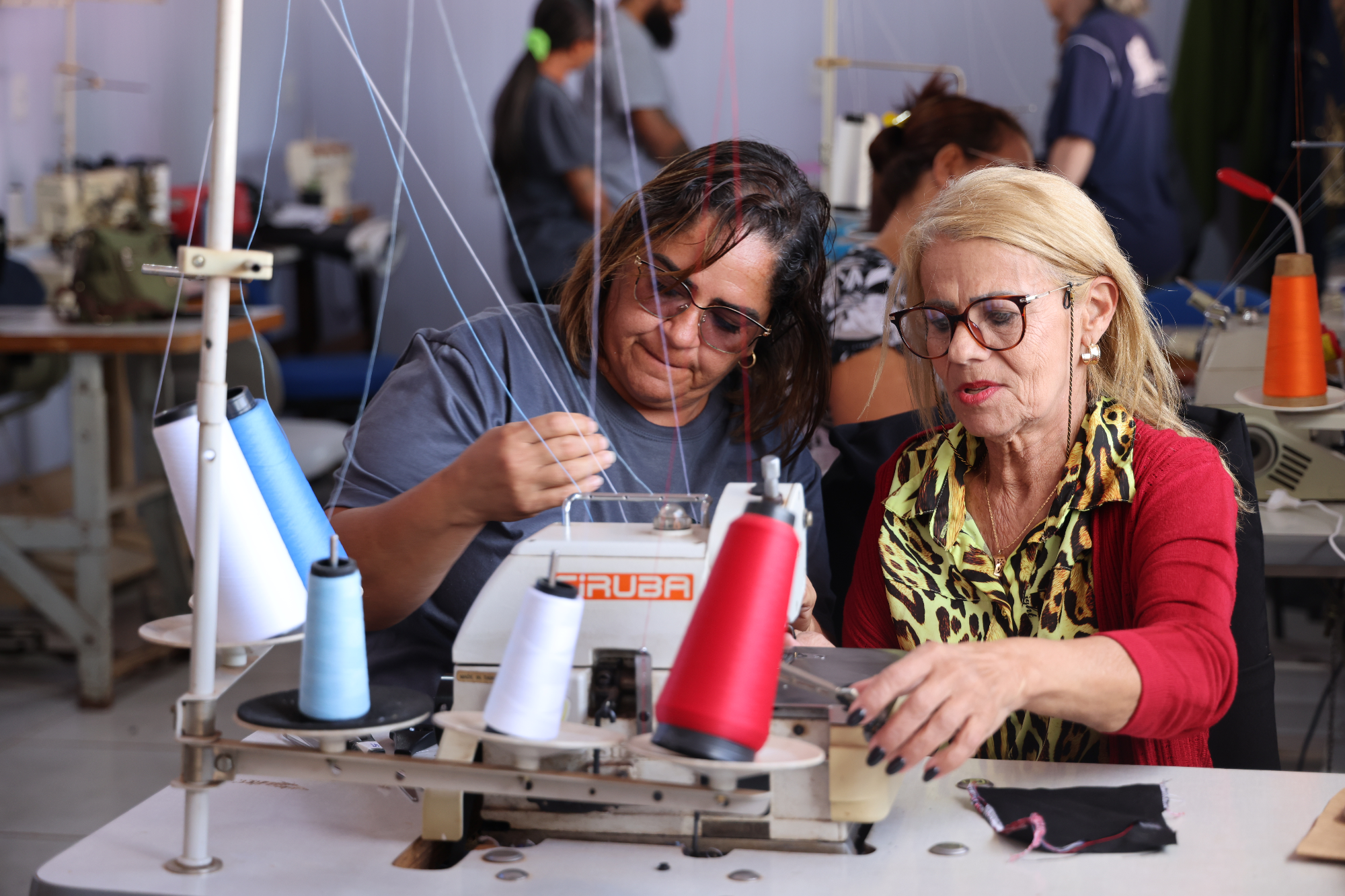
An experienced participant teaches sewing skills to another trainee at Fehsolna. (Photo: Shi Yuanhao /People's Daily)
Sewing now provides her with a stable monthly income of more than 2,000 reais (around $398). More importantly, her daughters have also learned to sew and are earning income from it, too.
"What China has brought is not only machines, but also opportunity and hope," she said.
An embroidered denim dress features a Siberian tiger on one side and a Brazilian puma on the other.
"These garments are not only expressions of fashion; they are also expressions of culture," project designer Junio said.
Recently, the project also established a "China Corner" using books donated by the Chinese Embassy, introducing Chinese culture, history and stories to trainees and local children.
"China has brought not only advanced technology and equipment, but also knowledge, organizational capacity, and valuable development experience," Junio said.
"We hope to strengthen exchanges between our two countries in culture, education and many other fields."